Support Nepal: Donate to our Disaster Response Appeal Today. Donate Today
Taj Mahal
Sunrise or Sunset at the Taj Mahal?
Sunrise at the Taj Mahal
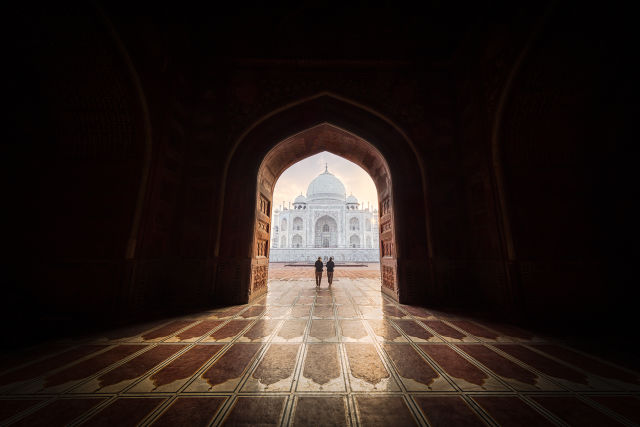
The Taj Mahal was built by the Moghul Emperor Shah Jahan in memory of his beloved wife, Mumtaz Mahal, who died in 1631. The Taj is serenely beautiful and never fails to amaze a first-time visitor; the white marble exterior changes colour according to the position of the sun and is matched by the rich interior detail. Wake up early to visit the Taj Mahal at sunrise and enjoy the sun’s golden hue rising behind the dome: this is undoubtedly the best time of day to be here!
Sunset at the Taj Mahal
On India’s Taj Mahal and Tigers – Premium Adventure, we have organised a unique experience for you to visit the Taj Mahal at sunset as well as sunrise. Beautifully decorated cycle rickshaws wind along the bustling streets of Agra soaking up the vibrant atmosphere of city life. From here it’s a short walk to high tea and local snacks with a stunning view of the Taj Mahal at sunset. Millions of people visit this New Wonder of the World each year, but this extra-special experience allows extra time to admire its beauty as we relax and converse together.
Taj Mahal Trips
Probably the most extravagant monument ever built for love, the Taj Mahal has become the emblem of India. Known as the jewel in India’s crown, its exquisite white marble dome and beguiling symmetry make it one of the world’s best-loved architectural treasures.
Built by the Emperor Shah Jahan between 1632 and 1648 as a mausoleum for his second wife Mumtaz Mahal, it is the finest existing example of Mughal architecture. It combines intricate Persian, Turkish, Indian and Islamic styles to wonderful effect and seems to appear as immaculate today as when it was first constructed. Its timeless beauty is perhaps best captured in the words of the Bengali poet Rabindranath Tagore who described it as “a teardrop on the cheek of time”.
This was our first time travelling with Exodus and we have had a superb experience. From the initial enquiry about the trip, booking ,departure/ joining details and trip exceeded expectations.
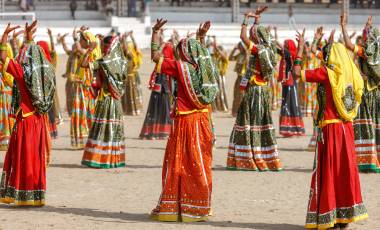
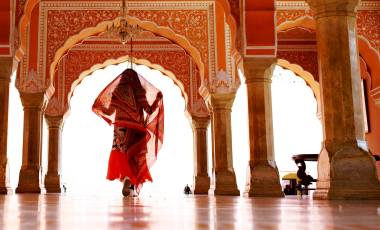
We are just back from our first ever trip to India. It was a wonderful experience full of amazing buildings, palaces and forts. We tried a wide variety of delicious food and had the opportunity to eat at both top end restaurants for a reasonable price as well as sample a range of street food. The trip certainly lived up to its name as the colours we saw were so vibrant, whether it was ladies dressed in beautiful saris, colourful flowers and garlands or the decoration in the temples.
A great way to see a number of sites and cities in a relatively short period of time. Excellent trip , managed efficiently and professionally from start to finish.
Get to the Taj early – sunrise is undoubtedly the best time to avoid the huge crowds and the heat. As the sun rises and the early morning mists clear, the delicately carved white marble walls are slowly unveiled to dazzling effect.
On the other hand… sunset affords the most impressive views of the Taj. As the sun goes down, the white marble first takes on a rich golden sheen, which slowly gives way to rose-pink hues, then deep red and finally blue with the changing light. Mesmerising.
And while in the city of Agra – your base for Taj Mahal tours – visit the Red Fort, a key strategic stronghold of the Mughal Empire. A citadel of over 500 buildings, once you are inside the fortified red walls a palatial city spreads out before you. Fairytale palaces, elegant courtyards and exquisitely crafted mosques create the city within a city.
Meanwhile, just outside Agra is Fatehpur Sikri, another Mughal palace-city. The Emperor Akbar moved his capital there in 1571, with the Red Fort just down the road for protection if it were ever needed. Occupied for just 14 years, its palaces and courtyards feel as though they were left only yesterday.
As far as grand designs go, they don’t come any grander than in Agra.