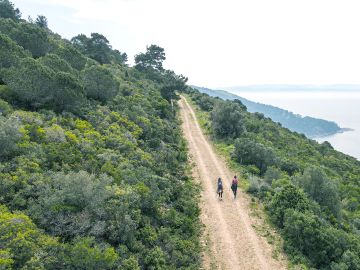
From the sun-drenched Turquoise Coast of the south to the high mountain plateaus and vertiginous peaks of the east, walking holidays in Turkey offer a wealth of opportunities to discover the country’s richly diverse landscapes. Amidst the Mediterranean backdrop you’ll find ancient sites filled with crumbling ruins and monuments that tell of Turkey’s Roman, Byzantine and Ottoman past which has shaped the land and culture of the country.
The Goreme open-air museum is one of the most fascinating sites to explore on holidays to Turkey. As well as boasting dazzling views over the valley, it’s also home to a collection of cave churches decorated with ornate Byzantine frescoes that date back to 1000 – 1200 AD when they were used by orthodox monks.
Cappadocia is one of the most famous sites in Turkey and its distinctive landscape is punctuated by unusual rock formations that resemble a scene from a fairy tale. The unique pillars were formed from volcanic eruptions and have become recognised around the world, making it a popular destination for walking holidays in Turkey.
In between trekking among sun-kissed beaches, olive groves and ancient wonders, there’s plenty of time to immerse yourself in the local culture. The Turks are extremely welcoming and eager to show you their traditional way of life. And, of course, the cuisine is also one of the highlights on trips to Turkey. From authentic meze and spicy kebabs to sweet baklava, the vibrant Mediterranean flavours are irresistible.
Top 5 Places to Visit on Walking Holidays in Turkey
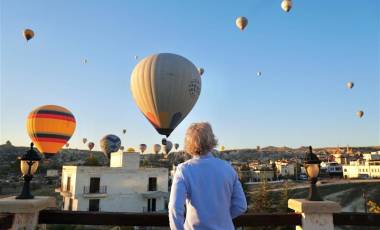
Cappadocia: Piercing the skyline with its fantastical rocky pillars, Cappadocia is a dreamlike vision that attract visitors from across the world. These curious, geological wonders rise up against a canvas of rugged hills in central Turkey and are known as the ‘fairy chimneys’ owing to their distinctive formations. One of the best ways to witness these natural wonders is by hot air balloon which gives you a bird’s-eye perspective of this almost unreal landscape. Back on the ground, you might also get to see the equally interesting wildlife such as the Eurasian fox or the hoopoe.
Kaymakli: Also located in Cappadocia is the underground city of Kaymakli. Built by Christians as far back as the 7th-century BCE, Kaymakli is a labyrinth of tunnels, caves and ancient homes and settlements where the local people would hide to avoid attack from the Byzantine invaders. It’s hard to imagine that inhabitants lived in this underground city and created everything from kitchens and living areas to stables and there’s even a church and graveyard. At one time a staggering number of people, around 3,500, lived inside Kaymakli City.
Goreme Open-Air Museum: Believed to be a Byzantine monastic settlement and a pilgrimage site in later years, Goreme Open-Air Museum is now a UNESCO World Heritage Site and one of the greatest of its kind. The museum is a fine example of Byzantine art and architecture and is home to an incredible complex of churches, chapels and monasteries cut into the volcanic rock. Inside each of the structures you’ll find beautiful frescoes that depict life in times gone by. The 11th-century Chapel of St Basil is particularly fascinating with its paintings of St Basil himself, a Maltese cross and St George slaying a dragon. The Dark Church is another highlight of Goreme Open-Air Museum and was so named owing to its lack of windows. Because of the lack of light in the church, its frescoes have hardly faded and still retain their vibrancy.
Akvadi Valley: Also known as White Valley, Akvadi is one of the most popular walking areas in Cappadocia and also one of the most diverse valleys. There are several walking trails that lead you through surreal landscapes made up of white rocks, orchards, vineyards and fairy chimneys. As you walk along the ancient river path, there’s a real sense of calm and you’ll be enthralled by the stunning scenery.
Arycanda: The ancient Lycian city of Arycanda lies on mountain terraces overlooking a pretty valley. It’s believed the city dates all the way back to Anatolian times and had several rulers throughout history, from the Persians and Alexander the Great to Seleucids. It is one of the oldest cities in Lycia and suffered from the great earthquake in 240 AD. Explore the Acropolis to see Hellenistic ruins, the Temple of Helios and Roman ruins. The well-preserved theatre is worth visiting to see its coloured marbles and the bust of Emperor Hadrian.
Where do I start……?
The trip was so good for so many reasons! The hikes were different every day, and a lot greener than expected. Some of the scenery was just surreal! The ‘Fairy Chimneys’, underground cities, the pigeon caves; and ‘Love Valley’ was particularly thought provoking!!
The accommodation was spot on, probably one of the nicest hotels we have stayed in on an Exodus trip! The rooms delightful and spotlessly clean, the staff very helpful, the breakfast buffet and couple of evening meals there were good too.
We ate out most evenings at different restaurants which was most welcome, and just a short walk into town.
The group were great fun, we had a few youngsters in the mix ….I say youngsters, they were in their early 30’s and it added an extra dynamic to the whole week. Everyone was very friendly, conversational, interesting and funny. They all made the week that extra special.
I was travelling as an Exodus Staff Member: The Garfagnana is such a beautiful and quiet part of Italy, a true hidden gem. I did Level 3 walks every day in September, and we were very lucky with the weather: only one rainy day, and otherwise beautiful blue skies, perfect for those incredible 360° views. Every walk was stunning, throughout and specially at the peaks. Staying at Agriturismo Braccicorti was also a highlight, it’s such a beautiful cozy, peaceful farm with so much history, lovingly restored by the owners and almost self-sustainable. We were completely spoiled with amazing local food, cheeses, homemade jams, fresh peaches and apples, and some of the best wine I’ve ever had, ah, i miss the food!