Italy
Hiking the Dolomites
20% OFF
Italy
Iconic Dolomites Hikes

20% OFF

The Italian Dolomites form a vast mountain region in northern Italy, rising between the Austrian border and the Venetian plains, and spanning South Tyrol, Trentino and Veneto.
Part of the Alps, they feel distinct from neighbouring ranges, with dramatic limestone towers lifting straight from rolling alpine meadows. Clear lakes sit beneath wide-open skies, and a dense network of well-marked trails links valleys shaped by both geology and history.
For those considering hiking tours in Italy, the Dolomites strike an ideal balance between scenery, variety and rewarding days on the trail.
Here’s what to know before you go.
| Question | Quick answer |
| When is the best time to hike? | Late June to September |
| How difficult are the hikes? | Moderate to Challenging |
| Where is best for first-timers? | Alta Badia and Alta Pusteria |
| What is the most famous hike? | Tre Cime di Lavaredo circuit |
| Do I need technical skills? | Not for most standard hiking routes |
| How long should I go for? | A week works well |
| What is the main weather risk? | Fast-changing conditions and summer storms |
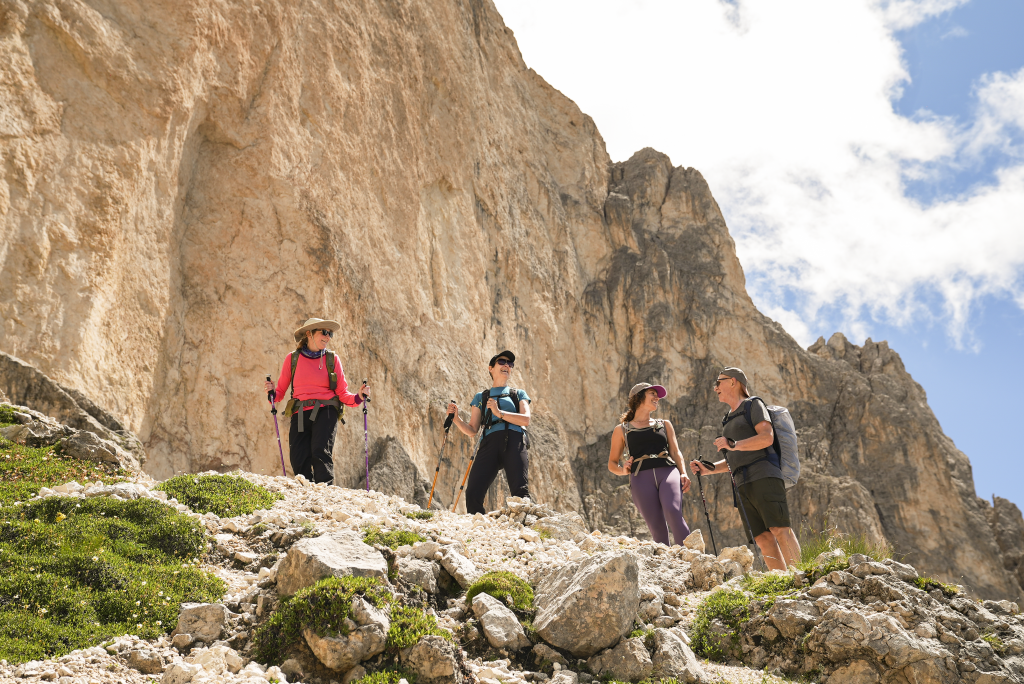
In 2009, UNESCO recognised the Dolomites as a World Heritage site for their outstanding geology and natural beauty. Unlike many mountain ranges, the peaks here are made of pale limestone that forms vertical walls, pinnacles and broad plateaus, creating a striking contrast with the green meadows below.
Hiking in the Dolomites is a richly varied experience. One moment, you’re hiking across gentle pastures scattered with wildflowers. Next, you’re beneath sheer rock faces or gazing across high plateaus with far-reaching views. Lakes such as Lago di Braies add flashes of colour, while historic sites like Monte Piana reveal a quieter, reflective side of the mountains, where First World War trenches and tunnels are now part of the landscape.
The best Dolomites hiking tours make the most of this variety, linking together the region’s natural showstoppers, ensuring each hike delivers a strong sense of place rather than simply covering distance.

Hiking in the Dolomites in summer is impressive. You’re often moving through open alpine meadows with wildflowers at your feet, while steep limestone peaks rise directly above you. The scale of the landscape is obvious from the first day.
Wildlife isn’t the main event, but it’s there. You’ll usually hear marmots before you see them, and occasionally an ibex turns up on rocky ground. Some days you’ll see very little, other days a bit more – it depends on the timing and the conditions.
Views are constant rather than occasional highlights. Many walks stay high or cross open terrain, so there’s rarely a sense of being closed in. At places like Monte Piana, hiking is combined with visible First World War remains that sit along the routes, adding context without taking over the experience.

Across the northern and central Dolomites, a network of well-marked trails links lakes, high plateaus, ridges and classic limestone peaks. Exodus trips are based in carefully chosen locations, including the Alta Pusteria Valley near Dobbiaco, Fanes-Sennes-Braies Nature Park, the Alta Badia region, and the central Dolomites.

Once you’ve seen them, you won’t forget them. The three peaks lie close to the border of South Tyrol and Veneto, rising 9,839 ft (2,999m) into the air at their highest point. They act as a focal point for visitors to the area; many choose to loop around the trio, which – aside from providing up-close views – also brings traces of First World War history: fortifications, trenches, tunnels and commemorative plaques.
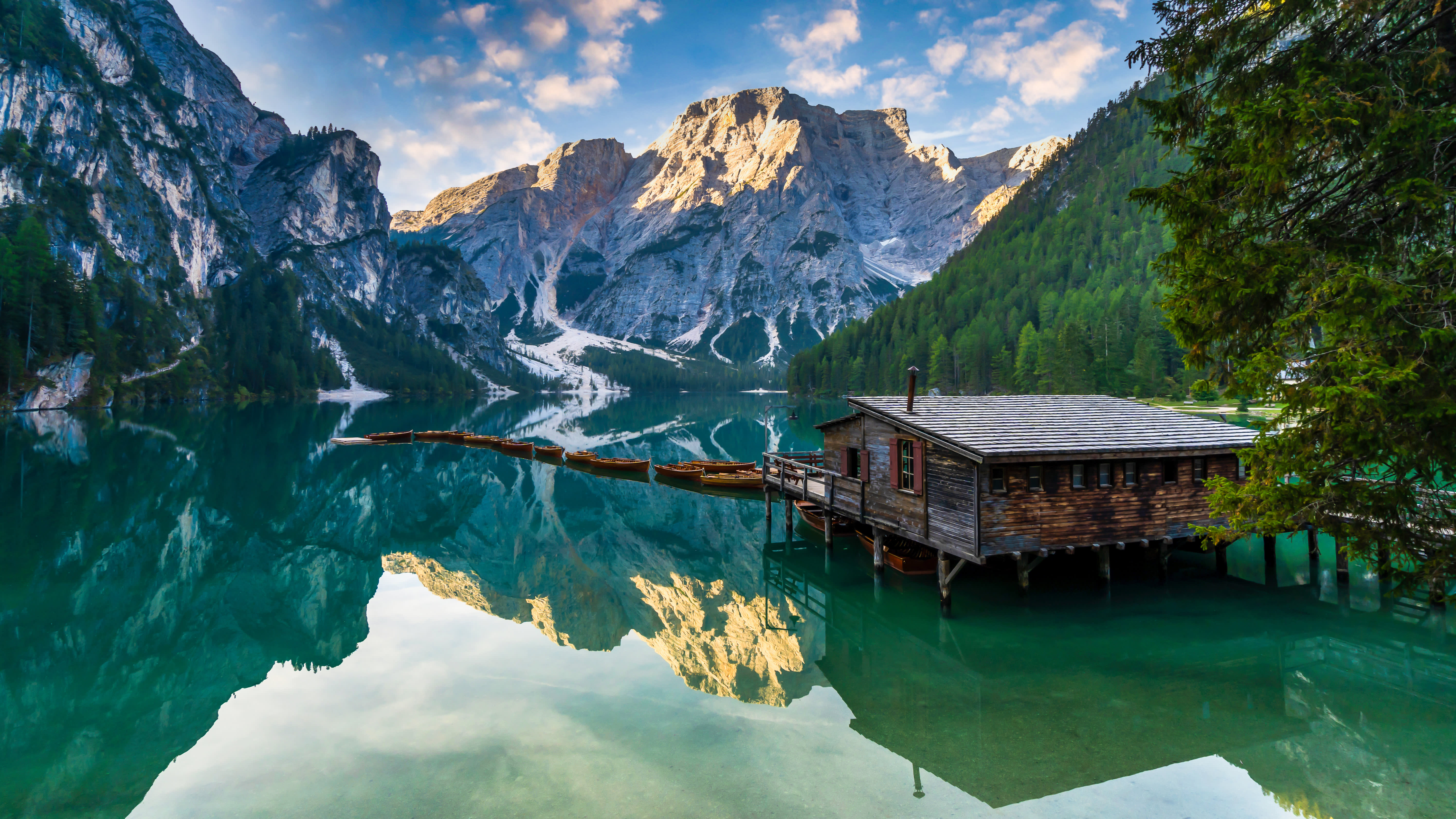
Within Fanes-Sennes-Braies Nature Park, Lago di Braies – one of nearly 450 natural lakes in the Dolomites – provides a calm contrast to jagged mountains. The often-emerald waters are known for their mirror-like surface, reflecting the dramatic spires of the surrounding peaks. The 2.5mi (4km) loop around the waters provides a relatively gentle hike, an excellent introduction to the area.

The ‘Queen of the Dolomites’ is the highest peak in the range, stretching 10,968ft (3,343m) into the sky. Climbers arrive from across the globe to tackle its rocky face, but many also make use of the cable car, which can take you to a viewing platform at 10,712ft (3,265m). Alternatively, stop at the Serauta station to visit the Museum of the Great War, one of Europe’s highest museums at 9,843ft (3,000m).

Monte Specie (in Italian, Strudelkopf in German) is one for first-time summiteers, combining an accessible route with standout panoramas at the top. Visit in summer to hike through wildflowers and stop at the Durrenstein hut for the local speciality Kaiserschmarrn (a fluffy, shredded pancake). From the summit, you can enjoy views of Tre Cime and Monte Piana on a clear day.

History and natural wonders unite on Monte Piana. Views stretch to some of the most iconic peaks in the Dolomites, including the Tre Cime di Lavaredo. However, the mountain is best known for its First World War history. Here, Italian and Austrian forces endured fierce battles for two years, leading to the deaths of 14,000 soldiers. Explore that period at the Monte Piana Open-Air Museum, located on the summit of the mountain.

Summer and early autumn, typically June through September, are the prime hiking months in the Dolomites. During this spell, most trails are accessible, mountain huts are open, and cable cars and chairlifts are operating, making it easier to reach higher ground without unnecessary strain.
Conditions do vary with altitude. Early summer can still bring lingering snow on higher paths, while September often delivers cooler temperatures and clearer air that suit longer walks. Afternoon thunderstorms are common in mid-summer, particularly in July and August, so early starts and sensible pacing matter.
Our itineraries are scheduled to make the most of these seasonal patterns, balancing trail access, weather reliability, and lift operations so days feel well-timed and unhurried.
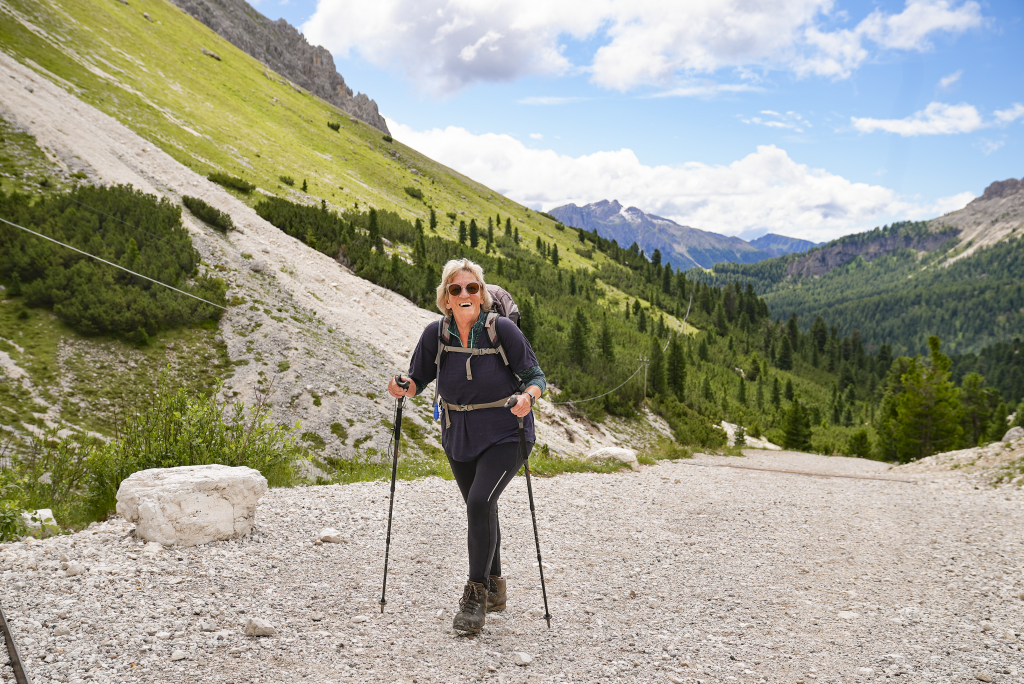
Good preparation makes a real difference on the trails. Even on well-marked routes, alpine conditions can change quickly, so it pays to pack with comfort, safety, and flexibility in mind.

Our leaders spend season after season hiking these trails, and their advice is shaped by what works day after day in the Dolomites.

Independent hiking certainly has its appeal. It offers freedom, flexibility, and the chance to move at your own rhythm. For confident planners with strong navigation skills and a good understanding of alpine conditions, it can be a rewarding way to explore.
For travellers considering guided hiking tours in Italy, this approach removes much of the guesswork and can elevate the experience. Every practical detail is taken care of, from lifts and transfers to daily route choices, so your focus stays on the hiking and the landscape around you.
Our qualified tour leaders know these mountains intimately, reading the weather, understanding trail conditions, and adapting plans to make the most of each day.
Routes are carefully selected to link the most rewarding viewpoints, lakes, and ridgelines, creating days that feel varied, well-paced, and thoughtfully put together.
Hiking in a small group also brings a sense of camaraderie that’s hard to replicate alone, with shared moments, supportive encouragement on ascents, and the pleasure of experiencing the Dolomites alongside like-minded others.
If you’re wondering what hiking in the Dolomites is really like day to day, these are the questions we hear most often. The answers below should help you picture the experience on the trail and decide whether it’s the right fit for you.
Walks generally range from moderate to challenging. Expect steady ascents, uneven ground, and full days of walking, with daily distances and height gains similar to those on the Classic and Highlights trips. You don’t need to be fast, but you should be comfortable walking for several hours at a time with breaks.
Previous hill walking experience is helpful, but technical skills aren’t required. If you’re used to walking on varied terrain and have a reasonable level of fitness, you’ll be well prepared.
Altitudes in the Dolomites are manageable for most people, and the walking is well below extreme elevation. That said, the weather can change quickly, especially at higher levels. Cool mornings, warm afternoons, and the chance of afternoon storms are all part of the alpine environment, which is why carrying layers and waterproofs is essential.
Yes. Both the Classic and Highlights itineraries include a free day built into the trip. This gives you the chance to rest, explore a local village, take a short optional walk, or simply enjoy the mountain setting at your own pace.