Walking Through Time: Japan’s Most Scenic Trails & Rural Experiences

Walk the old highways once used by samurai and merchants, follow sacred pilgrimage routes into cedar-dark mountains, and you find a more rural side of Japan, where life still moves with the seasons and local hospitality (with the occasional vending machine cameo, naturally).
Our Japan walking trips aren’t only about ticking off landmarks; they follow some of the country’s most scenic trails, travelling from village to village, shrine to shrine, and inn to inn, where the landscape and locals do the storytelling.
Why Explore Japan on foot?

Japan is made for walking, with more than 70% of the country being mountainous.
Historic routes still stitch together the countryside, and walking gives you time to notice the small, telling details: stone markers half-swallowed by moss, timber houses with old shopfronts, the hush that falls when a forest trail turns into shrine land.
Our Japan walking trips are built around this slower immersion, with carefully planned itineraries and local expertise that take you beyond the guidebooks.
And there’s a practical perk: many of the most evocative places – post towns, pilgrimage stages, onsen hamlets – make far more sense exploring on foot than hopping on and off a station platform.
Along the way, you encounter:
- Quiet rural communities where traditions endure
- Traditional inns and teahouses offering warm hospitality
- Historic temples and shrines hidden in forested hills
- Terraced fields and farming landscapes shaped over generations
It’s this slower, immersive pace that makes walking one of the most rewarding ways to experience Japan.
Nakasendo Way: The Samurai Trail Through the Kiso Valley

The Nakasendo (literally, the “Road through the Central Mountains”) was one of Japan’s great Edo-period highways, used by feudal lords, samurai, merchants and pilgrims travelling between Kyoto and Edo (now known as Tokyo).
On our Walk the Nakasendo Trail, you begin by soaking up Kyoto, a cultural warm-up act of temples and teahouses, before stepping onto the quieter Japan of the trail, finishing in Tokyo for a full-spectrum finale.
What makes this route so satisfying is how complete the experience feels. You’re not just hiking; you’re travelling the way locals used to travel, walking between towns, and letting landscapes change at a walking pace.
Expect:
- Village-to-village walking on some of the most picturesque old Nakasendo sections in the Kiso Valley (plus time in Karuizawa)
- Post towns with serious atmosphere: Magome, Tsumago and Narai are all highlighted on the itinerary
- A hit of big-history architecture at Matsumoto Castle
- A well-earned soak: our trip includes the chance to bathe in thermal waters at a hot-spring ryokan
Book your place

Walk the Nakasendo Trail
Follow the historic pilgrimage of the Nakasendo Trail, with Kyoto & Tokyo at either end of the trip
Kumano Kodo: Japan’s Sacred Pilgrimage Routes

If the Nakasendo is Japan’s historic highway, the Kumano Kodo is its spiritual backbone.
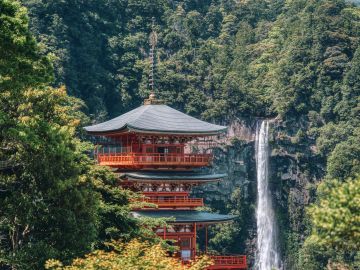
On our Walk the Kumano Kodo trip, you hike through the Kii Peninsula Mountains on an ancient network of “old ways” that have been in use for around 1,000 years. The religious heart of the region is the Kumano Sanzan, with its three major shrines: Hongu Taisha, Hayatama Taisha and Nachi Taisha.
We focus on the Nakahechi-do, a route that weaves through forested mountains and small villages to reach the Grand Shrine of Hongu, before finishing near the Pacific Ocean at Nachi Grand Shrine.
It’s a beautifully paced journey: you explore Kyoto before the walk, then finish with two nights in Osaka, ideal for decompressing in the “food capital of western Japan”.
Why it’s so memorable:

The Kii Peninsula is often described as remote and mystical despite it being surprisingly close to Kyoto/Osaka

You get cultural immersion baked into the nights, with stays in ryokans and minshuku guesthouses

You enjoy bathing in hot-spring thermal waters alongside the grand shrines and Pacific views
Discovering Rural Japan: Villages, Forests and Timeless Landscapes
“Rural Japan” can sound vague until you’re actually in it – then it becomes wonderfully specific.
On our Japan walking adventures, rural life isn’t a side quest; it’s part of the route design. On the Kumano Kodo, the Nakahechi-do threads through small villages as you move between sacred sites. On the Nakasendo, the joy is in walking between exquisitely preserved post towns, the kind of places built to welcome pilgrims and travellers.
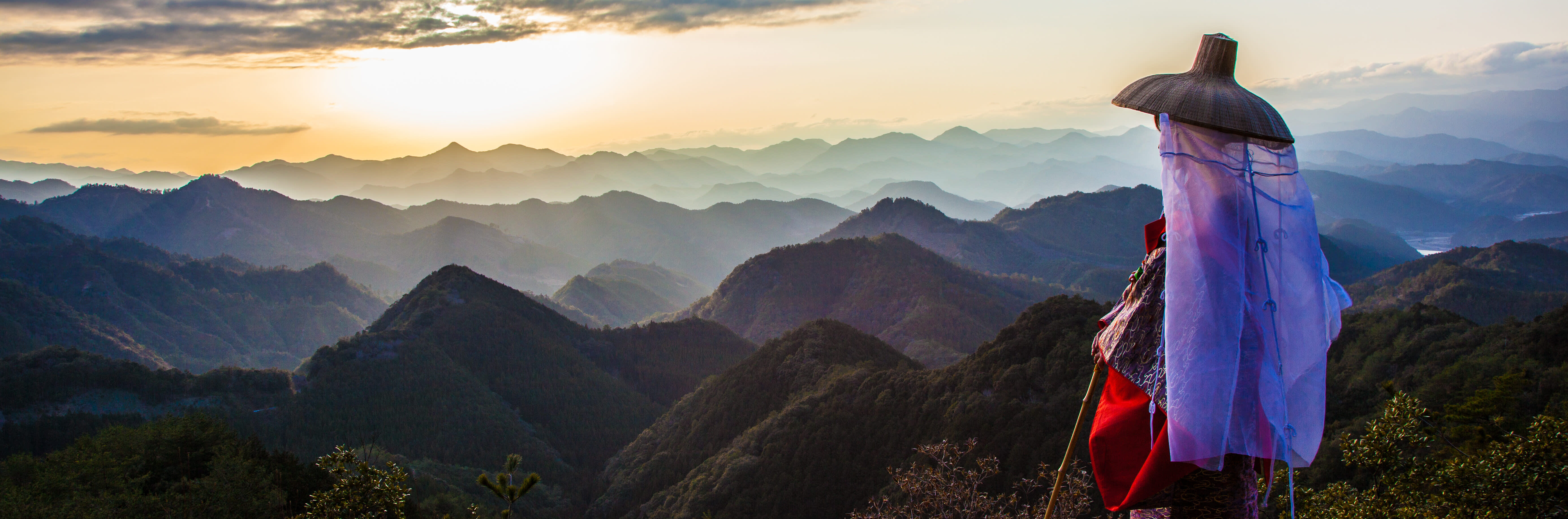
And if you want a deeper dive into walking culture, we offer the Shikoku Pilgrimage Trail, built around the most beautiful sections of the Shikoku 88 Temple Pilgrimage in Tokushima, Kagawa and Ehime. This one leans into living tradition: pilgrims still walk these routes today, often dressed in traditional garb, receiving small blessings from locals along the way.
On Shikoku, we’ve selected the most rewarding sections of the pilgrimage route and paired them with characterful stays, including shukubo (temple lodging) and traditional inns in places like Tokushima and Dogo Onsen near Matsuyama.
One detail travellers particularly love is the chance to experience Shojin-Ryori, the refined Buddhist vegetarian cuisine served in temple lodgings – a meal style that’s as much a cultural tradition as it is dinner.
Kyushu’s Volcanic Landscapes and Onsen Culture

If you’re drawn to landscapes with a little more drama, Japan’s southwest delivers.
Our Japan Adventure: Kyushu & Shikoku itinerary leans into this side of the country, with steaming onsens and walking-focused adventures. In Beppu, you’ll hike on Mount Yufu, following well-marked trails through mountainous landscapes, with routes adapted by your leader to suit the group.
Around Mount Aso, Japan’s most active volcano, we explore a selection of trails in Aso-Kuju National Park, with routes chosen depending on conditions.
On the trip, you even get to try ‘hell steam’ cooking, using natural geothermal steam to prepare your meal – a local speciality unique to the region.
It’s this kind of grounded planning that turns “volcanic Japan” from a nice idea into a trip you can actually picture: boots on, bento packed, onsen afterwards.
Book your place

Active Japan: Kyushu & Shikoku
Active volcanoes, steaming onsens, island-hopping by bike – this is Japan at its most beautiful and exciting
What to Expect on a Small Group Adventure in Japan

Japan is remarkably easy to travel in, but its complex transport networks, cultural nuances and language differences can make planning a walking journey challenging.
That’s where our expert-led small group adventures come into their own.
Travelling with a knowledgeable guide helps bring the landscape to life, whether they’re explaining the history of a samurai road, sharing local customs or guiding you to hidden temples you might otherwise miss.
Small group travel also makes it easier to access remote regions and rural trails, where logistics can be more complicated to navigate independently.
Typical advantages include:
- Expert local guides with deep cultural knowledge
- Carefully planned walking routes and itineraries
- Seamless transport between destinations
- Opportunities to stay in traditional accommodation
Our groups are intentionally small, from 8-16 travellers, creating a relaxed atmosphere where you can share the experience with like-minded adventurers while still enjoying plenty of personal space.
When preparing for a walking holiday, it’s worth keeping a few essentials in mind:
Practical Tips: When to Go, What to Pack and How to Prepare
Japan is a fantastic walking destination throughout much of the year, although certain seasons offer particularly memorable conditions.
Spring and autumn are widely considered the best times to walk, thanks to comfortable temperatures and beautiful scenery.

Spring (March–May)
Cherry blossom (Sakura) season transforms landscapes with soft pink blooms, especially around temples and rural valleys. Many locals celebrate with hanami – picnics beneath the blossoms – as petals drift along rivers and village paths.

Autumn (September–November)
Mountain forests glow with red and gold foliage during Momijigari season, making it one of the most scenic times to explore Japan’s trails. The word ‘momijigari’ literally means “maple hunting”, a tradition of seeking out the most spectacular autumn colours.
When preparing for a walking holiday, it’s worth keeping a few essentials in mind:
- Comfortable walking boots or trail shoes
- Lightweight layers for changing weather
- A waterproof jacket
- Daypack for water and essentials
Japan is also known for its respectful etiquette. In traditional accommodations, you may often be asked to remove shoes, keep noise low, and treat shared spaces (including bathing areas) with respect. You don’t need to memorise a rulebook, just follow your guide’s lead.

Your most memorable moments in Japan often happen between the headline sights: a lantern-lit post town at dusk on the Nakasendo trail, a cedar forest opening onto a shrine on the Kumano Kodo, a quiet temple stay on Shikoku, or steam rising into mountain air after a volcanic hike. That’s where walking in Japan truly comes to life.
Discover Japan one step at a time on our expert-led small group walking adventures.