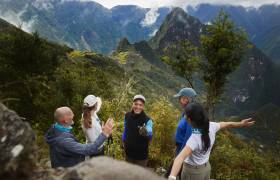
Are Guided Adventure Holidays Worth It? 7 Reasons to Give One a Go

There are holidays where the main challenge is deciding whether to order another drink by the pool. Adventure holidays tend to ask a little more of you.
They’re not always about scaling mountains or testing the limits of your endurance, but they could mean pulling on hiking boots, getting back on a bike for the first time in years or simply exploring somewhere new.
So, are guided adventure holidays worth it? If you want to experience a place rather than simply visit it, we think there’s a very good case for saying yes.
Travel with Exodus and you get the local expertise of our tour leaders, the satisfaction of doing something yourself and people to share it with, while much of the planning is taken care of. They’re not always the most restful holidays, but that’s rather the point.
Intrigued by an adventure holiday? Read on.
What Type of Adventure Holiday Should You Choose?
First question: what would you happily spend several days doing?
Walking holidays might put you on the Path of the Gods on the Amalfi or the Inca Trail. Cycling holidays can get you off the tourist trail and onto the backroads. Choose wildlife and knowing where to look becomes part of the expertise; choose a cultural adventure and the experience might happen around a market stall or in the kitchen with your hands dusted in the dough. And if choosing one sounds unnecessarily restrictive, there are mixed-activity adventures too.
Read more: How to Choose a Cycling Tour: 6 Essential Tips from Our Top Guide
What is an Adventure Holiday?
An adventure holiday is a trip built around doing, not just looking.
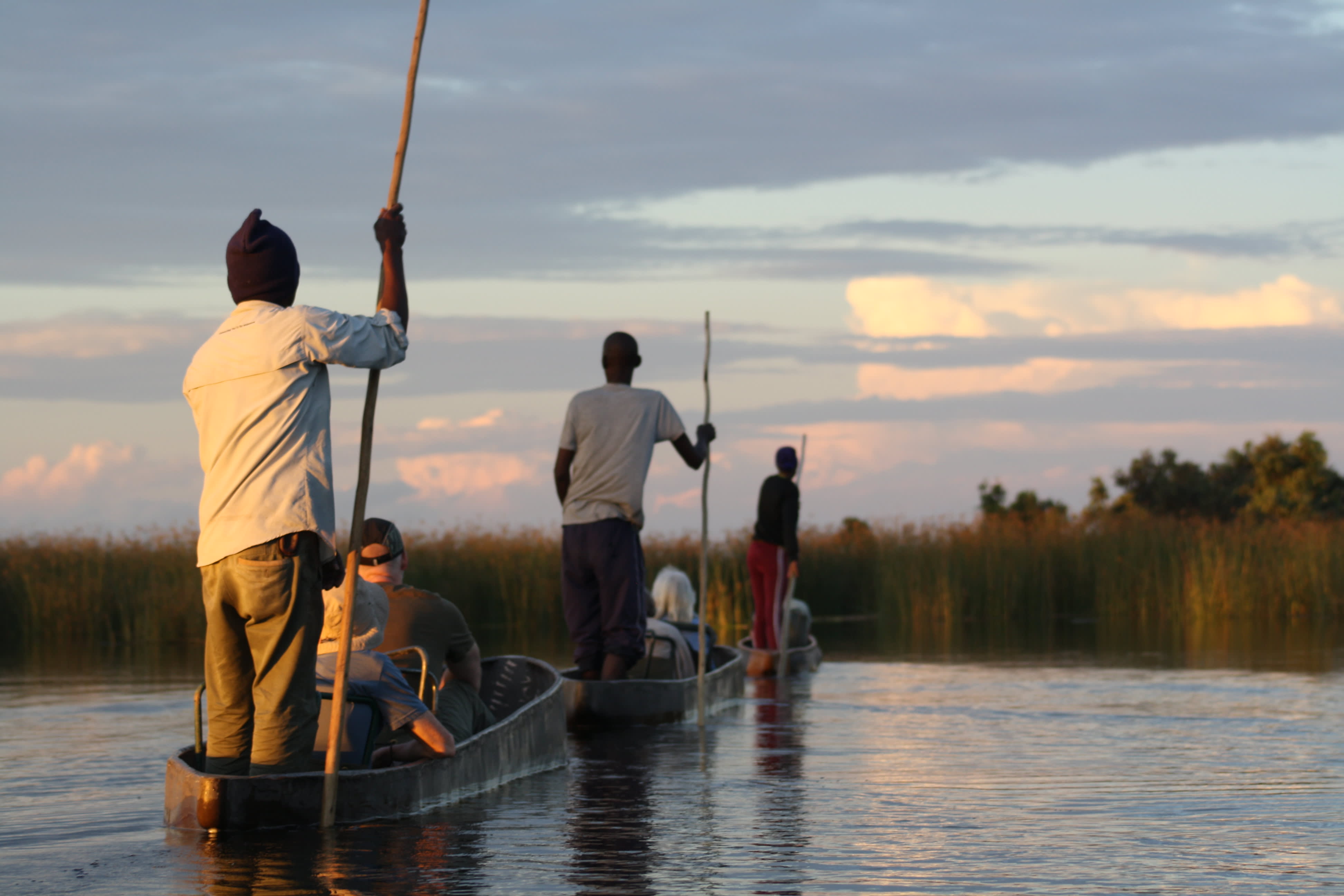
For us, that could mean hiking the Dolomites, tracking wildlife in Botswana’s Okavango Delta or learning to make pasta with a local family in Italy.
You’re part of what’s happening, rather than watching it through a window.
Why are Guided Adventure Holidays Worth it?
1. The best bits aren’t always the ones on the map
The Path of the Gods deserves its name. Pompeii needs little introduction. But on our Walking the Amalfi Coast adventure, you also return each evening to Bomerano, an alpine mountain village high above the coast, where the long-standing family-run Hotel Due Torri has been welcoming Exodus groups for years. It’s the kind of place where staying put for the week means you get to know more than just the walking trails. And a spot you’d likely not have wandered into on your own.
2. A local guide knows more than the route
Our leader in Peru, Edwind Colque, calls the Andes “part of my body, part of my heart.” Vietnam leader Nguyen Van Lam says, “This is the Vietnam I want to share.” On the Amalfi Coast, Veriano Verde wants travellers to see his home “with my eyes.”
That’s the difference between knowing a route and knowing a place.
3. You find out what your version of adventurous looks like
Achievement is personal.
It might be your first night in a tent, your first point-to-point trek or finally making it up the hill everyone was talking about at breakfast. For somebody else, that same hill is merely the warm-up.
And sometimes adventure isn’t about pushing harder at all. You might want to spend longer getting to know a place, add a few more comforts at the end of the day or mix gentle activity with plenty of good food and local culture.
4. A full day can still clear your head
When you’re watching your footing on a mountain trail, looking for a leopard in the undergrowth or concentrating on the next bend on two wheels, there isn’t much room to think about what’s waiting back at your desk or at home.
And a day full of adventure doesn’t mean every minute of your holiday needs filling either. There can still be time for a long lunch, a quiet afternoon or simply putting your feet up before tomorrow’s adventure.
5. The introductions take care of themselves
Joining a group of strangers can feel daunting. Then somebody takes a wrong turn or dinner turns into a debate about who ordered the best thing.
That’s the useful thing about travelling in a small group: you don’t have to work particularly hard at getting to know each other. The days give you plenty to talk about.
Read more: 7 Reasons Why Small-Group Adventures Are the Best Way to Explore
And if you’re travelling solo, you can arrive on your own without having to experience everything that way.
If joining a group for the first time feels like the bigger adventure, our guide to what to expect on your first small-group adventure explains what it’s actually like.
6. You get the adventure, without all the faff
A good adventure should contain surprises. Discovering you needed to arrange a permit three months ago is not one of them.
We’ve been working out details like these since 1974. Sometimes expertise looks like a beautifully paced itinerary. Sometimes it looks like your bag arriving before you do and dinner appearing while you’re still wondering how your legs carried you over the last pass.
7. Where you travel matters. So does what you leave behind
On our Everest Base Camp Trek, travellers can visit the Sagarmatha Next Experience Centre to see how people in the region are tackling the waste problem. The Exodus Adventure Travels Foundation also supports Himalayan communities through its Himalayan Community Project.
Across our adventures, we work with local leaders and locally owned accommodation, restaurants and suppliers where possible. Exodus is also a certified B Corp, with our social and environmental performance, accountability and transparency assessed against B Lab’s standards.


What are the possible drawbacks of an adventure holiday?
We’re fans, obviously. But even the right adventure can involve moments when you wonder why breakfast needed to be quite so early.
Don’t expect every morning to start slowly
Some trips involve early starts, long days outside and more than one hotel key.
A trek, safari or wildlife-watching day may need to work around the terrain, weather or animals rather than your preferred breakfast time. Others leave plenty of room for a slow afternoon.
Getting the Activity Level right matters
“Walking holiday” can mean a gentle coastal path or consecutive days trekking at altitude. Same boots. Very different week.
Look beyond words such as “moderate” or “challenging.” Check the daily distance. Check the ascent. Look at the terrain and how many active days come one after another. Speak to our amazing team on the phone – they can help you find the perfect adventure for you.
And don’t rule yourself out because you’re new to it. Your first adventure can be a gentle walking trip. Nobody says you have to begin with Everest.
Things change
Mountain paths close. Seas get rough. Wildlife remains stubbornly wild.
Sometimes the route changes. That’s when having somebody who knows the mountains, coast or wildlife beside you really counts. Because sometimes Plan B turns out to be even better than the itinerary.
Group travel, even small group travel, always involves some compromise. There are meeting times, a planned route and other people whose holiday matters too.
In return, you get the guide, the support and a group of new personalities to share it with.

Who are Adventure Holidays Best Suited to?
An adventure holiday could be for you if you:
- would rather explore than spend most of the week beside the pool
- want to understand more about the culture, nature and everyday life around you
- enjoy being active, even if “athlete” is not a word you’d use to describe yourself
- like the idea of somebody local showing you around
- want other people to share the experience with, particularly if you’re travelling solo
- get a kick out of trying something new or achieving something along the way
Beginners are very welcome. The important question isn’t whether you’re “adventurous enough.” It’s which adventure suits you.


How Do You Choose the Right Adventure Holiday?
Don’t choose the trip that sounds most adventurous. Choose the one you’ll actually enjoy doing.
A few things we’d check before booking:
- Don’t just read the highlights. Read the itinerary. The Taj Mahal or Machu Picchu may have caught your eye, but the day-by-day itinerary tells you what your holiday will actually feel like. Look at the pace too: is every day full, or is there time to wander off for lunch?
- Ignore the heroic version of yourself for a moment. Check the distances, ascent, terrain and consecutive active days. Our Activity Level guidelines are there to help you choose well, not to judge you.
- Check how many people you’ll actually travel with. Group size matters when you’re walking a narrow trail, piling into a local restaurant or trying to hear your guide. That’s why we like small-group travel.
- Find out what’s already sorted. Permits, transfers and luggage can be remarkably uninteresting until nobody has arranged them. Check the accommodation too, so you know what will be waiting at the end of the day.
- Look at who will be showing you around. “Local guide” should mean more than somebody holding the clipboard. Our guides have a genuine connection to the destination.
- Read what recent travellers say. They’re very good at revealing whether the reality matches the itinerary, and have heaps of tips to share.

The verdict: are adventure holidays worth it?
Yes – if you choose the right one.
Worth it might mean hiking with your local leader into Voru, a remote mountain village in Tajikistan, then sitting down to eat with a local family and learning what life there is actually like. Or paddling Sardinia’s coastline to reach little coves and secret grottoes you’d never see from the road.
There may be an early alarm or two.
We think the view is usually worth getting up for.