On the Tuscan Truffle Hunt: Dogs, Tradition and Buried Treasure
No one can predict exactly where one will emerge. No truffle hunter can guarantee finding one, which is precisely why the search is so addictive. “It’s unpredictable,” says Massimo. “We know the season. That’s it.”
Finding one requires years of knowledge – and dogs, very good dogs.
Officially, Massimo leads the experience. Unofficially, “the dogs are the superstars of the show,” he says with a smile.
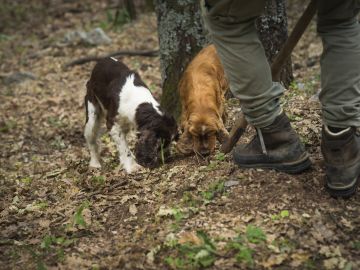
There’s Mela, the 10-year-old veteran with what Massimo describes as “the best nose I’ve ever seen in my life. She’s brilliant.” Then there’s Geo, her brother. ” He’s focused, very professional, a true gentleman.” As for Bice? “She loves to eat truffles,” he says, laughing. “So I need to be very quick.”


When guests watch Massimo work with his dogs, it’s impossible not to notice the understanding between them. They don’t need commands barked across the forest. Instead, they communicate through small gestures, familiar routines and years of shared experience.
He reads their movements the way other people read maps. A flick of an ear. A change in pace. The slightest movement of a tail.
The dogs never bark to indicate that the truffle is there. Their clues are far subtler than that. Part of the magic is learning how to see them, Massimo explains.
Experience a truffle hunt on:
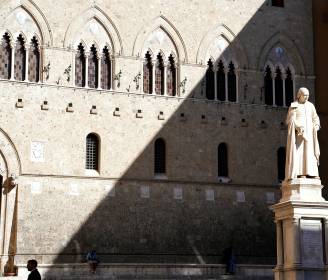
Signature Italy | Allure of Renaissance Tuscany
And perhaps that’s why his guests leave talking about the dogs as much as the truffles themselves. After all, truffles may be the treasure hidden beneath the forest floor. But Mela, Geo, and Bice are the reason the hunt feels like an adventure.
Training a truffle dog isn’t quick.
The first year is spent largely in the yard, building trust and teaching scent recognition through games. Only then do dogs graduate to the forest. Summer black truffles come first. Then winter varieties. Then spring whites. Only after several years of experience do they tackle the ultimate challenge. “The white truffle is the final examination.”
Like people, every dog learns differently. Some progress quickly. Others take longer. “You become a truffle hunter over a lifetime,” Massimo says. The same, it seems, applies to dogs.
What surprises many visitors most is not the truffles themselves, but how little they actually knew about them beforehand.
Many arrive believing they love truffles. Then Massimo delivers a gentle reality check. “Truffle oil? Usually synthetic. Truffle fries? Rarely made with real truffles.”
Many of the products people associate with truffles contain flavor compounds designed to mimic the aroma rather than the ingredient itself.
“The first thing I do is destroy some dreams,” he jokes. Then he takes guests into the forest. By the end of the day, he says, the reaction is almost always the same. “Oh my God. This is completely different.”
The real thing is more subtle and complex. Less about intensity and more about nuance. You don’t really understand truffles until you’ve smelled one freshly unearthed from the soil.


Then comes the best part: the tasting. This happens at the family table, with his sister Letizia as the head chef. Cooking has always been her way of unwinding. “When she was little and had a bad day at school, she’d come home and start cooking,” says Massimo.
Fresh pasta arrives first, then eggs and other traditional dishes designed to showcase truffles in their simplest form. All using seasonal ingredients, nothing complicated.
“The king of the dish should always be the truffle,” Massimo says.
For dessert? Truffle chocolate. It’s a family recipe Letizia developed herself and one that initially raised eyebrows.
“Nobody believed in making something sweet with truffle,” says Massimo. Guests are often skeptical too.
The chocolate always arrives chilled. People take a bite. A few seconds pass, the chocolate warms on the tongue, then the aroma blooms. And suddenly, as Massimo puts it: “It’s like a truffle explosion.”
Everyone may leave with a different favorite dish, but they leave with the same feeling – a connection that binds them. In Massimo’s eyes, they become “truffle ambassadors”, carrying the story of San Miniato far beyond Tuscany.

After welcoming travelers into his family’s world for nearly two decades, he now has friends scattered across the globe.
He laughs while telling the story of a recent trip to New York. His wife posted a photograph online. Within the hour, messages started flooding in: “Are you in New York?”, “Do you want to meet for lunch?”, “ How about a quick dinner?”
The thought still makes him smile.” We have friends everywhere now.”
When asked what his grandfather would think of visitors walking through these forests today, Massimo smiles and says, “My grandfather was a person who, if you came into my house and asked a question about truffles, he could speak for two days. I think he’d be proud of what we’re doing here in San Miniato.”
The trees have changed little. The truffles remain hidden beneath the soil. And somewhere between the excitement of the hunt and the warmth of the family table, people begin to understand why this tradition matters.
And another truffle ambassador is created.
Not because of what lies beneath the ground, but because of what has been passed from one generation to the next.
As Massimo puts it: “Every day that we share our tradition, we protect our tradition.”
Meet a family like Massimo’s and get a taste of Tuscany’s truffle-hunting tradition on our Signature Italy: Allure of Renaissance Tuscany adventure.