Is Bosnia & Herzegovina Europe’s Most Surprising Hiking Destination?

I didn’t know what to expect from Bosnia & Herzegovina, but this wasn’t it. At my feet, a glass-clear river flows over lush water mosses, which bend to a current from a lazy wooden waterwheel. Beyond, a stone bridge stretches from one riverbank to another, connecting beautifully bricked, terracotta-tiled buildings clustered beneath rolling hills.
With the summer sun glinting off it all, it’s a scene worthy of Disney. In reality, it’s Trebinje, Bosnia’s southernmost burg, and a pocket idyll just 18mi (30km) from Croatia’s superstar city, Dubrovnik.
According to my Exodus tour leader Samer Hajric, my surprise is not unusual. “For a lot of people, the memory of Bosnia is from the news of the ‘90s – or that’s mostly what’s online today.”
I’m not alone in my reaction. As my small group settles in for lunch at Restaurant Platani in Trebinje’s sun-dappled Freedom Square, we echo each other’s thoughts aloud: ‘how pretty’, ‘how quiet’, ‘how peaceful’.
The hour-long drive from Dubrovnik Airport to Trebinje had provided a glimpse of what was to come on this nine-day Walking in Bosnia & Herzegovina tour. After leaving the glittering Adriatic behind us, our route inland followed winding roads past vineyards and sloping farm fields.
View Ally's itinerary:

Walking in Bosnia & Herzegovina
Explore the natural beauty and intriguing history of Bosnia
The deeper we went, the wilder it became. Traffic lessened, buildings thinned out, and lush trees and foliage began to dominate the landscape. From the driver’s seat, Samer shared that 60% of the country is classified as hillside or mountainous terrain, and 50% is “completely under forest”.
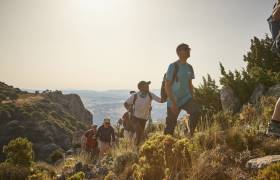
Back in Trebinje, he continues espousing Bosnia’s adventure credentials while tucking into veal ‘under the sač’ (meat and potatoes cooked under a domed clay hat). “In all my years guiding, one thing people appreciate is that the mountains here are very attractive and there aren’t many people around. People say it’s hard to believe peaks like this exist in Europe which aren’t overcrowded. You can be here for seven days and hardly see anyone except the occasional shepherd.”
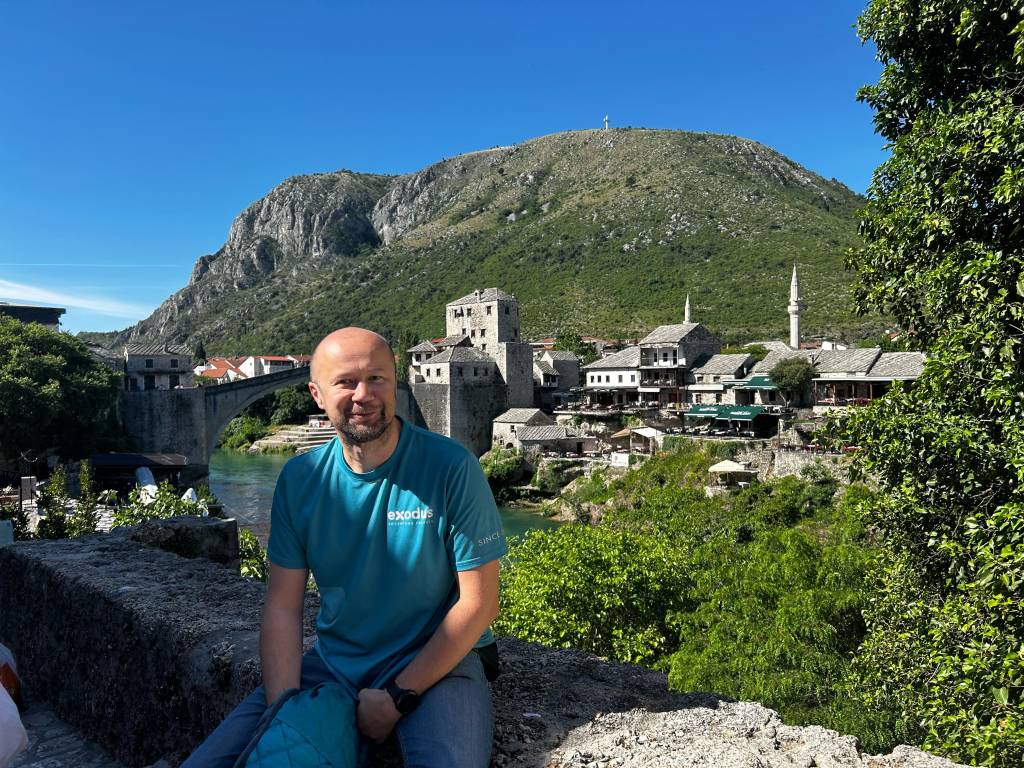

It’s a bold statement, but coming from someone with 20 years’ experience, whose goal has been to show outsiders that Bosnia is a European hiking haven, I’m inclined to believe him.
The next day we drove up past the 2mi (3km) long Lake Vrba en route to Sujetska National Park. Established in 1962, it’s the oldest national park in the country and home to its highest peak, Maglić (7,828ft/2,386m), and Perućica, one of two remaining primaeval forests in Europe. Locally, it’s better known as the site of one of Yugoslavia’s most brutal World War Two battles: the Battle of the Sutjeska.
My group clusters around the base of the Sutjeska Monument – a striking concrete structure depicting jagged arms reaching to the sky, whose facades are carved with cubist faces. As sombre clouds roll in, Samer recounts a story in which more than 7,500 Yugoslav partisans lost their lives trying to escape Axis forces.
“You can be here for seven days and hardly see anyone except the occasional shepherd ”
Hearing the tale from someone whose relatives lived through it was a supremely moving experience, and I vowed to read Samer’s suggestion of The Embattled Mountain by a British SOE officer, William Deakin, who parachuted behind enemy lines to report on the Yugoslav resistance.
It stayed on my mind as we drove into Sarajevo later. While the city effused the upbeat atmosphere of a diverse and vibrant capital, it still bore the scars of a fight long since over. Bullet-pocked walls merged with modern structures, forming a web of streets mapping the basin floor beneath the four ‘Olympic Mountains’ of Trebević, Jahorina, Bjelašnica and Igman.
After a hotel bag drop, we were whisked a kilometre into the sky via a swinging cable car, traversing the lower slopes of Trebević in just nine minutes to begin our hike through its forested face. Though still within sight of the city, I already felt a world away.
The moist bark of spruce and deciduous trees marked our route up an incline where every step was taken with care, lest we crush a yellow-shelled grove snail or obstruct a determined salamander’s voyage through the undergrowth.


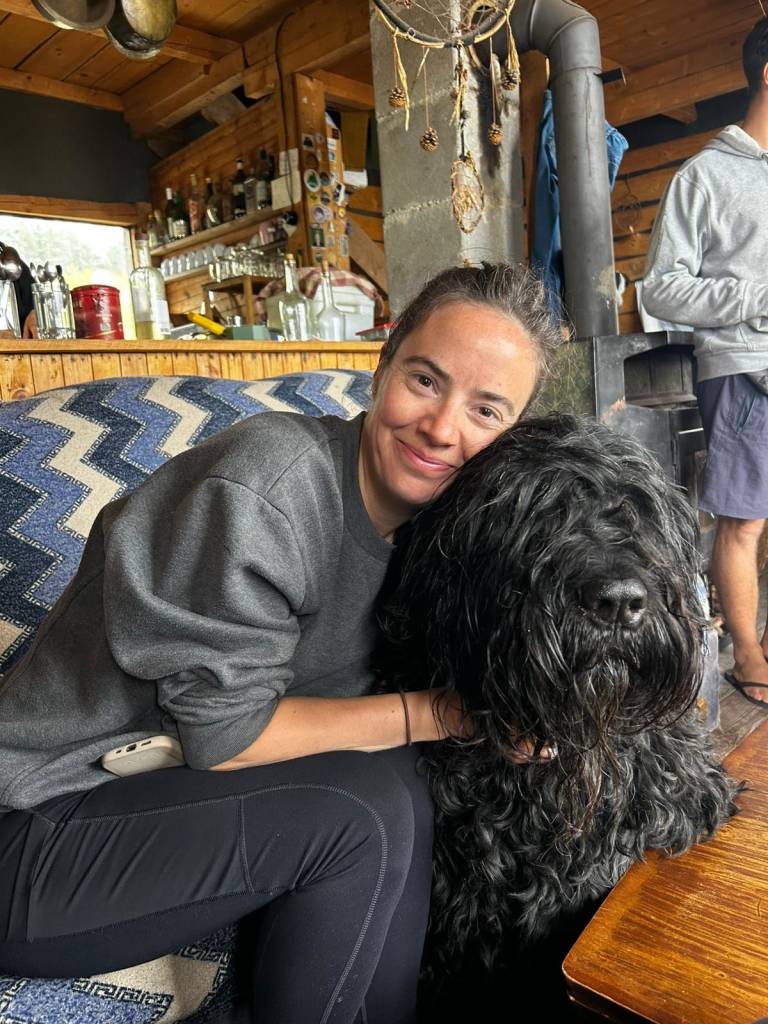
After an hour of hiking accompanied by bird song and scrabbling black squirrels, the trees opened up to a grass-covered plateau, dropping off to a breathtaking valley below. Perched on the plateau’s edge was Jure Franko, referred to as a ‘hut’ by Samer, but whose log walls, soup-infused scents and enormous Russian terrier, Dexter, sported vibes wholesome enough to challenge Oaken’s cabin in Frozen.
We flopped gratefully onto the generous sofas, sipping mountain tea (a never-quite-the-same infusion of herbs, cloves and cinnamon) and slurping white bean soup while engrossed in Slovenian owner Primoz’s account of the hut’s origin story – one of shunning the daily grind in favour of a return to nature.
On the way back, a short detour took us past the 1984 Winter Olympic luge tracks, which today serve as a multicoloured canvas for street art, rounding off a nearly 6mi (10km) hiking circuit. We refuelled that evening in Sarajevo’s Old Town with a dinner of veal goulash, roasted red peppers and Sarajevsko pivo (a locally brewed beer).
“Though still within sight of the city, I already felt a world away ”
The nourishing flavours of Bosnian cuisine were an unexpected highlight for me. After a hike across the moist floors of Studeni Potok’s valley the next day, I tucked into a warming pita pie – a cheese, oil and potato flour roll looped into a pan and cooked in a woodfire oven. It was owner Narsid’s antidote to the cooler climes we’d found ourselves in: the highest living community in the country, Lukomir.
A place where only ‘the post comes regularly’ and snow drifts stick around until July, Lukomir was a captivating collection of metal-roofed houses, shaggy sheepdogs and shawled women selling hand-woven wools.

Perched on the edge of the Rakitnica Canyon, 4,905ft (1,495m) up the Bjelašnica Mountain, its mist-shrouded peaks felt like something out of Norse mythology rather than the modern-day Balkan Peninsula.
The Monaco-worthy chicanes of the Bosnian hillside brought us back down to earth, the roughly 4,710ft (1,435m) descent taking us deep into the Mostar basin, which houses both the historic Mostar city and a microclimate Samer’s uncle likes to call ‘two Celsius below hell’ (though we all quite enjoyed the balmy temperatures after the bracing mountain mist).
Here, a guided tour took us past a panoply of architectural styles – Ottoman, Mediterranean and European – as well as inside traditional Turkish houses.
This area, together with the iconic Stari Bridge, was completely destroyed during the 1990s conflict before being painstakingly rebuilt and reopened in 2004, earning UNESCO World Heritage status. It was easy to see why. Mostar was unlike any other city I’d visited: the blend of architectural styles, set among the narrow streets of a town cradled by green hillsides and divided by a fast-flowing river, gave it a beauty and character unlike anywhere else.
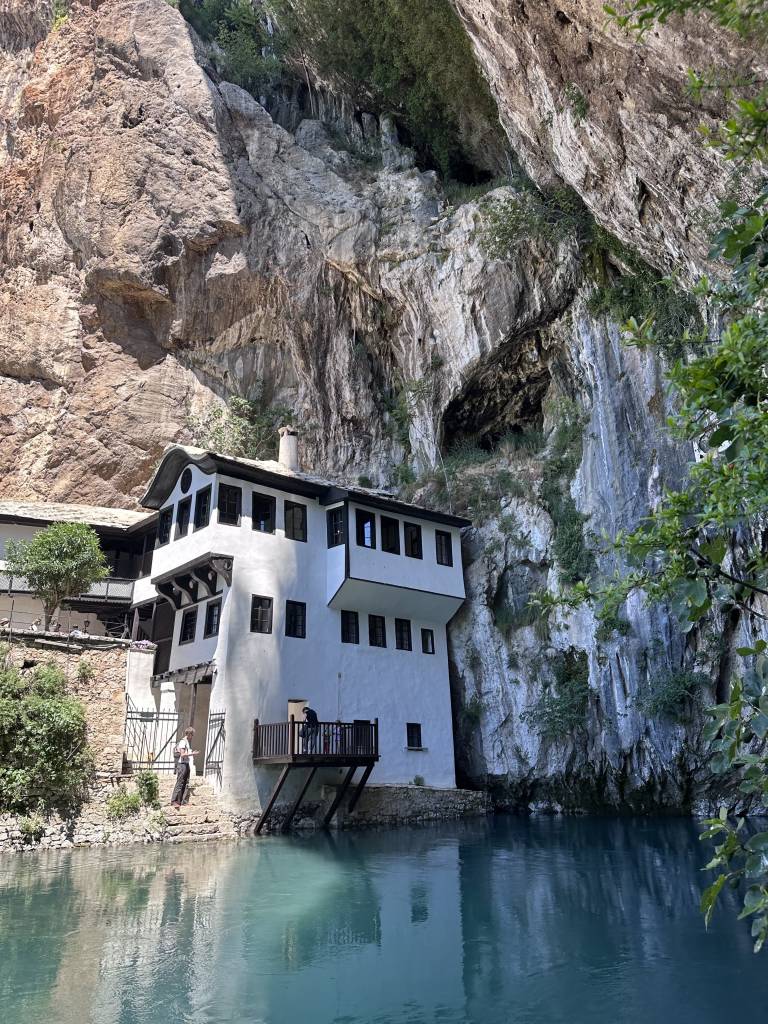
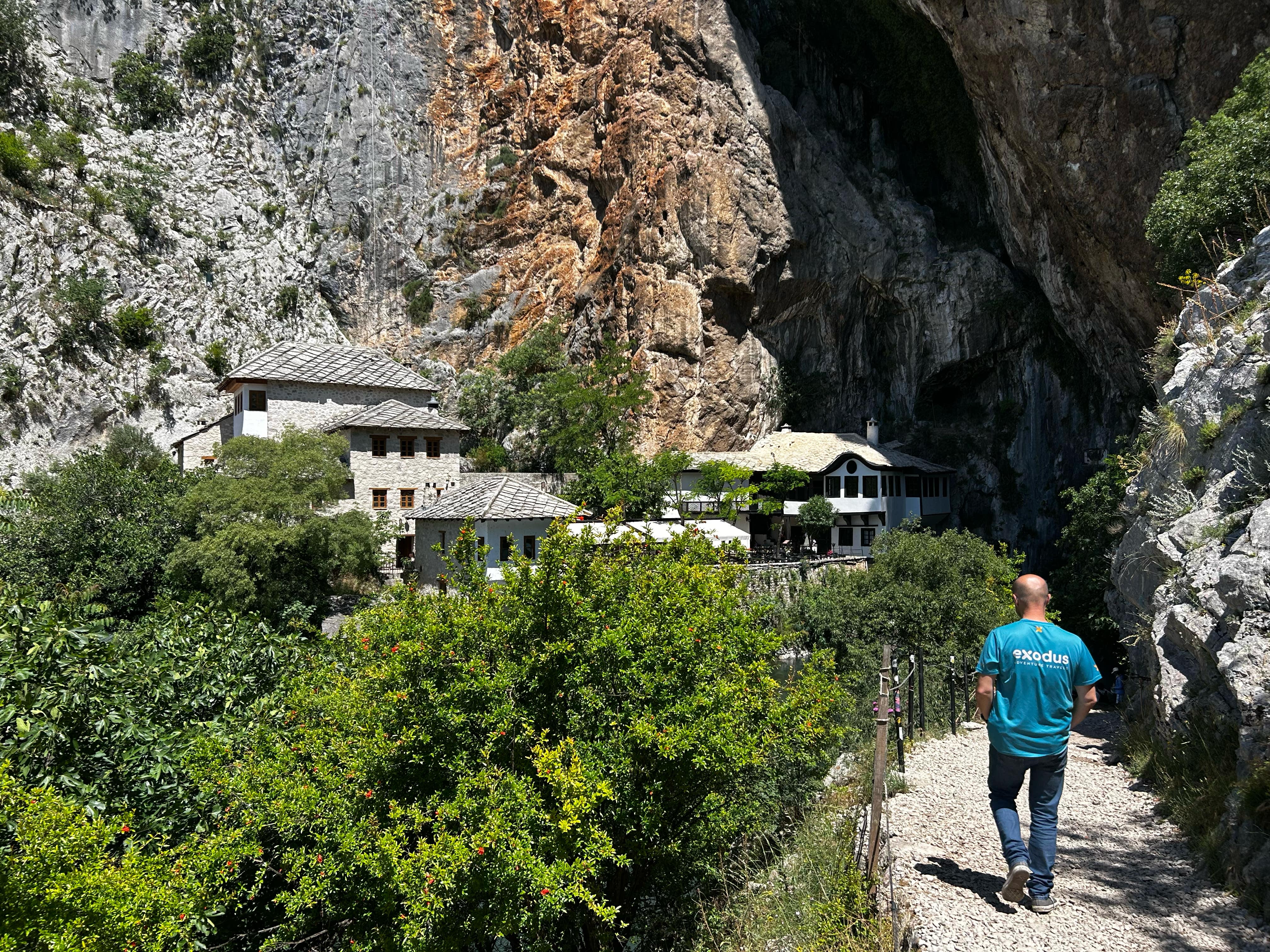
By the end of the trip, the impact left on me was profound, something I credit in large part to Samer. While the majesty of Bosnia spoke for itself, without my guide, I wouldn’t have understood the significance of Sarajevo’s history, discovered that most of the food here is organic (the terrain doesn’t allow for large-scale agriculture) or ventured off-piste to marvel at the majesty of the Blagaj Tekke monastery clinging to a cliffside.
I was left wanting more, as if I’d tasted a spoonful of rich gulaš then been deprived of the bowl. I knew for certain I’d return to hike the Via Dinarica, the nearly 1,245mi (2,000km) long trail along the Dinaric Alps and Sharr Mountain Range, and explore the expansive cave systems lurking underground. Bosnia had shown its true colours to me, and I’d found them blinding.