


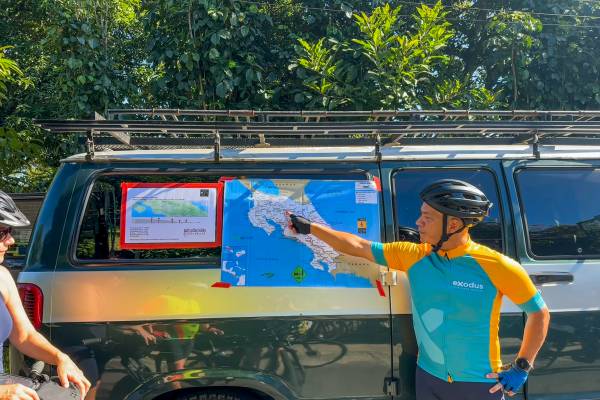


Cycling is a fantastic way to explore a destination, but it does carry risks. We have created a Safe Cycling Guide providing advice on how to stay safe on your bike. Helmets are mandatory on our guided cycling trips, so please remember to bring your own helmet.
Some itineraries include one or more nights over 9,845ft (3,000m), where there is a genuine risk of being affected by acute altitude illnesses. Most people experience mild symptoms such as headaches, shortness of breath or difficulty sleeping. Our leaders are trained to identify severe symptoms, and if extra care is required, arrangements such as a rapid descent will be made.
We have an Altitude Safety Guide that provides information about travel at altitude and advises you on how to stay safe.
Our itineraries are informed by the Wilderness Medical Society (WMS) Guidelines for the Prevention of Altitude Illnesses and are designed for adequate acclimatization. Due to terrain or logistical factors, there may be nights where the sleeping altitude gain is more than 1,640ft (500m), increasing the risk. The WMS highlight that because the rates of acclimatization and physiologic responses to high altitude vary considerably between individuals, the recommendations given, although generally effective, do not guarantee successful prevention. Participants should be aware of the inherent risk posed by altitude.
Certain medical conditions and medications can impair acclimatization, increasing susceptibility to acute altitude illnesses. Those with pre-existing heart or lung conditions, a history of altitude illness, or concerns about overall physical ability, should consult their doctor before booking. Diamox (acetazolamide) may aid acclimatization in some individuals; speak with your doctor to determine suitability, side effects, and obtain a prescription. Please note, while we endeavor to assist all our customers in achieving their goals, there may be times when a leader decides to delay or stop someone’s ascent if their condition requires it.
Many of our Nepal treks involve domestic flights to reach the trekking areas. Nepal’s mountainous terrain is subject to changeable weather, which makes flying conditions complex and challenging. Unfortunately the country has a significantly higher rates of aviation incidents – including fatalities – than many others.
The EU has highlighted the poor safety record in Nepal by including all Nepalese-registered airlines on the EU banned list, which prevents them from flying in EU airspace. While no Nepalese-registered airlines currently fly within the EU, the EU instigated this ban to highlight the risk of flying in Nepal to EU citizens.
Nepalese airlines are unlikely to be members of any internationally recognized safety audit systems and the Civil Aviation Authority (CAA) of Nepal does not operate to the same standards as those of Western nations.
Flying within Nepal is therefore a known risk, and we strongly encourage you to consider this carefully before booking.
To mitigate risk, Exodus arranges for independent air-safety auditors to visit Nepal annually to assess local carriers. We only use those approved through this process. In emergencies, helicopter transport may be required, and we maintain a list of approved helicopter carriers as well.
If concerns arise regarding the safety of any airline on our approved list, we remove the carrier from the list immediately; it would only be reinstated once our air-safety auditors are confident the airline meets acceptable safety standards.
We understand that flying within Nepal may raise concerns, so we ask that you consider all the information above before booking a Nepal itinerary.
The EU has introduced restrictions on all Tanzanian-registered flight operators. These restrictions are related to operational compliance by the Tanzanian Civil Aviation Authority, rather than to individual airlines themselves.
While domestic flying in Tanzania requires careful consideration, we want to reassure you that Exodus only works with Tanzanian carriers that are either accredited by internationally recognized safety auditing bodies (IOSA & ISSA) or have been approved by our independent aviation safety auditors. Independent audits include annual on-the-ground visits to carriers based in Tanzania. If any concerns arise about the safety of an airline on our approved list, we will immediately remove it from our operations and only reinstate it once our air-safety experts are satisfied that it meets the required standards.
