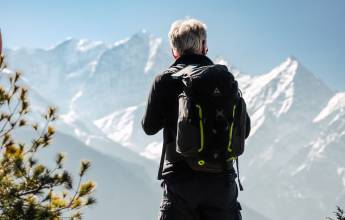
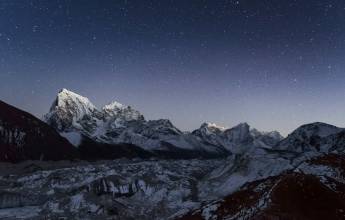
Embark on a circular trek via the Gokyo Lakes, crossing the Cho La pass to Everest Base Camp
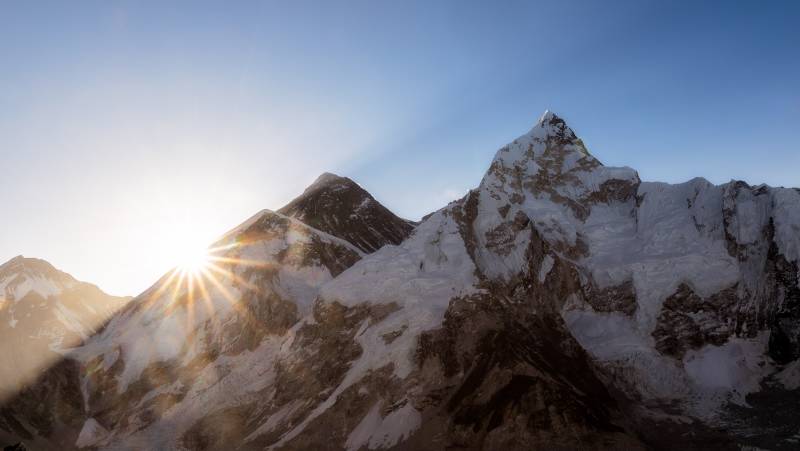
This circular Everest Base Camp trek explores the heart of the Sherpa homeland, from Namche Bazaar to the Gokyo Valley, crossing the glaciated Cho La pass and onto the classic route to Everest Base Camp used by the great climbing parties. Allowing ample time for acclimatisation, we can explore this high mountain wilderness, the quieter Gokyo Valley plus the main Everest trails. Our goal is Everest Base Camp on the Khumbu Glacier with the chance to climb Kala Pattar (18,192ft/5,545m) for fabulous close-up views of Everest.
Why trek with Exodus?
One of the highest staff-to-traveller ratios on the trek with one staff member to every four travellers
More than 30 years’ experience organising treks in Nepal
Carefully planned ascent rates and itineraries with built-in acclimatisation and contingency days
We beat the Everest crowds by rising early, avoiding foot traffic on the trails and getting into the next teahouse early for hot showers
Established protocol for Lukla flight delays
Exodus annually commissions independent air-safety audits on domestic carriers in Nepal and only use those approved as part of the audit
Experienced English-speaking local leaders who are qualified in first aid and trained to recognise and deal with altitude sickness
All staff (leaders, guides and porters) are fully insured and paid a fair wage
Staff carry oxygen, a first-aid kit, and self-assessment acute mountain sickness cards, used to monitor every traveller at altitude
Speak to Exodus office staff who have done the trek themselves
All breakfasts, one dinner, morning bed-tea on trek and a welcome drink at each overnight lodge
All accommodation
All transport and listed activities, including trekking permit and national park fees
Tour leader throughout, plus local staff (staff to client ratio of 1:4 on trek)
Arrival and departure transfers
Kitbag to keep
Pace:
Approximately six to nine hours’ walking on average per day, with some shorter/longer days (crossing the Cho La is a 12-hour day)
Terrain:
High altitude; mostly well-established trails, snow is possible at the highest parts. One mountain pass involving steep, rocky terrain, some scrambling and walking on a glacier
Altitude maximum: 18,192ft (5,545m); average: 13,450ft (4,100m)
Day 2
9.3 km / 5.6 miles
Day 3
13.3 km / 8.1 miles
Day 4
11.8 km / 6.8 miles
Day 5
8.4 km / 5 miles
Day 6
5 km / 3.1 miles
Day 7
7.5 km / 4.3 miles
Day 8
3 km / 1.9 miles
Day 9
3.5 km / 1.9 miles
Day 10
8.5 km / 5 miles
Day 11
6.5 km / 3.7 miles
Day 12
17 km / 10.6 miles
Day 13
14 km / 8.7 miles
Day 14
17 km / 10.6 miles
Day 15
11.8 km / 6.8 miles
Day 16
13 km / 8.1 miles
Highlights
Enjoy a circular trek via the quieter Gokyo Valley
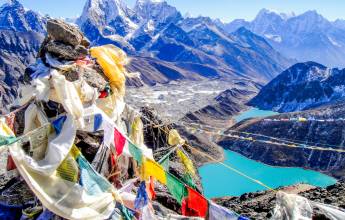
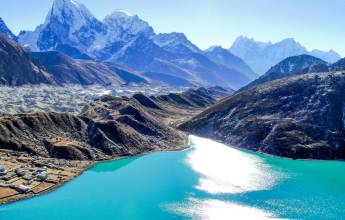
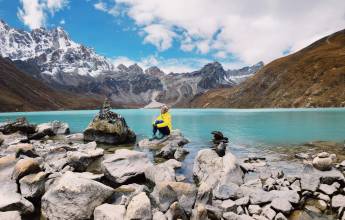
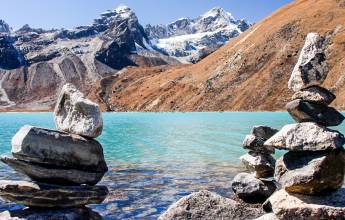
Stay beside the azure glacial lake at Gokyo
Climb Gokyo Ri for magnificent views of the Himalaya including four 8,000m peaks: Everest, Lhotse, Makalu and Cho Oyu
Cross the Ngozumpo Glacier and conquer the Cho La pass
Ascend Kala Pattar and Gokyo Ri for views of Everest and other Himalaya giants
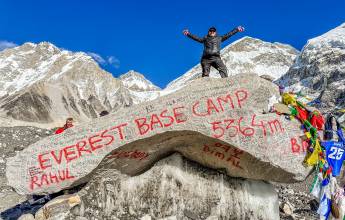
Trek to Everest Base Camp and stand at the foot of the highest mountain on Earth
Itinerary
First Destination:
Kathmandu
Next Destination:
Kathmandu
Meals included:Dinner
Meals included:Breakfast
First Destination:
Kathmandu
Next Destination:
Kathmandu
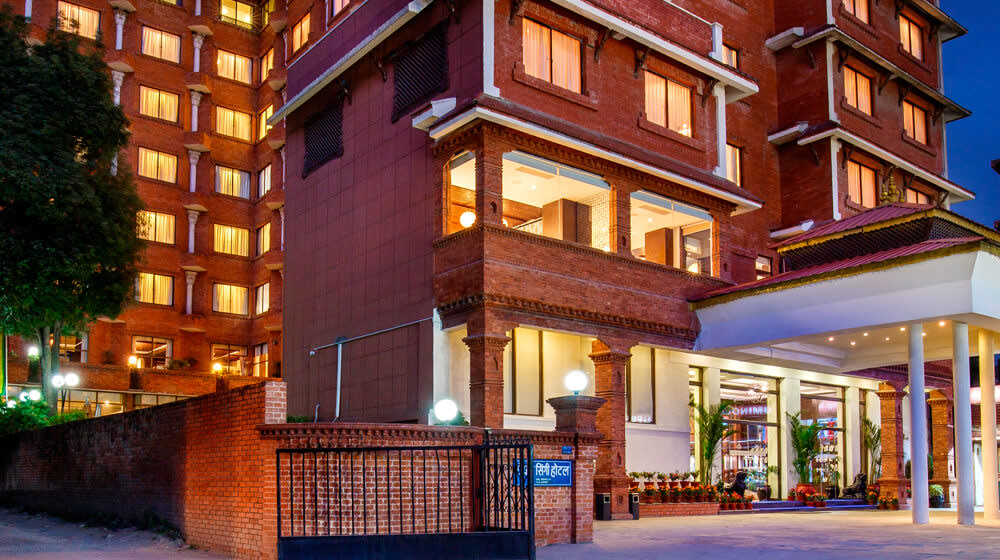
Begin your adventure at the Royal Singi Hotel in Kathmandu, the start point for many of our Himalayan treks over the years.
Around 6pm, bid namaste to your tour leader and fellow travellers, when we gather as a group for the first time to get to know each other and learn more about the adventures ahead during a full trek briefing.
Your tour leader then ensures a big Nepalese welcome by arranging a group dinner.
Want to explore Kathmandu further? Secure pre-tour hotel nights through your sales representative.
Accommodation: Royal Singi Hotel (or similar)
Meals included:Dinner
We have a very early start this morning to drive (approximately four hours) out to Manthali Airport (RHP) where all Lukla flights now operate from. We depart our hotel at approximately 3am to ensure arriving in Manthali for in time for the first morning flights to Lukla. The hotel will provide a packed breakfast for the journey.
We fly to the mountain airstrip of Lukla (9,190ft/2,800m), and set off on the first short leg of our trek, heading north up the valley of the Dudh Kosi (Milk River). We descend from the small plateau into the forested valley. The trail offers tantalising views before reaching the settlement of Phakding, where we spend our first night.
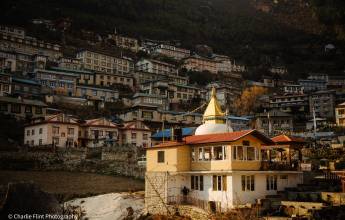
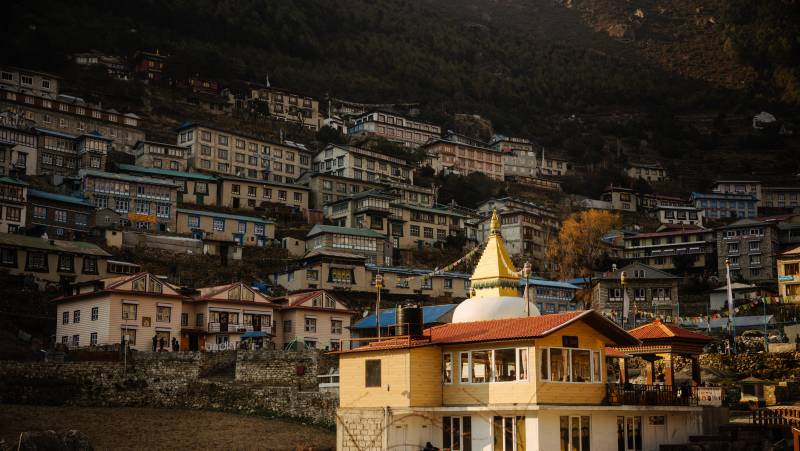
Heading out of Phakding, we follow the Dudh Kosi north. Today’s walk takes us through magnificent forests with glimpses of the mountains ahead. We cross the river several times by bridge as we pass through the villages of Benkar, Monzo and Jorsale. A final bridge brings us to the foot of the steep climb to Namche. Halfway up the ascent, we may get our first glimpse (cloud permitting) of the Everest summit behind the great ridge of Nuptse-Lhotse. A last 985ft (300m) climb brings us to Namche Bazaar, the Sherpa capital and the main town in the area. Namche is a prosperous Sherpa town and an important trading centre. It has a weekly market on Friday afternoons and Saturday mornings, but the town always bustles with trekkers, coffee shops, bakeries and stores selling all kinds of trekking and climbing gear and Tibetan souvenirs.
We climb steeply out of Namche past the airstrip at Shyangboche to the Everest View Hotel, the highpoint of our day at 12,730ft (3,880m). Built by the Japanese, this spectacularly situated hotel with wonderful views of Everest and Ama Dablam is an ideal place for a tea break.
Enroute to the Everest View Hotel, you will have the option to stop off at the Sagarmatha Next experience centre and learn about the work this local organisation is doing to tackle waste pollution on the mountain trails and how you can help.
Descending through forest, we come to Khumjung, where we have lunch close to the Sir Edmund Hillary School. After, we walk up to Kunde and visit the Edmund Hillary Hospital. The twin villages of Kunde and Khumjung are below Khumbila, the rocky peak sacred to all Sherpas. For much of the walk, we have great views of Ama Dablam and other Himalaya giants. We walk back down through Khumjumg to the monastery. Sadly, it was damaged in the earthquake but is now being repaired. Inside is a small box and, after paying the entry fee (which goes towards the repairs), we will be shown the only yeti skull in the world. Descending to the main trail, we spend the night at Kyanjuma.
At Kyanjuma we turn off the main trail and begin climbing to the Mong La, marked by a chorten on the top of a ridge at 3,972m. This ridge descends from Khumbila, the abode of the patron god of all Sherpas. From the ridge, the trail descends in a series of steep switchbacks towards the Dudh Kosi. At Phortse Tenga (3,600m) there are a few tea houses to choose from for our lunch stop. After lunch the trail starts to climb steeply out of the valley and we enter the rhododendron forests, which give way to juniper and conifers higher up the valley. We pass through kharkas, summer settlements used by the Sherpas to graze their yaks, before coming to Dole, where we have magnificent views of Kangtaiga and Tramserku.
Total ascent: 2,887ft (880m); total descent: 2,119ft (464m)
A short walk today. From Dole the trail is steep in places as it passes through Lhabarma and Luza along the side of the valley, high above the river through scrub junipers until we cross the sandy spurs to Machhermo (4,410m). It was here in 1974 that a yeti was reported to have attacked a sherpa and killed three yaks! We should get to Machhermo by lunchtime and in the afternoon there is time for an acclimatisation walk up onto the ridge behind the lodge for amazing views of Tramserku.
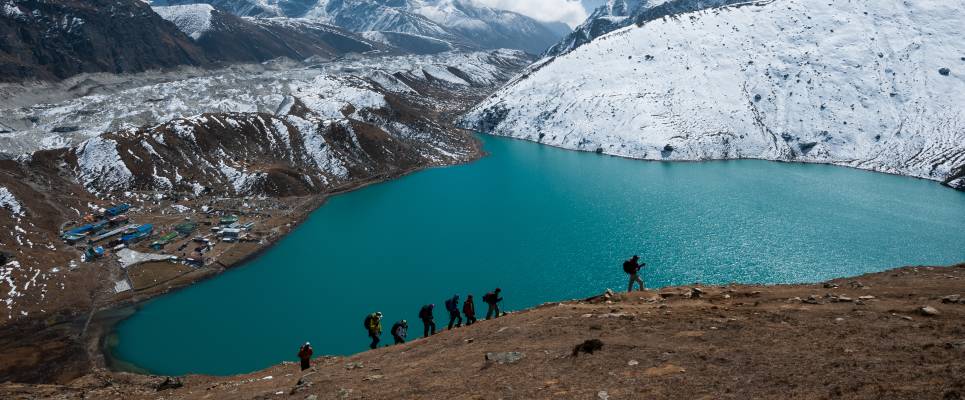
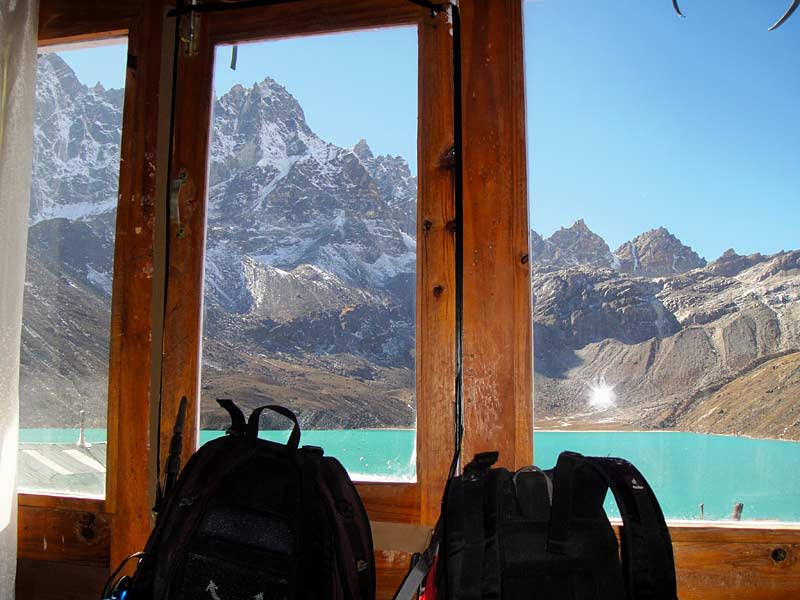
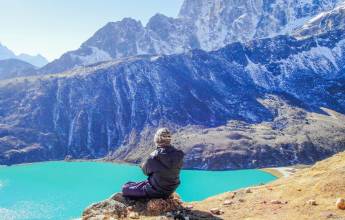
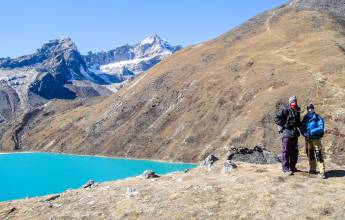
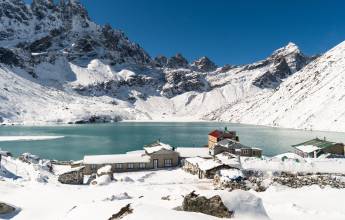
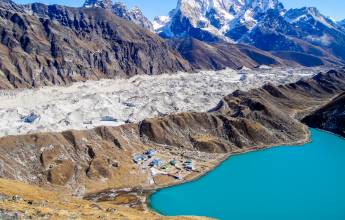
We begin today by climbing a ridge for an excellent view down the valley to Kangtaiga and Tramserku and up the valley towards Cho Oyu (8,201m). The valley now widens as the trail passes through Pangkha then descends to the riverbank before beginning the steep climb on a narrow trail onto the terminal moraine of the Ngozumpo Glacier. We pass the first of the lakes at Gokyo, called Longpongo. We then follow the almost level trail past the second lake and on to the third lake and the walled meadows and lodges of Gokyo at 4,750m. Gokyo is a small settlement of lodges on the shores of a blue lake. Look out for Brahmany Ducks swimming in the lake. We have lunch in Gokyo and in the afternoon we can walk up the hill behind the lodge for incredible views of the Ngozumpo Glacier.
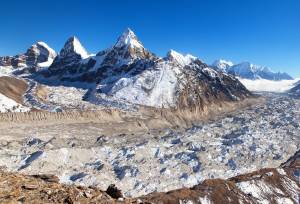
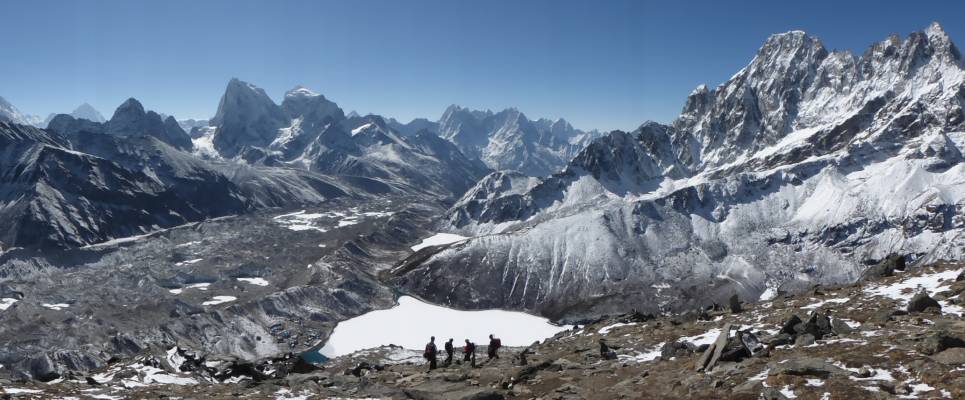
An early start this morning for the steep ascent of Gokyo Ri (17,585ft/5,360m), a small peak above Gokyo village. As we climb, the views become even more fantastic and from the top we can see four of the eight highest peaks in the Nepalese Himalaya: Cho Oyu, Everest, Lhotse and Makalu. Stretching out for miles below us is the longest glacier in Nepal – the Ngozumpo Glacier, which tumbles down from the slopes of Cho Oyu. One of the best all-round views in Nepal, the climb is well worth the effort. We return to Gokyo for lunch and the afternoon is free to relax or explore the lakeshore.
There is time this morning to explore the area around Gokyo. The energetic can walk to the fourth lake or explore the trail to the Renzo La from where you can see Everest.
After an early lunch we set off for Thangnak. The trail starts by climbing to the crest of the moraine overlooking the Ngozumpo Glacier. The route across the glacier is well marked with cairns but we need to take care as the path is narrow and there is ice underfoot in parts. The trail climbs up and down and takes us to the eastern side of the Gokyo Valley. We stay tonight at Thangnak at the foot of the Cho La Pass.
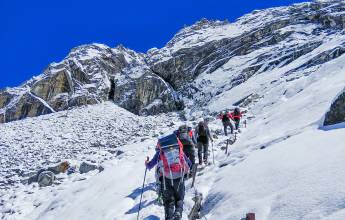
An early start for the very long day across the Cho La (5,420m), you will need to carry your micro-spikes with you today. We climb up the valley from Thangnak for about two hours to a col. Ahead we can see the Cho La in the distance. We descend to a large boulder field, which we cross on a well-defined path to the base of the steep part of the ascent. A new trail has been created up the Cho La to avoid the risk of rock fall and there are some metal chains in place to use as handrails. The last couple of hours are very steep and rocky and involve some scrambling as we zig-zag up to the top.The upper part of the route can be covered in snow and ice, particularly after November and in spring.
Finally, we reach the glaciated top, from where there are excellent views including an unusual aspect of Ama Dablam. We will need microspikes for the descent (and sometimes on the ascent) and we need to take care on the descent as it’s steep and involves the crossing of a glacier (usually snow-covered) which is fairly straightforward. After a scramble down onto the glacier, we follow a trail across the snow and down a rocky gully to the pastures below. The trail becomes more defined as we approach Dzongla, where we stay tonight.
An easier day ahead as leaving Dzongla we begin with a continuation of our descent. A short ascent brings us to the foot of Awi Peak, which we contour round on a wonderful high trail with great views of Chalotse and Tawoche across the valley. We finally descend to join the main trail again just below Lobuje. We spend the night at Lobuje (4,930m). The sunset on Nuptse from the ridge across from the lodge is not to be missed.
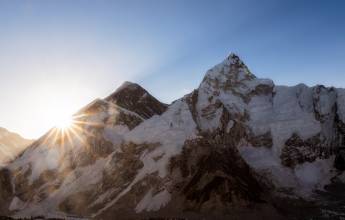
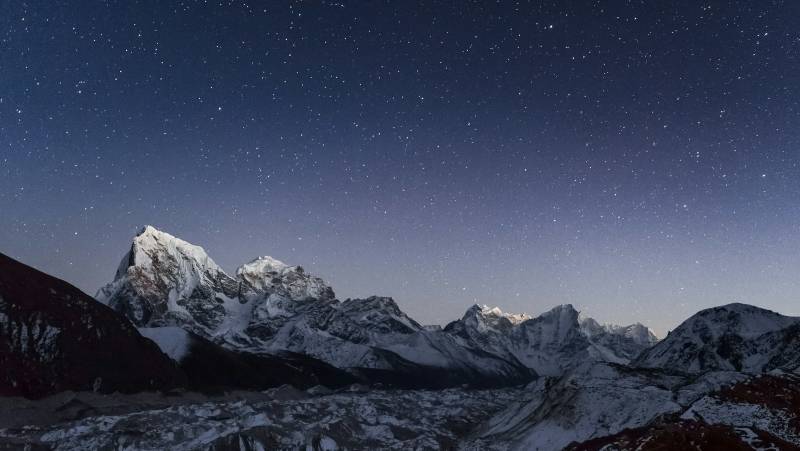
We are now surrounded by giant Himalayan peaks; Everest, Nuptse, Lingtren, Khumbutse and Pumori tower above us. Today is long and hard as we visit Everest Base Camp (5,364m). The trail from Lobuje climbs steadily by the side of the Khumbu Glacier, with some steep ups and downs on a rocky trail. It will take us about 3 hours to reach Gorak Shep (5,180m), a collection of lodges situated at the foot of Kala Pattar. After a short break and an early lunch, we fill our water bottles and make sure we have plenty of snacks (there are no lodges from here to Base Camp) and set off for Base Camp. The trail heads along the crest of the moraine at first with plenty of undulations, some of them quite steep. We then drop steeply down onto the Khumbu Glacier itself, where we get magnificent close-up views of the great Khumbu Icefall as it tumbles down from Everest. In the spring season we will see expedition teams as they prepare for an ascent. We retrace our steps to Gorak Shep for the night.
Another long day as we ascend the small peak of Kala Pattar (‘black rock’) at 18,192ft (5,545m). We set off very early before breakfast for the steep two-hour climb to the summit, but the effort is well worth it, as we appreciate the most magnificent view of the Khumbu glacier and above all a close-up sight of the world’s highest mountain which the Nepalese call Sagarmatha – Head of the Waters and the Sherpas Chomolungma – Mother of the World.
We return to Gorak Shep for a well-deserved breakfast and then head back down to Lobuje for lunch. Descending on the main trail we pass through Chukpo Lhari, where there are many memorials to those who have died on Everest. From here we drop down steeply to Dugla, a small collection of tea houses. The trail then descends to the riverbed and we have an easy walk down the valley to Pheriche.
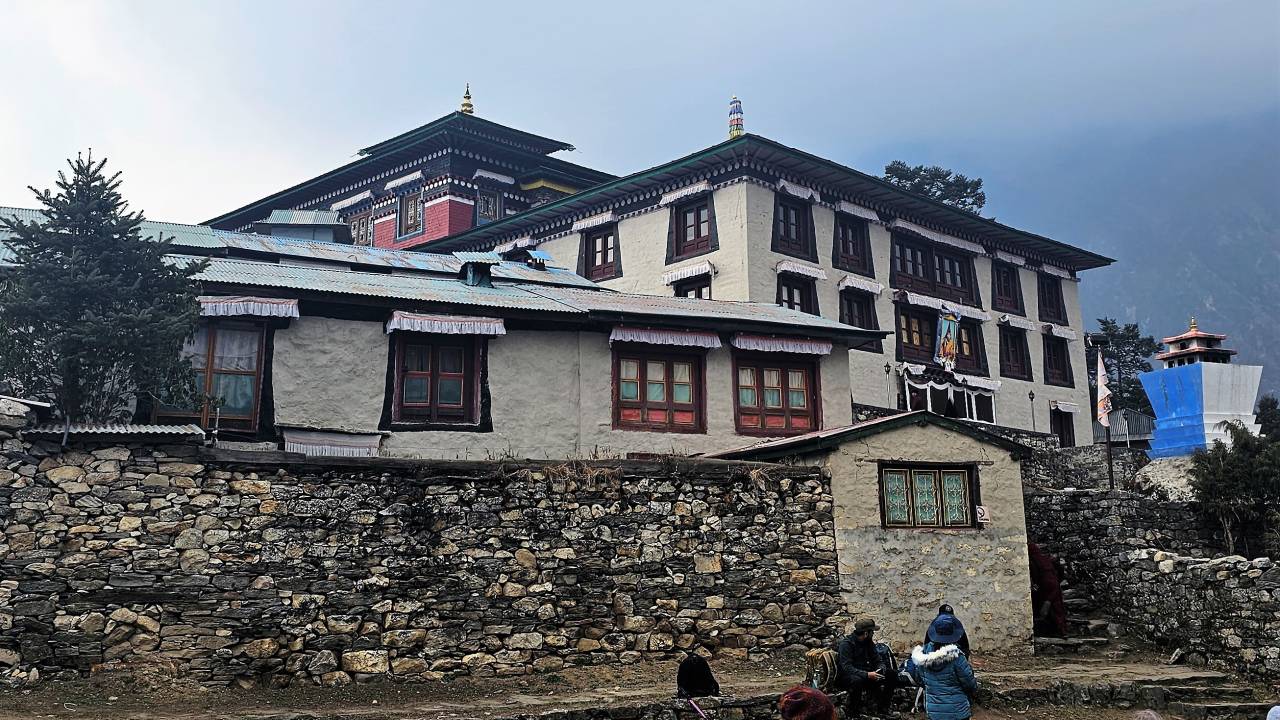
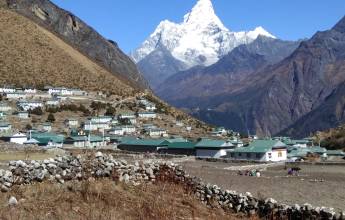
We descend the Pheriche Valley with spectacular views of Ama Dablam. We join the main Imja Khola Valley, which we follow down to Pangboche with superb views looking back to the great ridge of Lhotse-Nuptse. Pangboche, at 13,075ft (3,985m) is the highest permanent settlement on the approach to Everest. Dropping down to the rushing Imja Khola we then walk through rhododendron forests to Thyangboche. From here we have a fantastic panorama of Everest, Nuptse, Lhotse, and Ama Dablam. We have lunch here and can visit the famous monastery. After lunch the trail descends to the river at Phungki Tenga and then we have a long climb up to our lodge for the night at Kyanjuma, where there are wonderful views across the valley to Ama Dablam.
This morning our walk to Namche Bazaar takes us along a beautiful undulating trail high above the Dudh Kosi. We have time in Namche and after lunch we descend through Namche Bazaar and pick up our outward trail again to Monzo, where we stay tonight.
We fly back to Manthali airport on one of the first flights of the day (approximately 7-7:30am) to allow for the five to six hour bus transfer back to Kathmandu arriving in the city for mid-late afternoon.
Accommodation: Royal Singi Hotel
Meals included:Breakfast
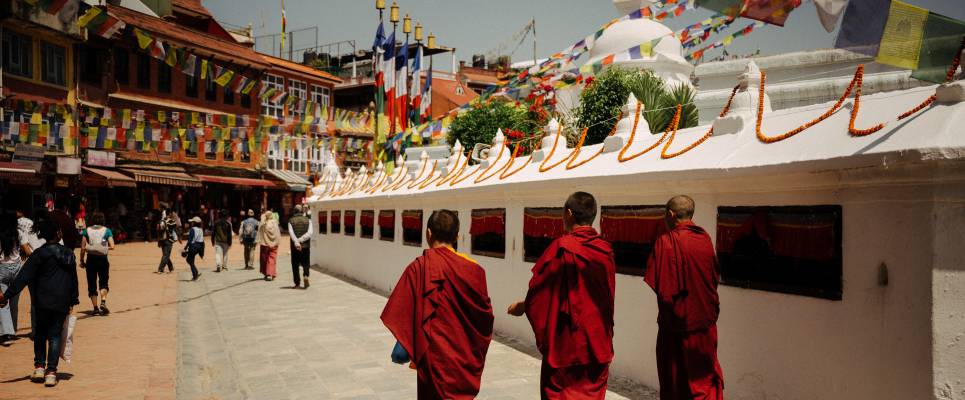
Today is free for sightseeing in Kathmandu (it is also a spare day to allow for any delays in the flights to or from Lukla). You may wish to visit the monkey temple at Swayambunath, one of the largest Buddhist stupas in the world at Boudhanath, or the most important Hindu temple in the valley at Pashupatinath. We offer a full range of sightseeing tours, which can be booked and paid for locally; please ask your leader for details. Or you can simply hire a taxi from outside the hotel. The Thamel area is full of shops and restaurants and coffee shops for those who want a more relaxing day.
Accommodation: Royal Singi Hotel (or similar)
Meals included:Breakfast
The trip comes to an end after breakfast. However, if you’d like a little more time to explore Kathmandu or the surrounding region, speak to your sales representative about extending your stay.
Meals included:Breakfast
Dates & Prices
Skip the hassle: We’ll handle your trip from start to finish, with competitive flight prices, deposit-only payments, and full ATOL protection available.
This departure is guaranteed to go ahead and can be booked, although some components will need to be requested. Please click Continue to proceed with booking or contact our Sales team for assistance.
Optional Single Supplement
+£ 165
£ 2649 (excl. flights)
Thursday 09 Apr 2026 to Monday 27 Apr 2026
Thursdayto
Monday
Availability
Guaranteed (Available)
This departure is available for new bookings and has reached the minimum number of passengers required to go ahead. Please click Continue to proceed with booking or contact our Sales team for assistance.
Optional Single Supplement
+£ 165
£ 2649 (excl. flights)
Thursday 05 Nov 2026 to Monday 23 Nov 2026
Thursdayto
Monday
Availability
Available
This departure is available for new bookings, and will be guaranteed to go ahead once it reaches minimum numbers. Please click Continue to proceed with booking or contact our Sales team for assistance.
Optional Single Supplement
+£ 165
£ 2699 (excl. flights)
Book with £ 674 deposit
Thursday 04 Mar 2027 to Monday 22 Mar 2027
Thursdayto
Monday
Availability
Available
This departure is available for new bookings, and will be guaranteed to go ahead once it reaches minimum numbers. Please click Continue to proceed with booking or contact our Sales team for assistance.
Optional Single Supplement
+£ 165
£ 2699 (excl. flights)
Book with £ 674 deposit
Thursday 08 Apr 2027 to Monday 26 Apr 2027
Thursdayto
Monday
Availability
Available
This departure is available for new bookings, and will be guaranteed to go ahead once it reaches minimum numbers. Please click Continue to proceed with booking or contact our Sales team for assistance.
Optional Single Supplement
+£ 165
£ 2699 (excl. flights)
Book with £ 674 deposit
Thursday 21 Oct 2027 to Monday 08 Nov 2027
Thursdayto
Monday
Availability
Available
This departure is available for new bookings, and will be guaranteed to go ahead once it reaches minimum numbers. Please click Continue to proceed with booking or contact our Sales team for assistance.
Optional Single Supplement
+£ 175
£ 2849 (excl. flights)
Book with £ 712 deposit
Thursday 28 Oct 2027 to Monday 15 Nov 2027
Thursdayto
Monday
Availability
Available
This departure is available for new bookings, and will be guaranteed to go ahead once it reaches minimum numbers. Please click Continue to proceed with booking or contact our Sales team for assistance.
Optional Single Supplement
+£ 175
£ 2849 (excl. flights)
Book with £ 712 deposit
Thursday 11 Nov 2027 to Monday 29 Nov 2027
Thursdayto
Monday
Availability
Available
This departure is available for new bookings, and will be guaranteed to go ahead once it reaches minimum numbers. Please click Continue to proceed with booking or contact our Sales team for assistance.
Optional Single Supplement
+£ 175
£ 3749 (excl. flights)
Book with £ 937 deposit
Led by Valerie Parkinson, Wanderlust World Guide Awards Winner 2021
No departures match your criteria. Please adjust your filters and try again.
Your Group, Your Adventure
Want to choose your travel companions? Gather your family and friends and let us create a Private Adventure just for you.
We stay in teahouses for most of this adventure, a classic experience for trekkers in the Himalaya. We spend the rest of our time in hotels. Below is more information on the places we stay.
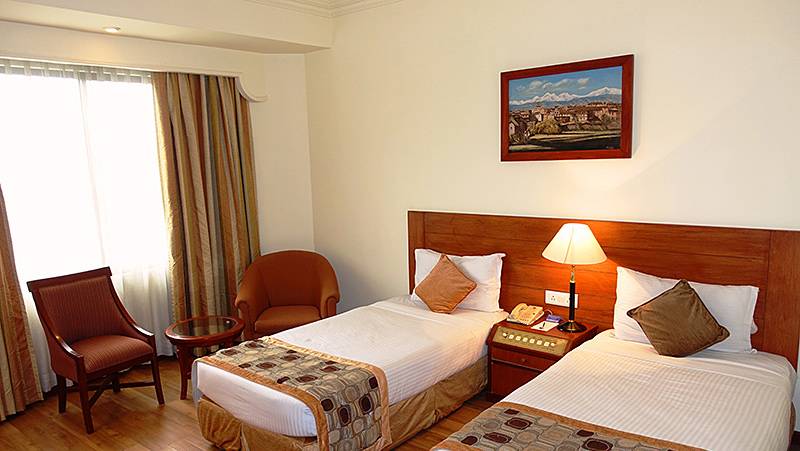
Kathmandu: Royal Singi Hotel (nights 1 and 17-18)
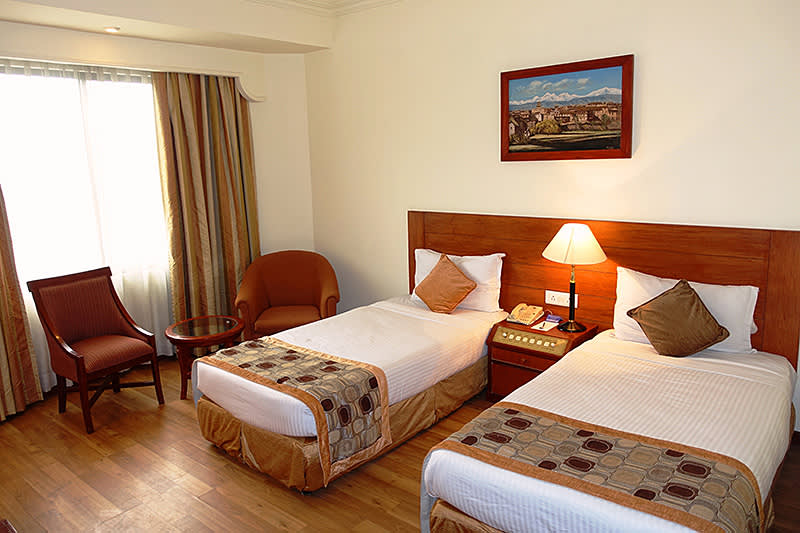
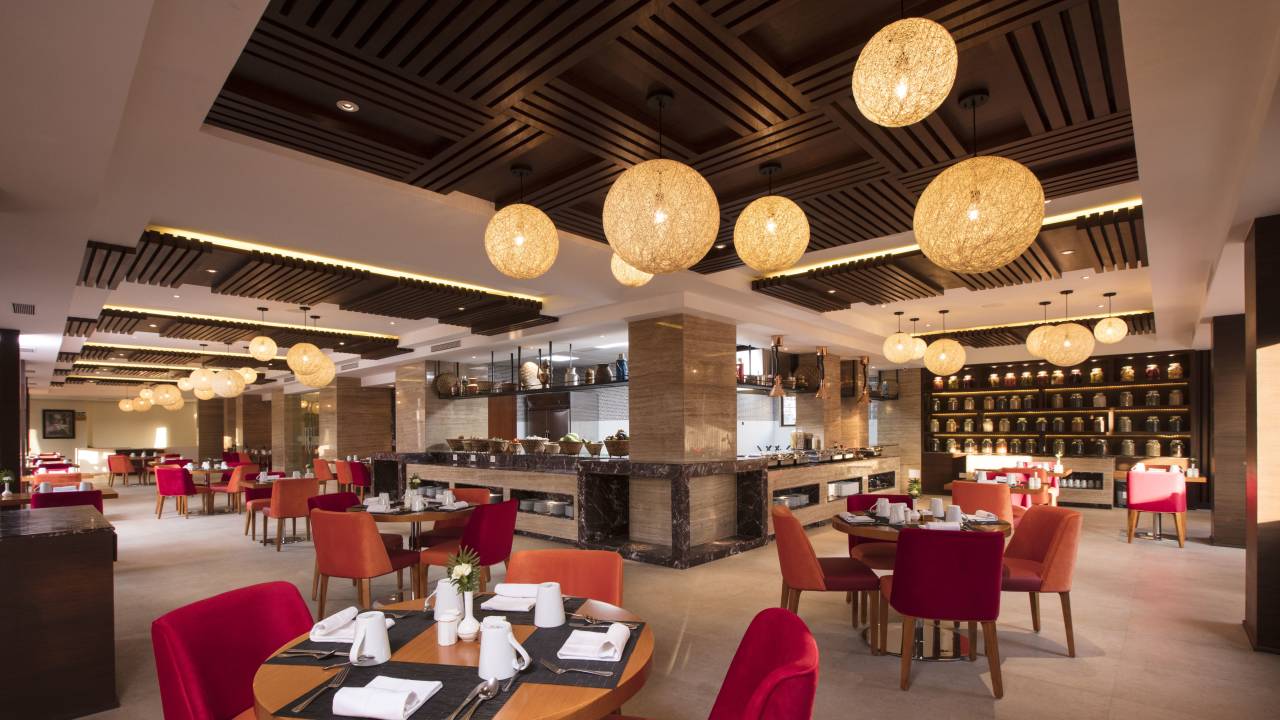
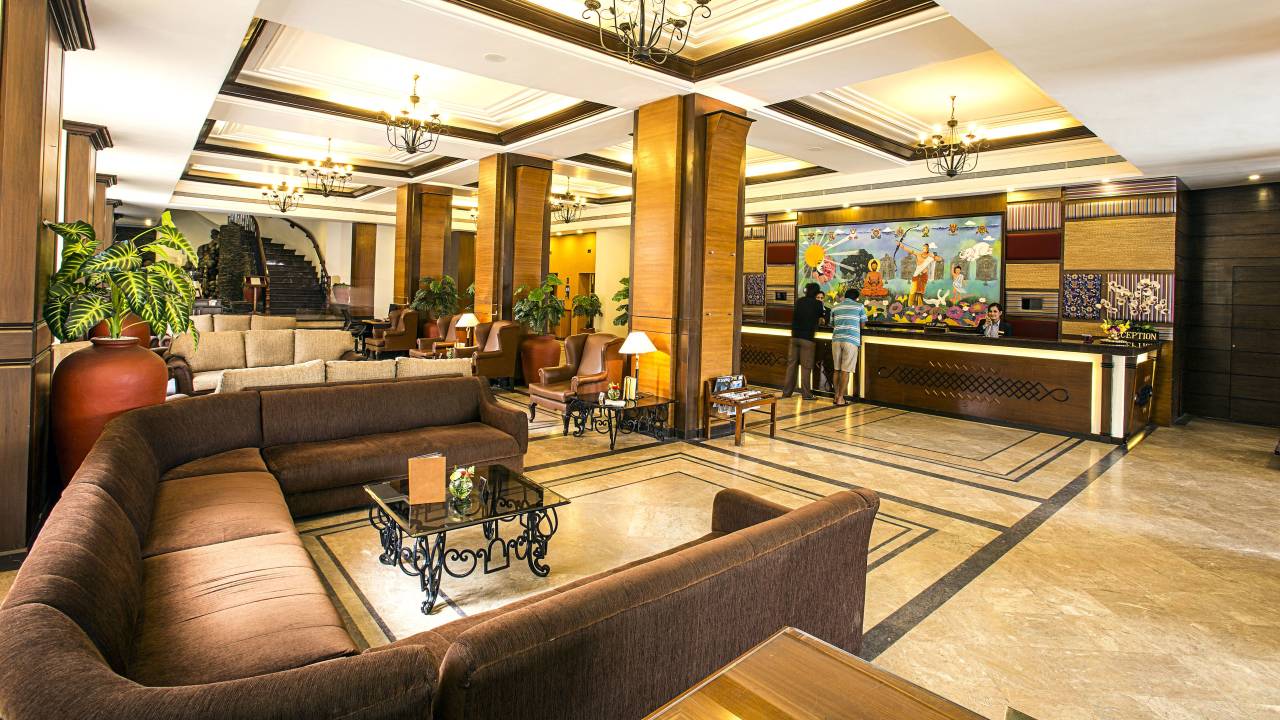
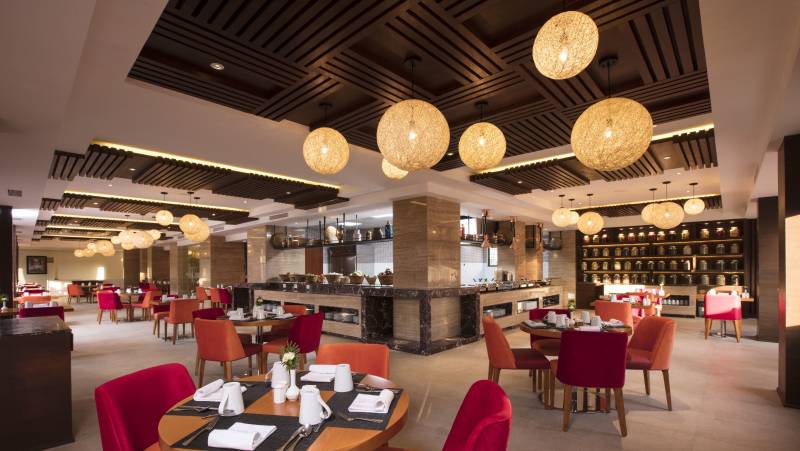
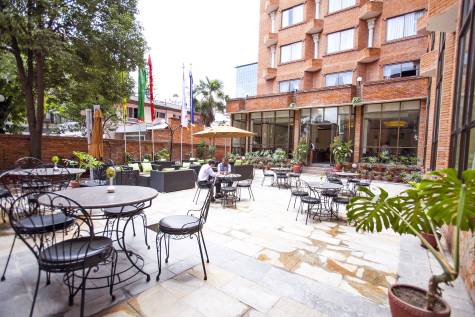
The Royal Singi, a three-star hotel, has been welcoming our groups for more than two decades. The name is inspired by the Snow Lion, a mythical creature in Tibetan Buddhism, which represents immense joy, positivity, delight and comfort. The hotel embraces the name with a restaurant, bar, outdoor courtyard, and complimentary wifi throughout. There’s also an Exodus desk in the lobby and an Exodus representative is usually available daily in the mornings and evenings. The Royal Singi is well located near the Thamel district, close to banks, restaurants, shops and attractions.
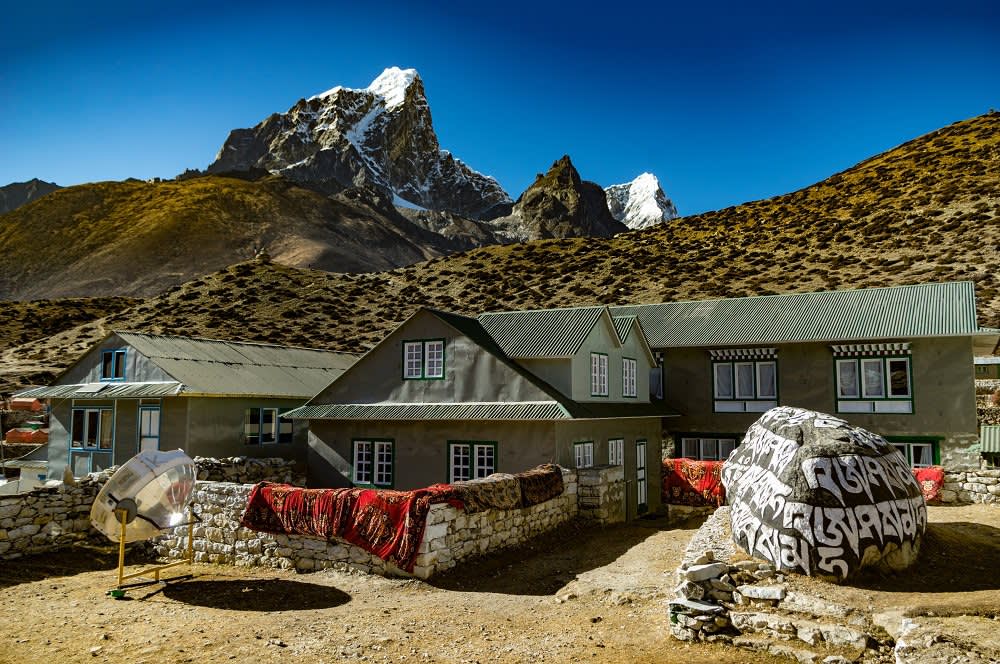
Himalaya: Teahouses (nights 2-16)
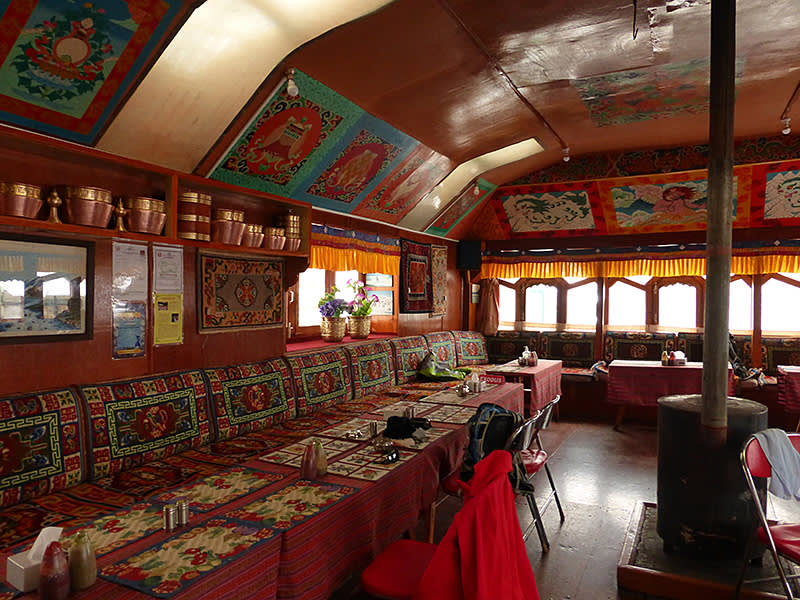
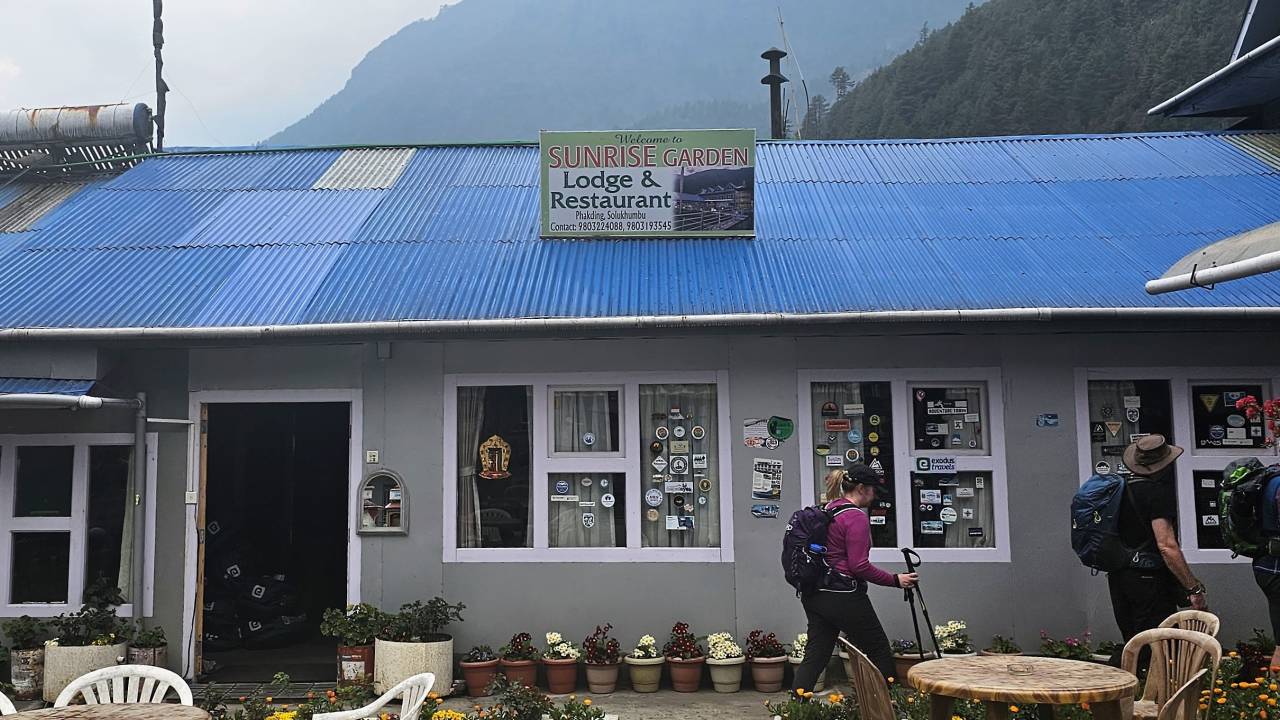
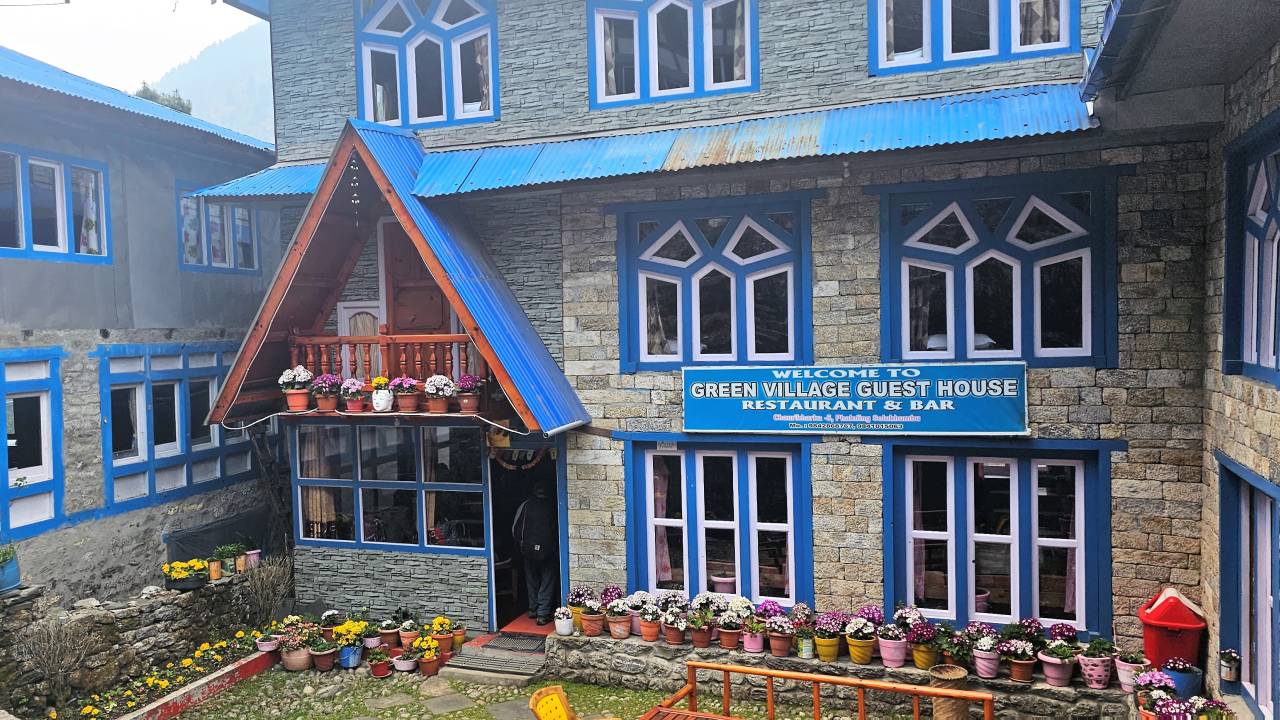
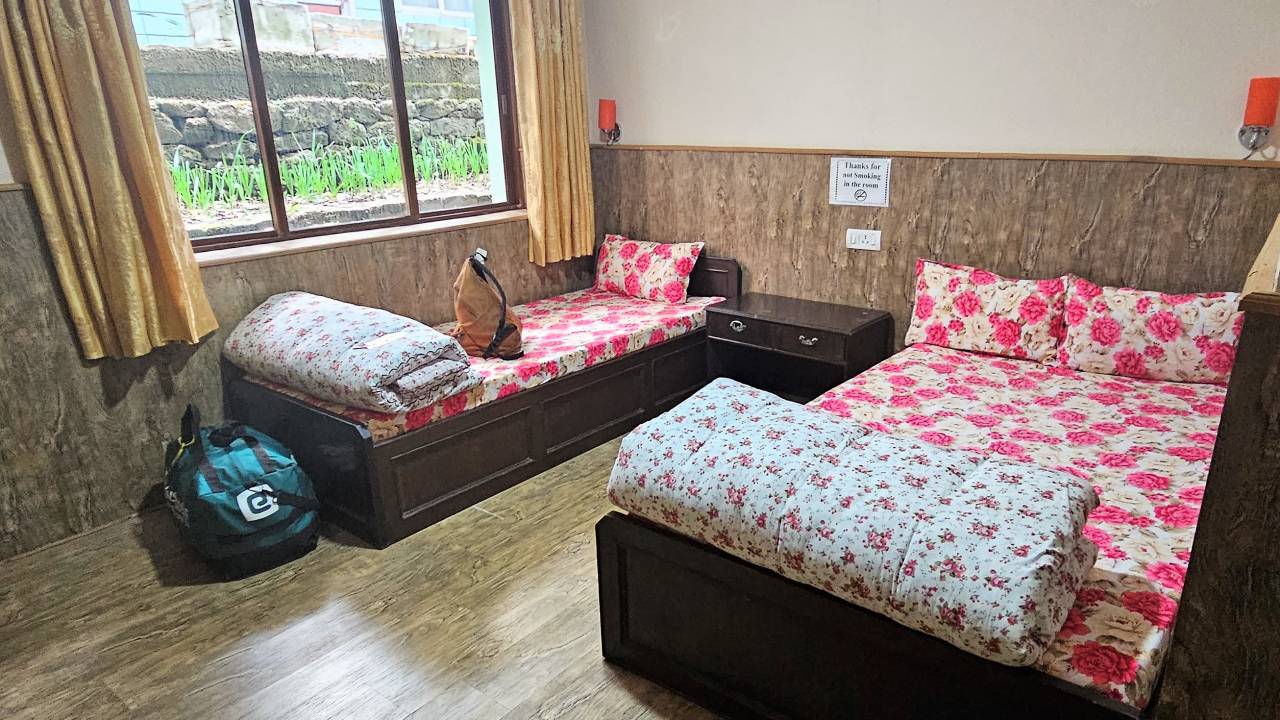
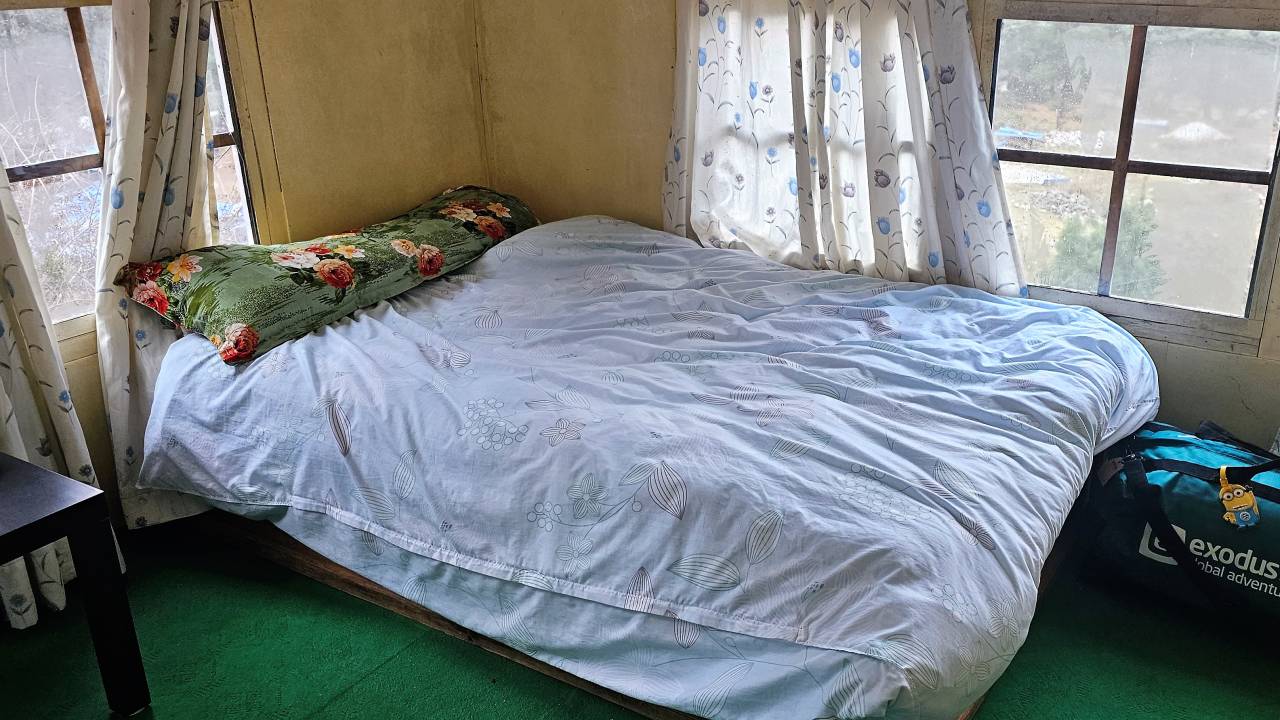
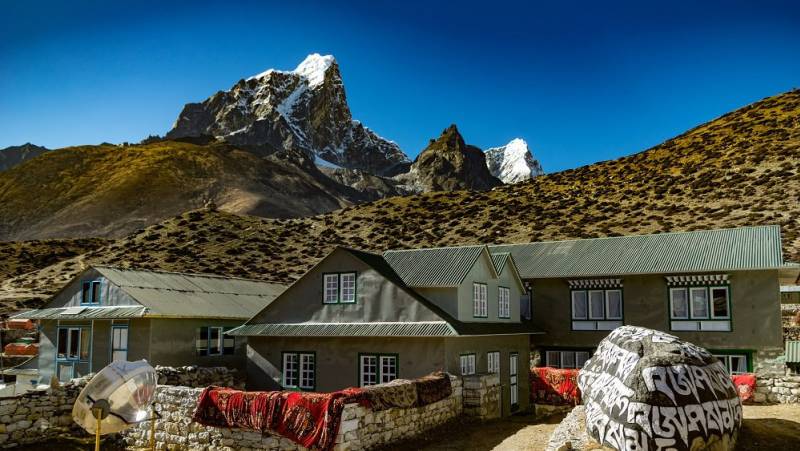
Staying in teahouses is a time-tested tradition for hikers in the Himalaya. They may be basic, but they’re a welcome sight after a day of walking among the spectacular peaks. The hub of teahouse living is the dining room, which is usually decorated with traditional rugs, sometimes with a stove or heater (some lodges charge a fee to put the heater on). Most teahouses sell snacks and other essentials such as tissues, soap and toilet paper.
We stay in twin-share bedrooms, which come with foam mattresses, bedsheets and a pillow. Remember to bring (or hire) a sleeping bag, rooms are unheated so they can get cold at night.
Worth knowing
Some teahouses above 9,845ft (3,000m) may not be heated due to local environmental restrictions. Occasionally, kerosene burners can be used to heat common areas if requested. We recommend against using these due to the risk of carbon monoxide poisoning. Your leader will not offer this to you.
Most teahouses have electricity, but it is not wholly reliable, and lighting may not be bright enough to read by – a torch (flashlight) is essential. Charging facilities are generally only available in the dining room (charged at approximately 200-500 Nepalese rupees/US$1.50-US$3.80 per hour per device). Many of the teahouses use solar power, so sometimes there is not enough electricity for charging. Many also have wifi, though it can be slow and temperamental.
Most teahouses have only one or two basic toilets and sometimes these are outside the main building. Toilets are usually squat-style, although many lodges have now installed seated ones. Toilet paper is not provided, so you should bring your own or buy it locally (please dispose of it in the bin provided). If there is not a flush handle, there should be a container of water to pour down – if it is empty (or frozen), please refill it or ask the lodge to.
Some teahouses have hot ‘showers’ (charged at approximately 250-500 rupees/US$1.90-US$3.80 per shower). Sometimes this is simply a bucket of hot water.
Standards of cleanliness vary, especially in the peak trekking season and in winter when the water freezes at night. Please report any problems to your leader or the teahouse staff and be vigilant in your personal hygiene regime – use soap or hand gel before and after toilet breaks, snacks and mealtimes.
Generally, the higher the altitude, the more basic the teahouse and the more expensive food and services.
Extra accommodation
If you require additional accommodation in Kathmandu, either before or after the tour, we can book this for you (subject to availability). Please enquire with your sales representative.
Single accommodation
If you prefer your own room, we offer a single supplement for the hotel nights in Kathmandu only (subject to availability). While in the teahouses, single rooms cannot be guaranteed so these have not been included in the single supplement price paid in advance. However, if a single room is available on arrival at a teahouse, you can pay locally on a day-by-day basis.
Extend Your Trip
Exclusive Add-ons
Chitwan or Kathmandu Valley Add-on Tours
Extend your adventure by joining one of our add on tours:
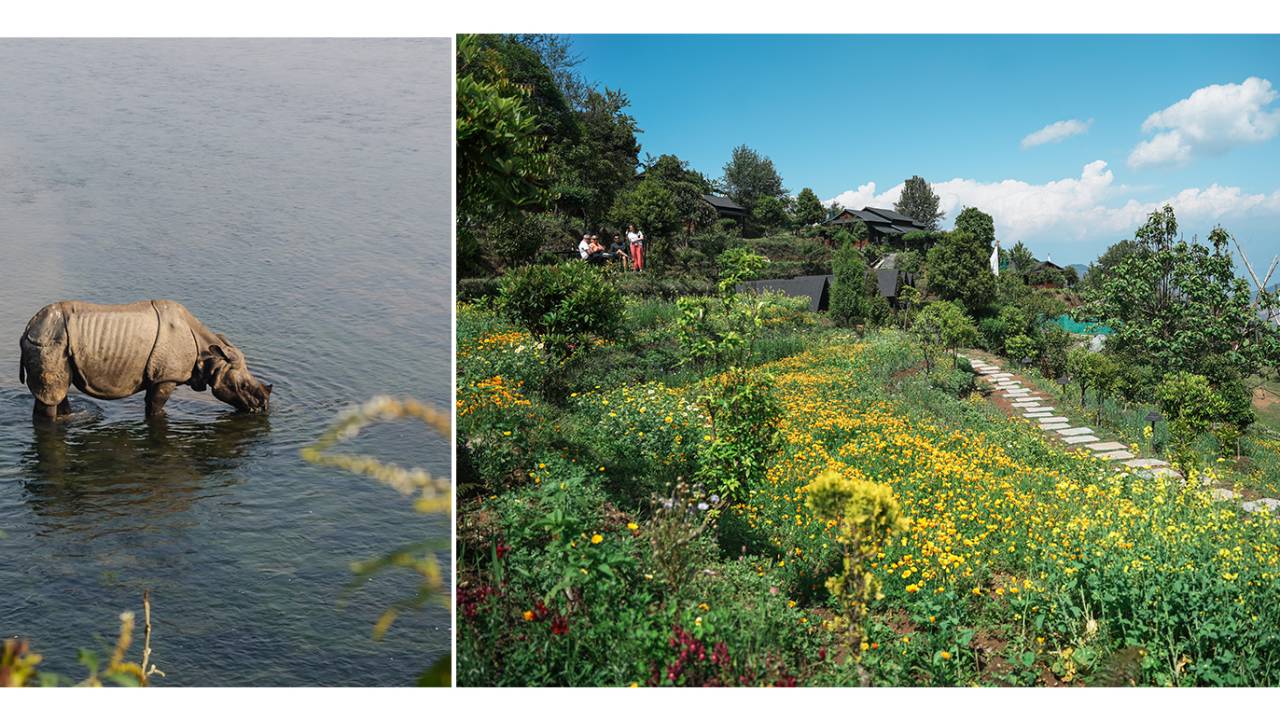
Chitwan: This five-day wildlife adventure is a perfect chance to unwind in Nepal’s lowlands after your trek. From Kathmandu, travel to your jungle lodge near Chitwan National Park, where an expert naturalist will help you spot one-horned rhinos, birds, deer and more. See the full itinerary here.
Kathmandu Valley: Nestled in the Himalayan foothills, the Kathmandu Valley is a perfect prelude to your adventure. This short trek starts and ends in Kathmandu, with gentle trails through villages and rhododendron forests, and sweeping mountain views. See the full itinerary here.
Introducing Jangbu
Born in the Himalaya village of Patle, Jangbu knows the range like few others.
This trek is graded Activity Level 6 (Challenging & Tough) with 15 days of walking and full porterage throughout. You need only carry your daypack. For more information on our trip gradings please visit the Activity Level Guidelines page. If you have any queries about the difficulty of the trip please do not hesitate to contact us.
Altitude: Most of the walking is at relatively high altitude, please refer to the Altitude Warning within the Trip Notes. The itinerary is designed with built-in acclimatisation days to maximise the chance of successfully crossing the Cho La pass, reaching Base Camp and climbing Gokyo Ri and Kala Pattar. The reward is panoramic views spanning pristine glacial lakes, expansive glaciers and the highest mountains in the world.
Maximum altitude: 18,192ft (5,545m)
Average altitude: 13,450ft (4,100m)
Maximum sleeping altitude: 12,467ft (3,800m)
Suitability: Anyone attempting this trek should be confident in their physical fitness and ideally have previous experience of trekking at altitude. This circuit is tougher than the classic Everest Base Camp trek as it involves a long, demanding crossing of the Cho La pass (17,780ft/5,420m). This entails a very steep ascent and descent on rocky trails, which can be icy; there is always ice and snow at the top as we cross a glacier. There are chains on the steep ascent up the Cho La.
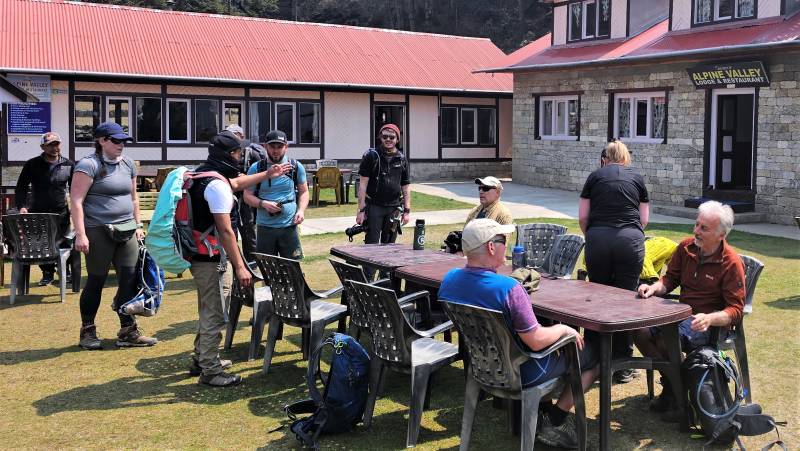
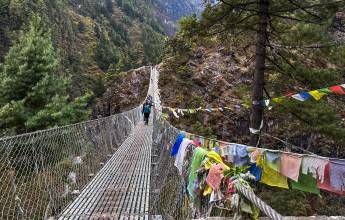
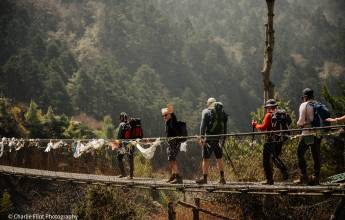
Besides the pass, most of the walking is on well-established trails but there may be snow and ice at the highest points of the trek on any departure. Although daytime temperatures can be very pleasant, the nights will be cold. At Gokyo and around the Base Camp area it can be well below freezing, especially on the winter departures. In very bad conditions or after very heavy snowfall, Cho La may be impassable, in which case we take a lower route. The trail also crosses a few modern suspension bridges with mesh sides; anyone with a strong fear of heights or vertigo may find them difficult.
Walking hours stated within the itinerary are given as approximates only. Timings exclude lunch stops and will vary depending on the group’s pace. To help you better prepare for your trip, please also see our Nepal Destination Guide.
Nepal flight safety: Many of our treks in Nepal use domestic flights to reach the trekking areas. The mountainous Nepalese terrain is subject to changeable weather, which makes flying conditions complex and challenging, and unfortunately there are significantly more incidents here than in other countries, including fatalities. The EU highlighted the poor safety record in Nepal in 2013 by including all Nepalese-registered airlines on the EU banned list, which prevents them from flying in EU airspace. While no Nepalese-registered airlines currently fly within the EU, the EU instigated this ban to highlight the risk of flying in Nepal to EU citizens. These airlines are unlikely to be members of any internationally recognised safety audit systems and the Civil Aviation Authority (CAA) of Nepal does not operate to the same standards as those of Western nations.
Flying within Nepal is therefore a known risk and we strongly encourage you to consider this carefully before booking. We suggest you refer to the following sources:
The current travel advice for Nepal issued by the UK Foreign, Commonwealth and Development Office
In response to concerns over this safety record, Exodus arranges for independent air-safety auditors to visit Nepal annually to assess the suitability of the available carriers. We then restrict our use to only those approved as part of this audit. In emergency situations, we will need to use helicopters, so we also have a list of approved helicopter carriers. Should concerns arise regarding the safety of an airline on our approved list, we remove the carrier from the list immediately, and it would only be reinstated once our air-safety auditors are confident the airline meets acceptable safety standards.
We appreciate you may have concerns about flying within Nepal, so we ask that you please consider all the information above when deciding to book this trip.
Internal flight delays: Adverse weather conditions at Lukla airport occasionally mean that flights to/from Kathmandu cannot operate. We include an additional day at the end of the itinerary to allow for this but please note that persistent bad weather may delay the start of your trek or your return to Kathmandu.
Should there be a lengthy delay at the start of a trip, we aim to provide a shortened Everest trek; however, if adverse weather conditions continue and the main objective of the trek becomes impossible to reach, an alternative trek to another region in Nepal will be offered. When fixed-wing planes are unable to fly, but helicopters to Lukla are available, clients may choose to travel by helicopter; in this event, the price per person will be approximately US$600-US$800, of which Exodus will cover half.
Should there be a significant delay at the end of your trek, we endeavour to get you on the first available fixed-wing flights to Kathmandu. If helicopters are able to fly, we will consider paying for these on a case-by-case basis to enable you to meet your international flights. In the case of persistent adverse weather, Exodus will rebook international flights for Flight Inclusive clients, but clients booking on a Land Only basis will be responsible for rebooking their onward travel and for any associated costs.
All flights to and from Lukla will no longer operate in/out of Kathmandu Airport (KTM), these flights have been transferred to operate in/out of Manthali Airport (RHP), which is in the Tamakoshi River Valley in Manthali, 82mi (132km) east of Kathmandu. The journey from Kathmandu to Manthali is a four-hour bus drive in the early morning and the return leg from Manthali to Kathmandu is usually five to six hours due to heavier traffic later in the day. The flight time between Manthali and Lukla is about 20 minutes.
It is necessary to depart your hotel in Kathmandu at approximately 3am by bus to ensure arriving in Manthali for 7am-7.30am in time for the flights to Lukla (between 8.30am-9am). Your Kathmandu hotel will provide a packed breakfast for the journey.
Key information
Start hotel: Royal Singi Hotel, Lal Durbar, Kamaladi, Kathmandu Phone: +977 144 24190 Recommended arrival time: You can arrive at any time today. There will be a welcome briefing around 6pm this evening. Airport: Kathmandu Airport (KTM)
Getting to the start hotel
The start hotel is approximately 30 minutes’ drive from the airport. Exodus provides free arrival transfers to the start hotel from the airport for all customers.
If you would like further information on joining this trip, please speak to your sales representative.
Catching your return flight
Exodus provides free departure transfers for all customers to Kathmandu Airport (KTM) from the end hotel.
Please note, unless specified otherwise, the transfers will be to the start (or pre-tour) hotel and from the end (or post-tour) hotel and will be on the date on which the tour starts/ends; transfers to other hotels in the same city and/or on different dates may attract an extra charge. Transfers should be booked with your sales representative at least two weeks before the tour starts.
Nepal
You can obtain your visa in advance or on arrival. The Immigration Department of Nepal has suspended visas on arrival for certain nationalities – please check if this applies to you with your nearest embassy or consulate.
When you arrive at Tribhuvan International Airport in Kathmandu, there will be three lines. If you have already secured your visa, go straight to the Immigration line. If not:
Fill in a tourist visa form at the electronic kiosks. After inserting your passport, the machine will automatically fill out an application form, take an electronic photograph of you and print a paper slip. If the machine won’t read your passport, complete the details manually using the touchscreen. We recommend taking a passport photo with you just in case. Top tip: This process can be completed through the online immigration portal (click ‘Visa On-Arrival’) within 14-days prior to arrivalin Kathmandu, helping you to avoid lengthy queues at the kiosks when you come through immigration – ensure you print and bring the confirmation with you. If you have completed your visa on arrival form in advance, go directly to the visa fees counters with your printed confirmation and skip the kiosk queues.
Proceed to the visa fees collection counter and pay the visa fee (in cash, if possible). Make sure to keep the receipt. Card payments are not always possible, so paying in cash is easiest, most currencies are accepted but US dollars are preferred.
Go to the relevant immigration desk and present your tourist visa form, payment receipt and passport to obtain your 15-, 30- or 90-day visa stamp. Please check you have been given the correct visa duration.
Breakfast is included throughout the trip as well as a welcome dinner at the start.
In the teahouses, breakfast will be a choice of bread (a slice of toast, chapatti or Tibetan bread), a choice of egg (boiled, fried or omelette), and a choice between either muesli or porridge each day. Hot tea/coffee is also served. On specific days, there will not be a choice for breakfast and either a trekkers breakfast (egg, hash brown, baked beans and toast) or a pancake with jam/honey will be served – these options are not available in all teahouses and so we have only included them in locations where they can be guaranteed. You may also be able to supplement your included breakfast with additional items on the teahouse menu should you wish. Additional items that are not included in the set menu should be ordered and paid for separately.
Please note, some more remote teahouses/lodges are unable to provide an extensive menu due to irregular delivery schedules and during periods of bad weather or a high volume of trekkers, there may be a more limited menu choice. Also, the higher altitude the more expenses the menus and extras generally are.
Lunch will be taken at a teahouse en route – sometimes one of your guides will go ahead with the group’s order to make it more expedient. Dinner will be in the same teahouse that you sleep at (this is custom in Nepal as teahouses base their room rate on it).
Although most lodges have almost identical menus, they are reasonably extensive and offer a varied selection, ranging from traditional Nepalese dhal bhat to pizza and apple pie. Dhal bhat is the staple diet in Nepal and comes in many different forms but generally comprises curried lentils and meat or vegetables, some rice, and a pickle/chutney. Another popular snack is momos; a type of Nepalese dumpling, fried or steamed, filled with meat or vegetables.
Meat is available in the teahouses but we advise against eating it on trek. The meat has often been carried in the heat from lower altitudes for several days before reaching the lodges and can cause stomach upsets or illness. Germs can also be spread by handling dirty money – we recommend using hand sanitiser.
If you have a gluten-free diet, we strongly recommend you bring extra food and snacks with you to supplement the food on trek as there will be little variety available for you, particularly for breakfast. Even many of the soups are powdered and contain gluten. Gluten-free breakfast options will be limited to vegetable fried rice and a choice of egg, and on specific days only, a trekkers breakfast (without the toast/with an extra egg). Breakfast options for vegans will be limited to a choice of muesli/porridge with water each day, and on specific days only, a trekkers breakfast (without the egg) or vegetable fried rice. If you are lactose intolerant, the same will apply although you will also have a choice of egg each day.
If you buy imported food and drink on trek, you will spend more than the suggested amount.
Drinking water
Staying hydrated is important when undertaking any physical activity but particularly at altitude where it is generally recommended you drink at least 100floz to 135floz (3-4 litres) per day.
We strongly encourage you not to buy bottled water on trek as this contributes to the growing problem of plastic pollution in Nepal.
The teahouses sell boiled water for approximately 150-300 rupees (US$1.80-US$3.65) per litre (the price increases the higher you trek) which should not require treating. This is also perfect for a bedtime refill as it can double up as a hot-water bottle.
Alternatively, all teahouses provide free cold water. Although this should not be drunk untreated, we recommend you bring a reusable bottle/water bladder/Camelpak (ideally two) and use an effective form of water treatment. There are a wide range of products available including Steripens or purification tablets, which are the quickest and easiest options to use on trek – we recommend talking to an outdoor retailer for the latest advice as technologies are improving all the time. Make sure to check the product’s performance in cold/freezing conditions and consider battery life (lithium batteries are best in cold conditions).
Exodus has partnered with Water-to-Go, a filtration system that eliminates more than 99.99 percent of all microbiological contaminants from any non-saltwater source – visit Water-to-Go for more information. Exodus customers can claim 15 percent off their first order and, better still, 15 percent of the purchase value will be donated to the Exodus Travels Foundation. These bottles filter the water as you drink through the spout may not be the most efficient while on the go on a trek. Please note, if the water freezes it will clog up the filter. In this event, defrost before use by sitting the filter in lukewarm water for 10-15 minutes.
The main trekking season in Nepal is from mid-September to mid-May. We do not operate treks in Nepal outside these months as it is the rainy season. During the trekking season, conditions at most altitudes are generally comfortable for walking and rain or snow are occasional occurrences. Daytime temperatures will vary from 15C to 35C (59F to 95F) in the Kathmandu Valley to around 10C (50F) at 11,810ft (3,600m) and progressively lower the higher we go.
Within the trekking season, there are three further distinct seasons in the weather, each offering different advantages for trekking.
Post-monsoon/autumn (mid-September to November): This is the most popular trekking season in Nepal. Day temperatures in Kathmandu are generally above 20C (68F). On trek, temperatures will be lower although skies are usually clear and days should be sunny and mild with clear mountain views. However, at higher altitudes, the days can be cold and windy. Nights will be colder with temperatures dropping as low as -10C (14F) or lower in late November at the higher altitudes.
Winter (December to end of February): Despite the colder conditions, this is an ideal time to trek in Nepal. Skies are usually very clear, especially in December, and the mountain views are at their best. Nights will be very cold with temperatures down to -20C (-4F) but days are often pleasant and sunny. In Kathmandu, maximum daytime temperatures are 19C (66F).
Pre-monsoon/spring (March to May): Both day and night temperatures will be warmer in general but haze will often build up in the afternoons. It is very hot in the lowlands and temperatures rise to 30C (86F) in Kathmandu. Flowers bloom in this season and this is one of the reasons people chose to trek in spring.
Snow can be expected on any departure, usually at the higher altitudes. There will always be snow/ice on the top of the Cho La pass as it is a glacier.
Please remember that in any mountain area the weather is never wholly predictable and you should be prepared and equipped to deal with any differences in weather beyond the conditions described above.
As a certified B Corp, we’re on a mission to improve our social and environmental impact across all our adventures.
This ‘nature positive’ approach is designed to help nature and communities thrive in harmony through practical solutions, such as reducing carbon and waste on our trips, supporting conservation projects through the Exodus Adventure Travels Foundation, and rewilding 100 square metres for every Exodus traveller.
Great trip with a wonderful group and excellent guides
This was my first time walking in the Himalayas and it was a truly magical experience. The scenery was breath-taking. I am glad we chose the route taking in Gokyo and the Cho La pass which were both challenging and beautiful and made for quieter days on the trail than...
Most Inspirational Moment
Reaching the top of Kala Patthar as the sun was coming up round the side of Everest is a memory that will live with me forever
Thoughts on Group Leader
Tenzi Sherpa was an inspiration. Always jolly and with the most infectious laugh. He really looked out for the whole group and seemed to conjure medicines and cures for everyone's ailments and ills wherever we stopped. He truly seemed to enjoy his job and took pleasure in introducing us all to his culture and country.
Advice for Potential Travellers
Wear a buff all day and every day to keep the dust out of your lungs. Despite the warnings before we went a few of our party didn't wear them because they complained that it made breathing difficult, especially as we got to higher altitudes, but they all then subsequently came down with the Khumbu Cough
martin Morris
Rating: 5
Challenging and rewarding trip
An amazing and very challenging trek to Gokyo, over the Cho La Pass and on to Everest Base Camp. We were blessed with good weather for most of the time and the views were breath-taking and the arrival at EBC was very satisfying.
Most Inspirational Moment
Climbing Gokyo Ri for the amazing views and arriving at Base Camp and seeing the Khumbu ice fall and summit of Everest.
Thoughts on Group Leader
Dohje and his team (Nobu, Angelu and Mingma) were amazing, and they managed to cope with many incidents and problems that will always arise when you are spending such a long time at 5,000 meters and above. They were also very friendly, helpful and informative, I learnt a lot about Sherpa culture and history.
Advice for Potential Travellers
Be prepared for a tough challenge but don’t be put off, its is well worth the effort.
Suggestions
If I had to pick one thing as a must do it would be the ascent of Gokyo Ri, don’t miss this one out! Its also a fantastic place for photographers, take your best camera.
Ruth Woolstencroft
Rating: 5
Childhood dream
I had always wanted to look up at Everest from base camp and wonder what it must be like to actually stand at the summit. In October I did that and it was absolutely worth the effort. I chose this route to challenge myself and just push a little more....
Most Inspirational Moment
From a distance the Cho La Pass looks impenetrable! As you get closer you see the route emerge and then you are climbing up towards the top. We left in the dark and cold and could see our destination way ahead bathed in sunshine on the top. We literally emerged from the dark and cold into the light....... truly inspirational.
Thoughts on Group Leader
I had already had the pleasure of Dorjee leading my Annapurna trip. He is an outstanding leader. He was organised, encouraging, sympathetic and totally dedicated to the group. He was also great fun which is important when energy levels are flagging, bringing humour and laughter to the trek. We all also commented on how well respected he is within the local communities. At Lukla airport he pretty much took control to ensure the right people got on the right planes at the right time!! Thank you Dorjee.
Advice for Potential Travellers
The best practice is not to walk for miles on end but to find a steep hill and go up and down it a lot! The tube escalators are ideal. You need good knees. Mine are cranky so I used poles all the times to take the pressure off them. Take lots of layers. It can be very cold at night and you will probably dive straight into your sleeping bag fully clothed! Eat plenty, you will work it off! You can buy everything at Namche so don't worry if you've forgotten anything or need more of something. Leave enough time to recover from your flight before the trek departs Kathmandu. My turnaround was too tight and the first two days were consequently very tiring. Be prepared for the post trek blues when you get home........
Suggestions
Nepal is not the UK. The tea houses are basic at the top. Embrace it and enjoy the experience of living more simply.
Louise Atkinsongok
Rating: 5
Amazing
A fantastic trip of a lifetime.
Most Inspirational Moment
Basecamp was the highlight. But the party on top of Gokyo Ri was my best memory thanks to Aayush's DJ skills. Chola pass was the hardest day but stunning. There is a lot of walking uphill on the way down!
Thoughts on Group Leader
Tsheten was organised and knowledgeable. Kami was strong and steady (he knows just about everyone in the mountains!). Aayush was a bundle of energy and kept us entertained and motivated while ensuring we were all doing ok. Together they made a fantastic team, their skills complemented each other and we felt safe and looked after at all times
Advice for Potential Travellers
Don't underestimate how hard this trip is, being at altitude for a couple of weeks is hard on your body!
David Shaw
Rating: 5
Trip of a lifetime
Besides the spectacular peaks and fresh mountain air, the residing memory was how attentive and hard working the staff were, from guides to porters. Every need taken care of without complaint, always with a smile and humble attitude. A joy to experience and a pleasure to be part of the...
Most Inspirational Moment
For me the first view of the Ngozumpa glacier which looks like the surface of th moon and subsequent Cho La Pass,
Thoughts on Group Leader
Ozzy was extremely knowledge, likeable and ensured everything was taken care of from start to finish. A great asset to your company.
Advice for Potential Travellers
Book....you won't regret it. To be experienced in person for yourself.
Hamish morton
Rating: 5
adventures in nepal Goyko lakes and Everest base camp
Simply the best organised and lead overseas trip I’ve been on in the last 30 years.( Oz ) Jaite Tamang was our very humble Nepalese Expedition leader. His natural ability to connect local Nepalese people with our group gave us a fully immersive experience of Nepal. His understanding of the...
Most Inspirational Moment
Meeting Kenton cool and a lot of the world-famous sherpas along the trail. Obviously getting to Everest base camp and goyko lakes was important . What was a bonus was the real inspirational moments in the little things like the wildlife and interaction with the local guides , Tea house owners and people along the way.
also realising at almost 60 years old that there is some life in the old duffer yet
Thoughts on Group Leader
Jaite Tamang Oz was our group leader.
OZ is a natural leader and demands respect amongst all his fellow guides and porters. He has a natural ability to bring people together and his good humour allows a relaxed harmonious movement across what is actually quite a difficult terrain and environment to be in. I can’t recommend him enough. I will definitely be requesting him by name on all my future trips in Nepal .
Advice for Potential Travellers
I have loads of advice for potential travellers and will probably write a whole document on this..
A few things I will definitely suggest now ,
do not take ibuprofen at high altitude because it is a respiratory suppressant and you may not be able to sleep well.
Read up about the Khumber cough and make sure you do not exert yourself at high altitude. Make sure you bring a breathable buff to cover your lips and mouth.
Suggestions
I have done many overseas trips possibly 30+ in the last 40 years and I realise how important the group leader is to the enjoyment of a trip. Every client comes with different expectations, energy levels and immune systems. These all present challenging situations for a group moving across such difficult terrain over a long time and a good leader I will make all the difference.
Pagan Dave
Rating: 5
Fantastic Trip
My first trip to Nepal and what a great experience. Beautiful countryside and views, had a fantastic time and now want to go back to do some of the trekking mountains. Watch out its addictive!
Most Inspirational Moment
Being surrounded by famous mountains, crossing the tall suspension bridges with yak trains carrying supplies up the passes, amazing!!
Thoughts on Group Leader
Experienced nice guy, took good care of us, firm when he needed to be but shared our enthusiasm for the experience.
Advice for Potential Travellers
Yep, silk sleeping bag liner very useful, fingerless gloves for the cold evenings in the tea houses, tracksters worked great during the day and for the evenings too, merino wool thermals were absolutely brilliant, wool jumper better than synthetic fabrics for keeping smell free, cards for the evening, good (compact) camera for the scenery not my digital SLR! I used Diamox and was glad I did, no altitude sickness problems.
In November it took clothes a few days to dry so pack enough. keep your bags within the weight limits, our porters had to carry our bags so please be considerate.
Trek wasn't as physically demanding as I expected, get fit before you go and you will enjoy it more.
Suggestions
Watch out, if you go once you'll want to go back again! I was the only person on the trek for whom this was a first visit.
Paul Walter
Rating: 5
Great Trip
Amazing trip with a new adventure everyday so much happened it will take time to reflect on how amazing it was. The mountains and scenery was so impressive. Very glad we did the Gokyo Lakes trip rather then the straight Everest base camp trek as it gave us more time...
Most Inspirational Moment
Seeing the mountains and taking in their magnificence. Also finally achieved a long held dream of doing such a trek and testing myself.
Thoughts on Group Leader
Our Group leader DB was very good at sharing details keeping us on track and making sure we stayed safe and healthy. I think he did more than other guides to check on our wellbeing and we appreciated that.
Advice for Potential Travellers
Make sure you get fit as many of the days are long and doing 15 days trekking back to back is pretty hard especially at altitude above 5,000m. Take a metal water bottle and fill it at night with hot water and use it as a hot water bottle in your sleeping bag as the tea houses above 4,500m get very cold at night in the bedrooms (we were at -10 deg most nights). Pack warm and take snack snd toilet rolls, tissues etc as these start to add a lot to costs as you move up the trek. We didn't bother showering for six days as the showers were so cold so be prepared! Watch out for altitude effects - our group was mainly ok but we saw a lot of pope with troubles so litter to your guides advice.
Suggestions
Look after the guides and porters as they are the real hero's taking your packs over the same hard terrain that you will hike with your small day pack and arriving many hours before you!
John Pickard
Rating: 3
Everest & Gokyo lakes Circuit
Do not read these trip notes and think, "oh thats a nice trip we have walked that in the lakes" This trip is a test of your physical and mental state. The views are spectacular, but so is the weather, when is snows it snows. sleep can be difficult at...
Most Inspirational Moment
seeing Everest from Namche, as the day before had been a huge slog, we needed some sunshine and a view
Thoughts on Group Leader
The leader of the group kumar, Harry and Saga were all very good and helpful. There were times that i am sure we pushed their patients
Advice for Potential Travellers
Do not rely on cash machines, take new english notes and exchange them.
Get fit before you go!
Rachel Perry
Rating: 5
Spectacular and challenging
If you're considering going to the Everest region, I strongly recommend this trip. The Gokyo Lakes and Cho La pass were stunning, and an absolute highlight and you'd miss these on a standard EBC trek. The region is absolutely breathtaking and the people welcoming and so friendly. It's certainly not...
Most Inspirational Moment
I really enjoyed our visits to monasteries to witness nuns and monks going about their daily prayers- incredibly special.
Thoughts on Group Leader
Our group leader, Sherpa Dorjee, was a complete star and with his colleagues Yuma and Nima, they all kept us safe, cheerful and enlightened about the region and way of life. They knew exactly the right pace to walk at to minimise the effects of altitude, and had an encyclopaedic knowledge of the surrounding peaks.
Advice for Potential Travellers
My top tips:
Take merino- you're going to stink otherwise.
Take plenty of hand sanitiser, you can't have too much.
Take toilet paper (unless you want to pay £2 a roll up in the mountains).
Steripens worked a treat for water sterilisation, but identify your Nalgene bottle somehow- when they get filled, you want to be able to identify it easily!
The ATM's are variable in whether or not they work- I couldn't get one to work in Namche, and had to try about 6 in Kathmandu until one worked. I could however change cash (GBP) in Namche. The estimate of cash needs from Exodus is pretty close, but beware if you have too much left over at the end, changing it back is hard- the hotel couldn't give us GBP and airport gave change in USD. So, don't take too much! Don't forget the porters- they are like secret ninjas collecting your bag and delivering it to your door before you arrive, often dressed in trainers and a thin jacket- try to take some old gear for the porter bank. I bought them biscuits a few times in the morning- they still earn a poor wage, and it's a shame for them if their daily wage is spent on food.
To give you the content requested, we need to store and process your personal data. For information on how to unsubscribe, as well as our privacy practices and commitment to protecting your privacy, please review our Privacy Policy.