Shape your adventure: With Extensions, every beginning and ending is yours to create. Learn More.      

CALL: 1300 131 564

Ask a Question

Annapurna Circuit Trek

Rating: 4.8
Rating: 4.8/5 Read 28 reviews

Activity Level

Challenging

See our Activity Level Guidelines to check if this holiday is right for you.

Comfort Level

Simple

Activity

Walking & Trekking

Overview

Tackle this essential Nepal trek, enjoying an unmatched variety of scenery and staying in teahouses

The Annapurna Circuit – considered the classic trek in Nepal – is legendary in the hiking community for its unrivalled variety of landscapes. However, few trekking trips complete the route, often skipping the final leg, which means missing out on deserted trails and unforgettable nights in quiet teahouses. We just couldn’t do that. Join us to tackle the full lap, enjoying superb views of the Annapurna and Dhaulagiri mountains and the ever-changing scenery. Based in teahouses throughout, we spend time in villages inhabited by many of Nepal’s different peoples, both Buddhist and Hindu.

Why trek with Exodus?

  • One of the highest staff-to-traveller ratios on the trek with one staff member to every four travellers
  • More than 30 years’ experience organising treks in Nepal
  • A carefully designed itinerary to minimise long road journeys and maximise comfort and ascent rates on the trails
  • Exodus annually commissions independent air-safety audits on domestic carriers in Nepal and only use those approved as part of the audit
  • Experienced English-speaking local leaders who are qualified in first aid and trained to recognise and deal with altitude sickness
  • All staff (leaders, guides and porters) are fully insured and paid a fair wage
  • Staff carry oxygen, a first-aid kit, and self-assessment acute mountain sickness cards, used to monitor every traveller at altitude
  • Speak to Exodus office staff who have done the trek themselves

Annapurna Circuit Trek

Key Information

What's Included

  • All breakfasts, one dinner, morning bed-tea on trek and welcome drink at each overnight lodge
  • All accommodation
  • All transport and listed activities, including trekking permit and national park fees
  • Tour leader throughout, plus local staff (staff to client ratio of 1:4 on trek)
  • Arrival and departure transfers
  • Kitbag to keep

17 days of Walking & Trekking

Pace:

Approximately seven hours of walking per day

Terrain:

High altitude; including steep, rocky terrain where snow and ice may be encountered
Altitude maximum: 17,769ft (5,416m); average: 9,186ft (2,800m)

Highlights

  • Take the improved route using New Annapurna Trekking Trails (NATT)
  • Cross the formidable Thorong La pass
  • Enjoy the chance to see sunrise from Poon Hill
  • Experience dramatically changing scenery
  • Spend time in Kathmandu and Pokhara

Itinerary

TNQ Map
  • First Destination: Kathmandu
  • Next Destination: Kathmandu
  • Meals included:Dinner
  • Meals included:Breakfast
  • Meals included:Breakfast
  • Meals included:Breakfast
  • Meals included:Breakfast
  • Meals included:Breakfast
  • Meals included:Breakfast
  • Meals included:Breakfast
  • Meals included:Breakfast
  • Meals included:Breakfast
  • Meals included:Breakfast
  • Meals included:Breakfast
  • Meals included:Breakfast
  • Meals included:Breakfast
  • Meals included:Breakfast
  • Meals included:Breakfast
  • Meals included:Breakfast
  • Meals included:Breakfast
  • Meals included:Breakfast
  • Meals included:Breakfast
  • Meals included:Breakfast
  • Meals included:Breakfast
  • First Destination: Kathmandu
  • Next Destination: Kathmandu

Begin your adventure at the Royal Singi Hotel in Kathmandu, the start point for many of our Himalayan treks over the years.

Around 6pm, bid namaste to your tour leader and fellow travellers, when we gather as a group for the first time to get to know each other and learn more about the adventures ahead during a full trek briefing.

Your tour leader then ensures a big Nepalese welcome by arranging a group dinner.

Want to explore Kathmandu further? Secure pre-tour hotel nights through your sales representative.

Accommodation: Hotel Royal Singi (or similar)

  • Meals included:Dinner

We leave Kathmandu early morning and drive towards Pokhara. Leaving the Kathmandu Valley, we follow the river to Mugling until we arrive at Besisahar. From Besisahar, we change to a high-clearance local bus (due to rough road conditions) and continue onto Syange for our overnight stay before we start our trek tomorrow. The total drive time can vary depending on road conditions and traffic but is approximately nine to ten hours.

Accommodation: Teahouse (sleeping altitude: 4,133t/1,260m)

  • Meals included:Breakfast

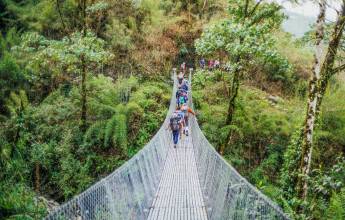
We start our trek today with a short but scenic walk. Our trail crosses the river at Syange by bridge. We climb up through Germu and follow an undulating trail through farmland to Tallo Chiple, where we stop for a tea break. The trail then descends to cross a suspension bridge, from where we have a steep climb towards Maththillo Chipla.

The trail contours round the hillside and we then have a steep descent to the Marsyangdi River, which we cross by a suspension bridge. Walking steeply uphill for approximately 20 minutes, we rejoin the main trail at the village of Jagat, where we spend the night. We arrive in Jagat around lunchtime and the afternoon is free to explore the area. Down by the river are some hot springs!

Accommodation: Teahouse (sleeping altitude: 4,265ft/1,300m)

  • Meals included:Breakfast

Immediately after leaving the lodge, a small, old trail turns off the road up to the left and undulates through forest and farmland all the way to Chyamje, after which we cross a suspension bridge and climb through oak forest. An undulating ascent brings us to a level valley where Tal, the next village, is situated at the foot of a grand waterfall (5,580ft/1,700m). From Tal, we cross the river and climb up to a jeep track which we follow to Dharapani.

Accommodation: Teahouse (sleeping altitude: 6,200ft/1,890m)

  • Meals included:Breakfast

Beyond Dharapani, we leave the jeep trail and turn sharply up to the left and have a steep 40 minute climb up a stone staircase to the pretty village of Odar. Passing traditional farms and homesteads, we trek through Galenchowk before descending to the main trail at Bagarchap at 7,100ft (2,164m). The name of this village means ‘butcher’s place’ and, although Buddhist, the people of this region used to hunt animals.

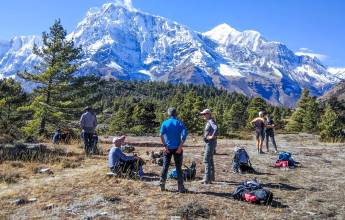
Continuing, we follow the jeep track for a short while past apple orchards to Dhanagyu. From here, we turn sharply up into the forest and have a fairly long climb to Temang, where we have lunch with magnificent views of Manaslu and Peak 29. The trail then descends through fir and pine forests to Thanchowk and further on through Koto to Chame (8,900ft/2,713m), the administrative centre of the Manang district.

Accommodation: Teahouse (sleeping altitude: 8,860ft/2,700m)

  • Meals included:Breakfast

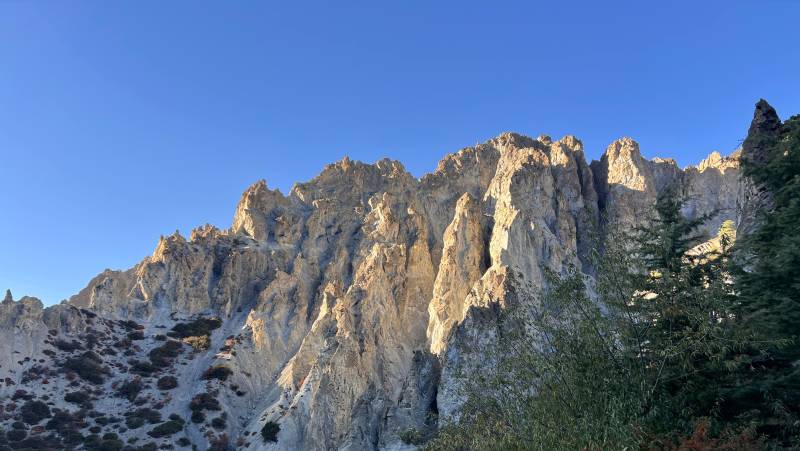
We now experience a dramatic change of scenery. Leaving the forests and vegetation of the alpine regions, we enter the upper district of Manang, known as Nyeshang. At first, our trail follows the river closely through a deep canyon on the jeep track for a couple of hours to Brathang (9,577ft/2,919m) where there is now a large apple plantation. We can stop for fresh coffee and cakes (and maybe some fresh apple juice) before we begin our climb this morning. The trail then crosses the river and leaves the jeep track to climb on forest trails through fir and pine trees. Here,  the curved rockface of Paungda Danda rises nearly 4,920ft (1,500m) from the riverbank to Dukha Pokhari, where we stop for lunch.
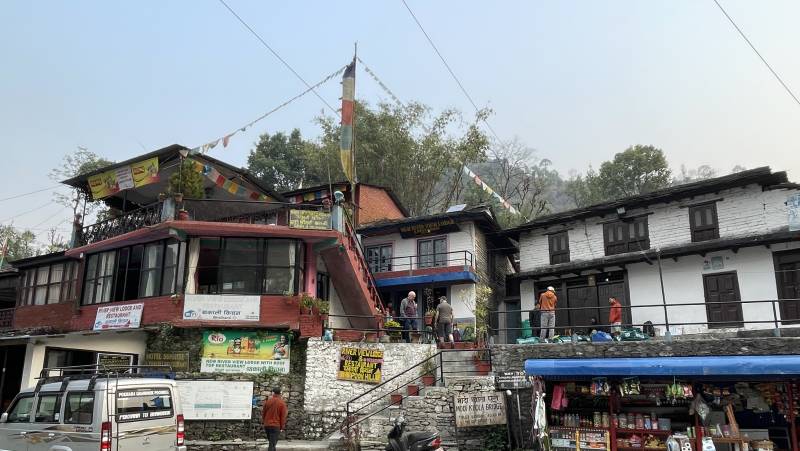
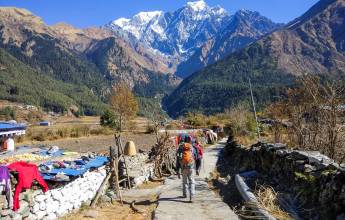
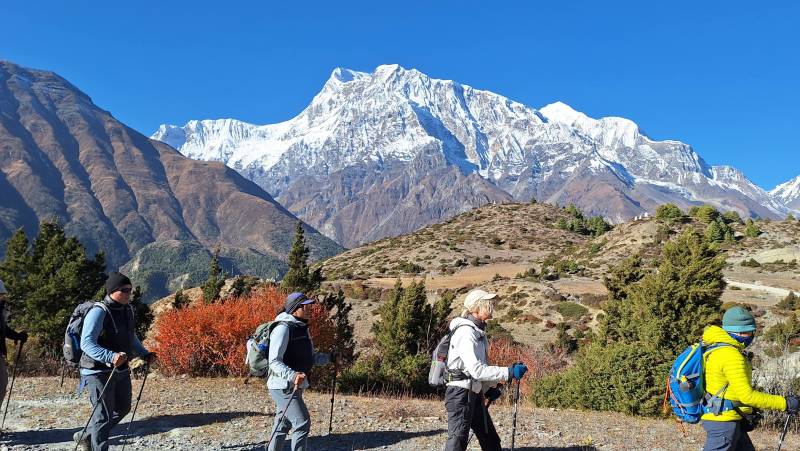
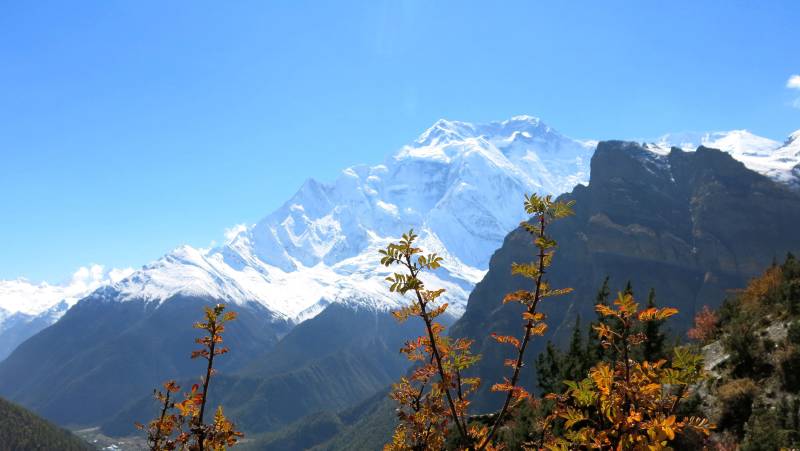
Next, we veer off to the right and take the trail that climbs away from the road track and to Upper Pisang village, where we stay in a lodge for the night. There is an impressive monastery in the village, which we can visit in the afternoon. From here to the pass, we are the closest we will be to the mountains and today the views of Annapurna II are particularly impressive (weather permitting).
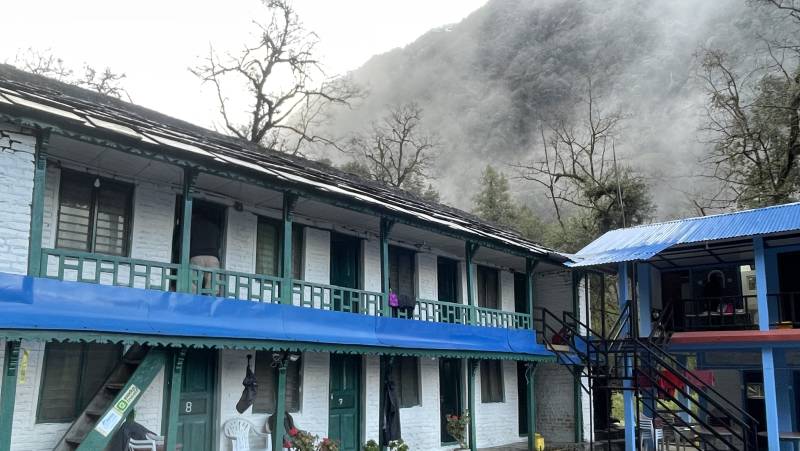
Accommodation: Teahouse (sleeping altitude: 10,825ft/3,300m)

  • Meals included:Breakfast

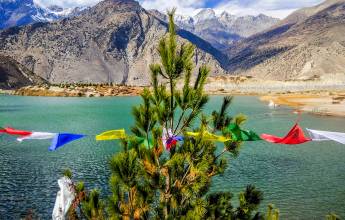
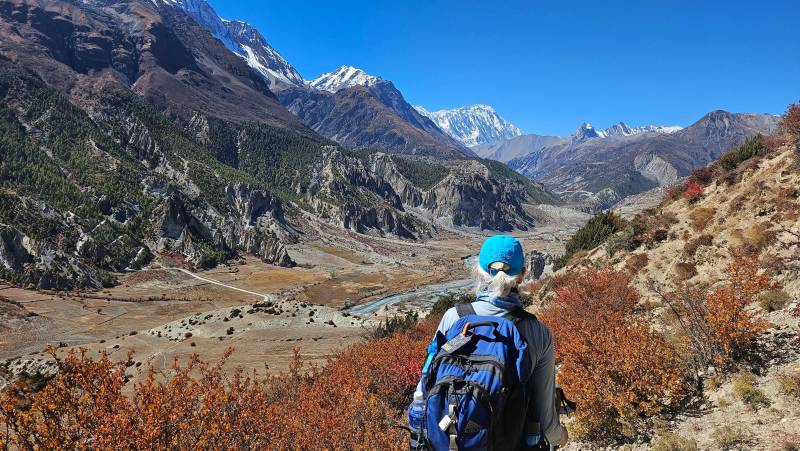
We have a shorter but spectacular day for acclimatisation. From Upper Pisang, we take the fantastic high-level route towards Manang via the villages of Gyaru and Ngawal. This is a wonderful walk with great views across to the Annapurnas. We start with a short descent through the forest to a small green lake and then have a very steep climb up to Gyaru for a tea break. The views across the valley become more spectacular the higher we go. From here, the trail undulates high above the river with magnificent views across the Annapurnas to Ngawal, where we stay tonight. After lunch at our lodge we can explore this pretty medieval village and also have the option for a 6km acclimatisation walk up above the village to a small shrine and cave (approximately two and a half hours) ascending 420m.

Accommodation: Teahouse (sleeping altitude: 11,975ft/3,650m)

  • Meals included:Breakfast

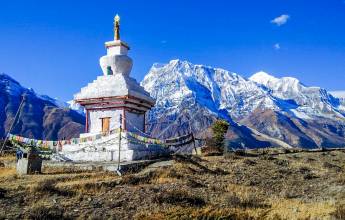
We have another half day for acclimatisation. From Ngawal, we take a spectacular high trail, which contours high above the valley with amazing views across to the Annapurnas and Gangapurna. As we leave Ngawal village, we pass a large chorten (Tibetan Buddhist shrine) before the trail drops to Julu village. We take the route that climbs steeply out of Julu onto a wonderful high trail above the valley. The trail climbs to a plateau and we contour through forests with great views across the valley to the Annapurnas and Gangapurna. The trail drops down to the pretty village of Braga, which is dominated by a large ancient gompa.

We stop here for the night and in the afternoon there will be the option for an additional acclimatisation walk exploring the village. We also visit the 500-year-old gompa.

Accommodation: Teahouse (sleeping altitude: 11,285ft/3,440m)

  • Meals included:Breakfast

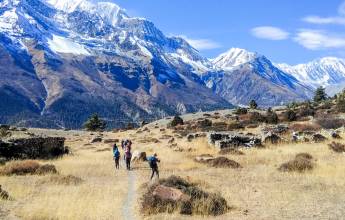
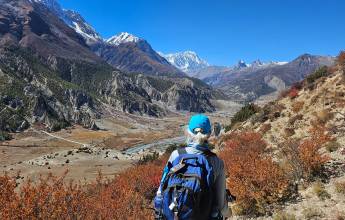
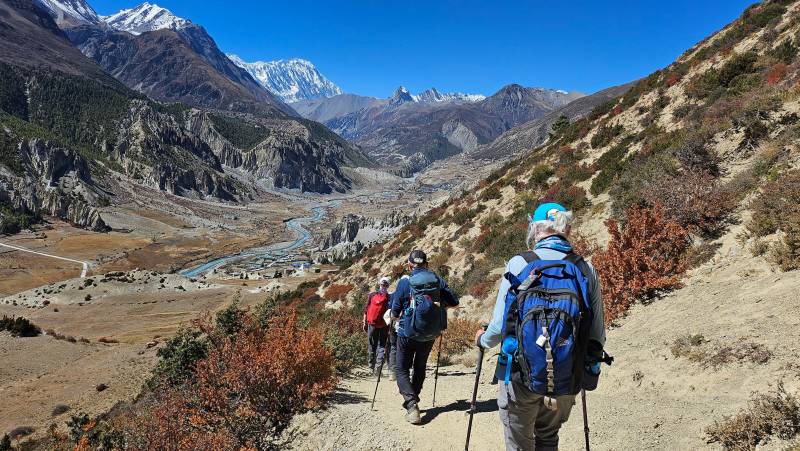
Leaving Braga, it’s a 1.2mi (2km) walk on the main trail to Manang village, passing beautifully carved mani (prayer) walls as we head towards the base of the Thorong La. We will stop at Manang for a short while, there are shops and bakeries here giving you the chance to pick up some snacks for the day or treat yourself to apple pie and a coffee. We climb out of the Marsyangdi Valley and turn northwest up the valley of the Jarsang Khola. Looking back, we enjoy ever-more spectacular views as we are above the forests and pass through dry, alpine country, with scrub juniper and occasional clumps of birch. We stop at Gunsang for a light lunch before continuing up the valley.

We spend tonight at a lodge in Yak Kharka. Look out for the blue sheep that inhabit this cold, windy spot. For the energetic, this afternoon we can take an additional walk into the hills behind the lodge.

Accommodation: Teahouse (sleeping altitude: 13,125ft/4,000m)

  • Meals included:Breakfast

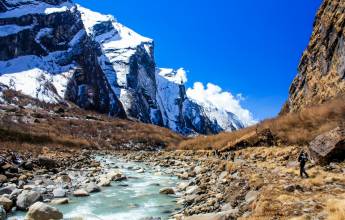
A short day to aid acclimatisation. The scenery becomes wilder as we continue ascending the valley. At one point, we descend to cross the Jarsang Khola, then traverse a scree slope to the lone teahouses at Phedi at the foot of the Thorong La. Thorong Phedi can be very cold and windy. In the afternoon, we can go for a walk up to Thorong High Camp, which is the last lodge and is about an hour above Phedi.

Accommodation: Teahouse (sleeping altitude: 14,500ft/4,420m)

  • Meals included:Breakfast

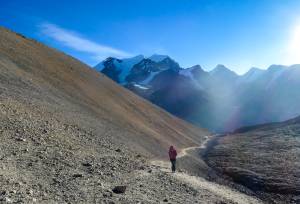
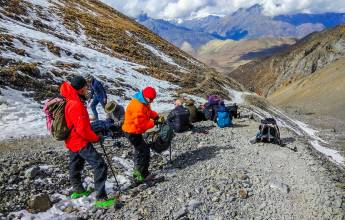
We have a very long day as we leave Phedi very early in the morning for the climb to the pass. The first part of the ascent is very steep, but it eases somewhat as we approach the top, although the altitude still makes the going tough. Eventually, after numerous false summits, we reach the pass itself at 17,769ft (5,416m). Ahead there is a magnificent panorama of snow-capped peaks soaring above the Kali Gandaki Valley looking towards Dolpo and Mustang; looking back, we can see several of the main Annapurna peaks. Directly in front of us is the great chasm of the Kali Gandaki (8,200ft/2,500m). It’s a very long descent that begins gently and becomes steeper, as we follow a series of switchbacks down to more grassy slopes. We stop for lunch at Phedi, where there are a few teahouses. From Phedi, it’s another hour and a half of gentle descent to Muktinath. We can visit the local famous temples on the way to our lodge.

Please note, conditions on the pass vary. It can be calm and clear with no snow but there can also be snow and ice and high winds on the pass. We recommend you carry Yaktrax or microspikes in case of snow or ice and take enough warm layers in case of high winds.

Accommodation: Teahouse (sleeping altitude: 12,140ft/3,700m)

  • Meals included:Breakfast

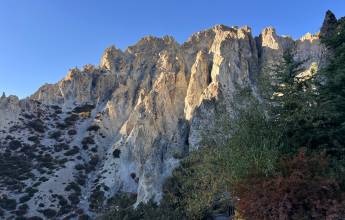
An easier day after the exertions of yesterday. From Muktinath, we pass through a landscape of bare, eroded hills with a backdrop of snow-capped high peaks. We cross the Jhong Khola and climb up to Chongur, a small traditional village. The monastery was founded by a Sakya monk and the whole village is painted with the colours of the Sakya sect. Continuing along a mixture of trekking trails and jeep tracks, we come to Jhong, another beautiful village. There is a monastery here dating to the seventh or eighth century and the ruins of an old fortress. Passing wind-eroded cliffs in an array of beautiful colours, we continue down the valley through Putak village and finally have a steep descent into the Kali Gandakhi Valley and the interesting village of Kagbeni. We have a long morning today (so take some snacks) and have a late lunch in Kagbeni.

There is time in the afternoon to explore this magical place. With narrow lanes and tunnels between the houses, it has an almost medieval feel.

Please note, in the event we are delayed due to bad weather, this day will be missed out and we trek directly from Muktinath to Marpha.

Accommodation: Teahouse (sleeping altitude: 9,185ft/2,800m)

  • Meals included:Breakfast

To avoid walking on the road, we take a 4×4 transfer (20 minutes), following the Kali Gandaki River to Jomsom. Here, we take a break, a chance to grab a tea or some local snacks, before exploring the ancient town populated by Thakali and Tibetan people.

From Jomsom, we hop back in our 4x4s for another 20 minutes until we reach the pretty village of Marpha, with its clean paved streets and white-washed houses, just in time for lunch. Marpha is known for producing apple and peach brandy, which you might like to sample to celebrate your crossing of the Thorong La.

This afternoon, enjoy free time to explore the area around Marpha, recuperating from the first half of your journey in Nepal.

Accommodation: Teahouse (sleeping altitude: 8,825ft/2,690m)

  • Meals included:Breakfast

Today, we follow the Kali Gandaki Valley, a major trade route. We are now in the deepest gorge in the world; to the east, Annapurna I rises to 26,545ft (8,091m), to the west, Dhaulagiri soars above us at 26,795ft (8,167m).

Leaving the dry, barren landscapes, we walk through pine, cypress and juniper forest, sometimes on the valley floor and at other times on a trail high above. From Marpha, before we cross back over the Kali Gandaki, we need to walk along the road for approximately 10 minutes before entering the walking trail through fir and pine forests. We climb up to the pretty Thakali village of Chimang.

Descending to a side stream, we follow the side valley down for a short while before climbing again into the forest. We ascend for about an hour and then the trail undulates for a while before descending to the valley floor at Sauru. We stop here for a break and then cross the Kali Gandaki to Kobang and onto Larjung.

Alternatively, from September to November, when the wooden suspension bridge crossing the Gali Gandaki is inaccessible, we must walk (1hr 30min) along a main road from Chimang to Larjung.

We stay tonight in a lodge. In the afternoon, we walk up to Naurikot, another traditional Thakali village, for sunset views across the valley on Niligiri.

Accommodation: Teahouse (sleeping altitude: 8,365ft/2,550m)

  • Meals included:Breakfast

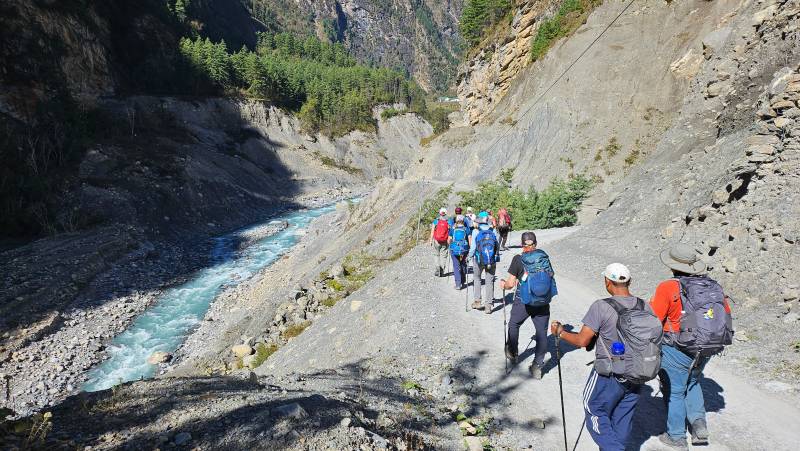
From our lodge we cross the Kali Gandaki to Sirkung. It’s then an easy climb up through the forest to Titi Tal, a very small lake (pond) but an important marsh zone for waterbirds in the Mustang area. We follow the trail through Taglung to Kunjo, where we have a simple Nepali lunch. After lunch we descend steeply through the forest to a rocky riverbed. Crossing a suspension bridge, we have a gradual climb up to Jhipre Deurali. The trail then descends to cross the Kali Gandaki where we join the road. We walk for approximately one hour along the road until we reach the start of the next trekking trail to Ghasa, where we reach our lodge for the evening.

Accommodation: Teahouse (sleeping altitude: 6,400ft/1,950m)

  • Meals included:Breakfast

From Ghasa, we follow the road for 30 minutes, until we cross the river via a suspension bridge. The trail now climbs high above the river to Pairothaplo and then descends to Kopchepani. Across the river, we can see the huge waterfall at Rupse Chhara. We continue on the same side of the river and follow the rollercoaster trail up and down all morning. We have lunch in the small village of Narcheng before continuing past a hydroelectric project just before Tatopani. A suspension bridge brings us right into Tatopani, where we spend the night. Tatopani means ‘hot water’ and is famous for its hot springs just below the village. There is time in the late afternoon to enjoy a welcome soak – guaranteed to ease any aching limbs!

Accommodation: Teahouse (sleeping altitude: 4,100ft/1,250m)

  • Meals included:Breakfast

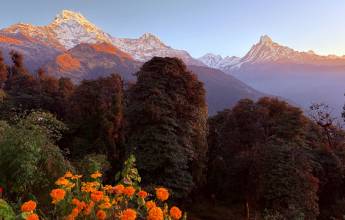
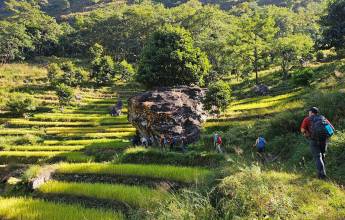
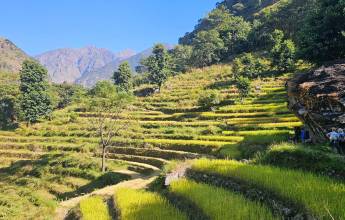
The last stage of the trek takes us over a high ridge to the end of the route. Today is a sting in the tail as we have a long climb to Ghorepani. We climb all day through small hamlets and terraced fields, starting with a short descent on the road track for 45 minutes to a couple of bridges. From the second bridge, we have 30 minutes along a track and then the trail starts climbing on a series of stone staircases. It’s fairly steep up to Durbin Danda from where we have a short descent through Ghara. We then mostly follow the old trail as it climbs up through the villages of Shika and Chitre. From Chitre, we enter a huge rhododendron forest and the last couple of hours takes us up to Ghorepani. Meaning ‘horse water’, Ghorepani was once a stopping place for the huge mule trains that used to ply this route. As we climb today, the mountains start to appear and from Ghorepani we get fabulous views of the Annapurnas from the lodge.

Accommodation: Teahouse (sleeping altitude: 9,515ft/2,900m)

  • Meals included:Breakfast

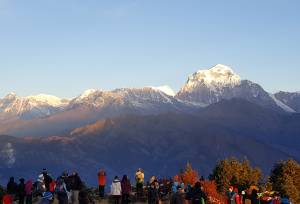
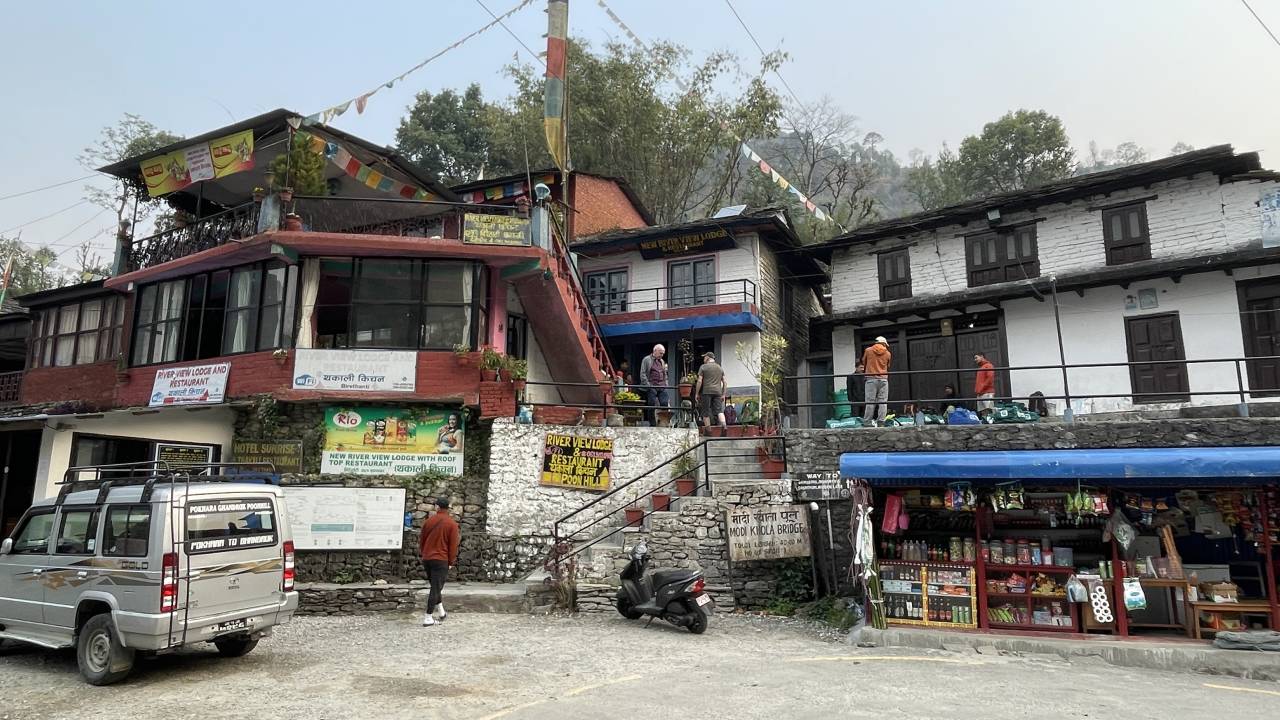
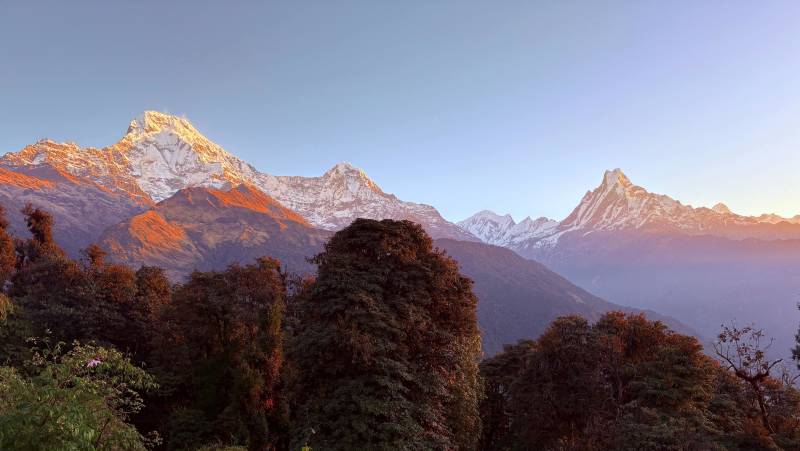
There’s an optional early start for those who want to climb Poon Hill for sunrise (approximately two hours’ return trip including stops – in addition to the 7hr 30min walking to Birethanthi). The effort is well worth the 1,015ft (310m) climb (again, in addition to the 1,050ft/320m of total ascent today) for the superb views over the Annapurnas, Dhaulagiri and Machhapuchhare. We return to our lodge for breakfast and then it’s all downhill through the forest to Banthanti and then down a stone staircase through Ulleri and Tirkhedunga to Birethanti by the Modi Khola, where we stay in a very modest lodge.

Accommodation: Teahouse (sleeping altitude: 3,360ft/1,025m)

  • Meals included:Breakfast

From Birethanti, it is a very short walk to Naya Pul, where we pick up transport back to Pokhara. We usually arrive by lunchtime and have the afternoon to explore this pretty lakeside town.

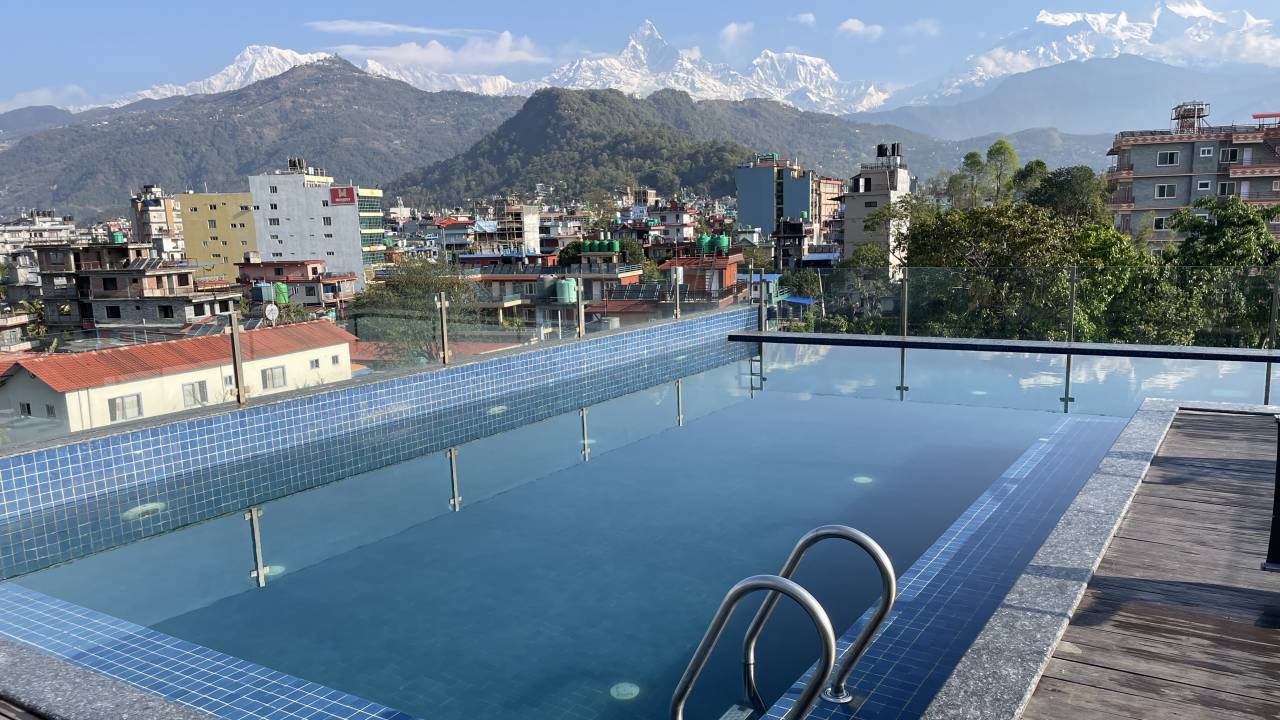
Accommodation: Hotel Kausi (or similar)

  • Meals included:Breakfast

We have the whole day in Pokhara. There are many options to choose from today. You might want to hire a bike and cycle around part of the lake or you could take a boat across the lake and walk up to the Japanese Peace Pagoda with great views of the mountains and the lake (from the pagoda, carry on up the ridge to Raniban Resort for lunch). Alternatively, visit the Mountaineering Museum, the Gurkha Museum, take a trip to the nearby Tibetan refugee settlement and craft centre, or simply relax in one of the many lakeside restaurants and stroll around the shops.

Accommodation: Hotel Kausi (or similar)

  • Meals included:Breakfast

We fly to Kathmandu. Weather depending, there should be good views on the flight.

Accommodation: Hotel Royal Singi (or similar)

  • Meals included:Breakfast

The trip ends after breakfast and we begin our return journeys home, full of tales and memories to last a lifetime. If you’d like a little more time to explore Kathmandu or the surrounding region, speak to your sales representative about extending your stay.

  • Meals included:Breakfast

Dates & Prices

Annapurna Circuit Trek

Skip the hassle: We’ll handle your trip from start to finish, with competitive flight prices, deposit-only payments, and full ATOL protection available.

Read more about our flights
  • Sunday 29 Mar 2026 to Sunday 19 Apr 2026

    Availability
    Guaranteed (Available)

    This departure is available for new bookings and has reached the minimum number of passengers required to go ahead. Please click Continue to proceed with booking or contact our Sales team for assistance.

    Optional Single Supplement
    +£ 205

    £ 2149 (excl. flights)

  • Sunday 04 Oct 2026 to Sunday 25 Oct 2026

    Availability
    Available

    This departure is available for new bookings, and will be guaranteed to go ahead once it reaches minimum numbers. Please click Continue to proceed with booking or contact our Sales team for assistance.

    Optional Single Supplement
    +£ 205

    £ 2199 (excl. flights)

    Book with £ 549 deposit

  • Sunday 18 Oct 2026 to Sunday 08 Nov 2026

    Availability
    Guaranteed (Available)

    This departure is available for new bookings and has reached the minimum number of passengers required to go ahead. Please click Continue to proceed with booking or contact our Sales team for assistance.

    Optional Single Supplement
    +£ 205
    Save £ 110

    Usually £ 2199

    Now £ 2089

    Book with £ 522 deposit

  • Sunday 01 Nov 2026 to Sunday 22 Nov 2026

    Availability
    Guaranteed (Available)

    This departure is available for new bookings and has reached the minimum number of passengers required to go ahead. Please click Continue to proceed with booking or contact our Sales team for assistance.

    Optional Single Supplement
    +£ 205

    £ 2199 (excl. flights)

    Book with £ 549 deposit

  • Sunday 22 Nov 2026 to Sunday 13 Dec 2026

    Availability
    Available

    This departure is available for new bookings, and will be guaranteed to go ahead once it reaches minimum numbers. Please click Continue to proceed with booking or contact our Sales team for assistance.

    Optional Single Supplement
    +£ 205

    £ 2199 (excl. flights)

    Book with £ 549 deposit

  • Sunday 06 Dec 2026 to Sunday 27 Dec 2026

    Availability
    Available

    This departure is available for new bookings, and will be guaranteed to go ahead once it reaches minimum numbers. Please click Continue to proceed with booking or contact our Sales team for assistance.

    Optional Single Supplement
    +£ 205

    £ 2249 (excl. flights)

    Book with £ 562 deposit

  • Sunday 07 Mar 2027 to Sunday 28 Mar 2027

    Availability
    Available

    This departure is available for new bookings, and will be guaranteed to go ahead once it reaches minimum numbers. Please click Continue to proceed with booking or contact our Sales team for assistance.

    Optional Single Supplement
    +£ 205

    £ 2199 (excl. flights)

    Book with £ 549 deposit

  • Wednesday 10 Mar 2027 to Wednesday 31 Mar 2027

    Availability
    Available

    This departure is available for new bookings, and will be guaranteed to go ahead once it reaches minimum numbers. Please click Continue to proceed with booking or contact our Sales team for assistance.

    Optional Single Supplement
    +£ 205

    £ 2199 (excl. flights)

    Book with £ 549 deposit

  • Sunday 21 Mar 2027 to Sunday 11 Apr 2027

    Availability
    Available

    This departure is available for new bookings, and will be guaranteed to go ahead once it reaches minimum numbers. Please click Continue to proceed with booking or contact our Sales team for assistance.

    Optional Single Supplement
    +£ 205

    £ 2999 (excl. flights)

    Book with £ 749 deposit

    Led by Valerie Parkinson, Wanderlust World Guide Awards Winner 2021

  • Wednesday 24 Mar 2027 to Wednesday 14 Apr 2027

    Availability
    Available

    This departure is available for new bookings, and will be guaranteed to go ahead once it reaches minimum numbers. Please click Continue to proceed with booking or contact our Sales team for assistance.

    Optional Single Supplement
    +£ 205

    £ 2199 (excl. flights)

    Book with £ 549 deposit

  • Sunday 04 Apr 2027 to Sunday 25 Apr 2027

    Availability
    Available

    This departure is available for new bookings, and will be guaranteed to go ahead once it reaches minimum numbers. Please click Continue to proceed with booking or contact our Sales team for assistance.

    Optional Single Supplement
    +£ 205

    £ 2199 (excl. flights)

    Book with £ 549 deposit

  • Sunday 03 Oct 2027 to Sunday 24 Oct 2027

    Availability
    Available

    This departure is available for new bookings, and will be guaranteed to go ahead once it reaches minimum numbers. Please click Continue to proceed with booking or contact our Sales team for assistance.

    Optional Single Supplement
    +£ 215

    £ 2299 (excl. flights)

    Book with £ 574 deposit

  • Sunday 10 Oct 2027 to Sunday 31 Oct 2027

    Availability
    Available

    This departure is available for new bookings, and will be guaranteed to go ahead once it reaches minimum numbers. Please click Continue to proceed with booking or contact our Sales team for assistance.

    Optional Single Supplement
    +£ 215

    £ 2299 (excl. flights)

    Book with £ 574 deposit

  • Wednesday 13 Oct 2027 to Wednesday 03 Nov 2027

    Availability
    Available

    This departure is available for new bookings, and will be guaranteed to go ahead once it reaches minimum numbers. Please click Continue to proceed with booking or contact our Sales team for assistance.

    Optional Single Supplement
    +£ 215

    £ 2299 (excl. flights)

    Book with £ 574 deposit

  • Sunday 31 Oct 2027 to Sunday 21 Nov 2027

    Availability
    Available

    This departure is available for new bookings, and will be guaranteed to go ahead once it reaches minimum numbers. Please click Continue to proceed with booking or contact our Sales team for assistance.

    Optional Single Supplement
    +£ 215

    £ 2299 (excl. flights)

    Book with £ 574 deposit

  • Wednesday 03 Nov 2027 to Wednesday 24 Nov 2027

    Availability
    Available

    This departure is available for new bookings, and will be guaranteed to go ahead once it reaches minimum numbers. Please click Continue to proceed with booking or contact our Sales team for assistance.

    Optional Single Supplement
    +£ 215

    £ 2299 (excl. flights)

    Book with £ 574 deposit

  • Sunday 14 Nov 2027 to Sunday 05 Dec 2027

    Availability
    Available

    This departure is available for new bookings, and will be guaranteed to go ahead once it reaches minimum numbers. Please click Continue to proceed with booking or contact our Sales team for assistance.

    Optional Single Supplement
    +£ 215

    £ 2299 (excl. flights)

    Book with £ 574 deposit

  • Wednesday 17 Nov 2027 to Wednesday 08 Dec 2027

    Availability
    Available

    This departure is available for new bookings, and will be guaranteed to go ahead once it reaches minimum numbers. Please click Continue to proceed with booking or contact our Sales team for assistance.

    Optional Single Supplement
    +£ 215

    £ 2299 (excl. flights)

    Book with £ 574 deposit

  • Sunday 28 Nov 2027 to Sunday 19 Dec 2027

    Availability
    Available

    This departure is available for new bookings, and will be guaranteed to go ahead once it reaches minimum numbers. Please click Continue to proceed with booking or contact our Sales team for assistance.

    Optional Single Supplement
    +£ 215

    £ 2299 (excl. flights)

    Book with £ 574 deposit

  • Wednesday 08 Dec 2027 to Wednesday 29 Dec 2027

    Availability
    Available

    This departure is available for new bookings, and will be guaranteed to go ahead once it reaches minimum numbers. Please click Continue to proceed with booking or contact our Sales team for assistance.

    Optional Single Supplement
    +£ 215

    £ 2349 (excl. flights)

    Book with £ 587 deposit

Your Group, Your Adventure

Want to choose your travel companions? Gather your family and friends and let us create a Private Adventure just for you.

View Details

Accommodation

Hotels and teahouses

We stay in teahouses for most of this adventure, a classic experience for trekkers in the Himalaya. We spend the rest of our time in hotels. The accommodations we typically use are on the day-to-day itinerary; however, below are a few of the notable places we stay on this trip.  

Kathmandu: Royal Singi Hotel (nights 1 and 21)  

Annapurna Circuit Trek

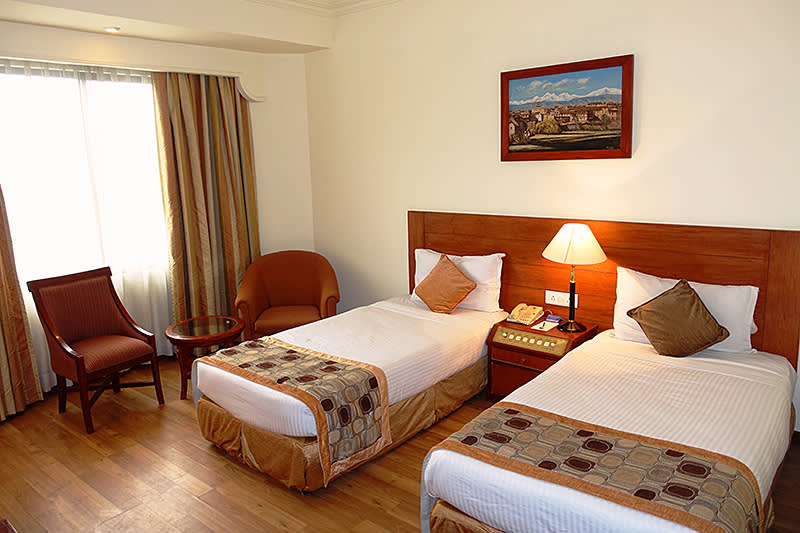
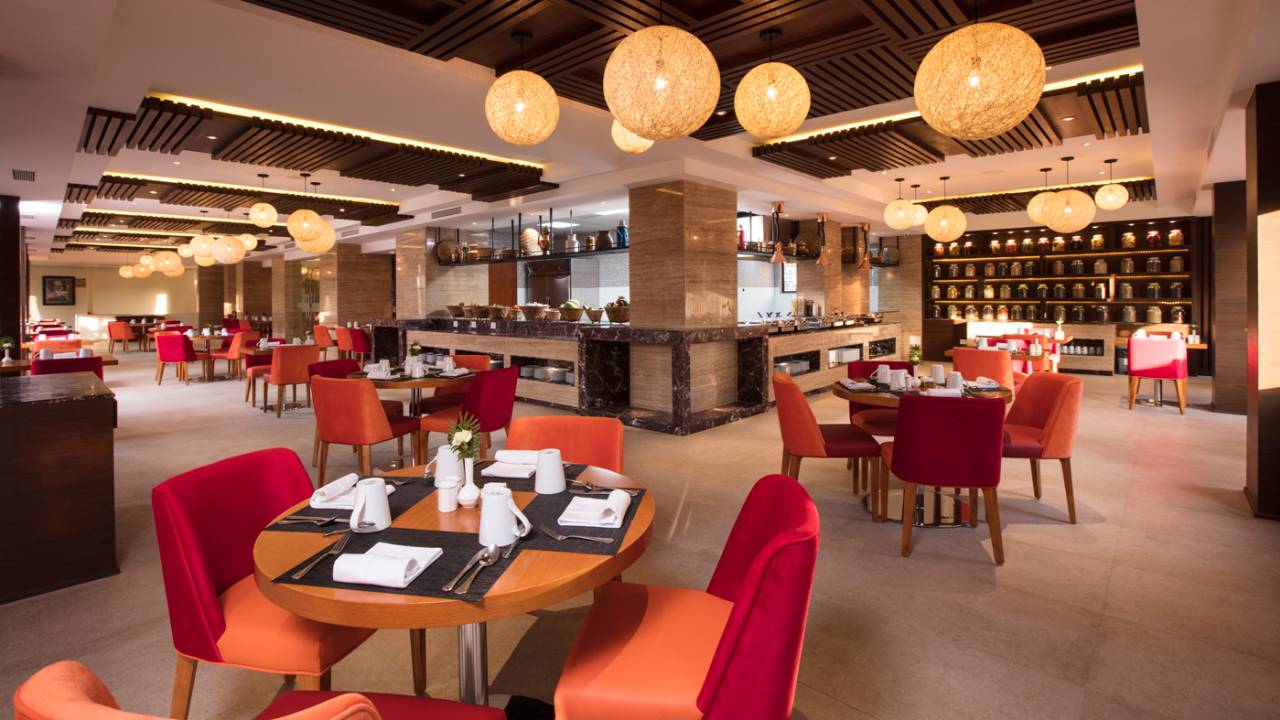
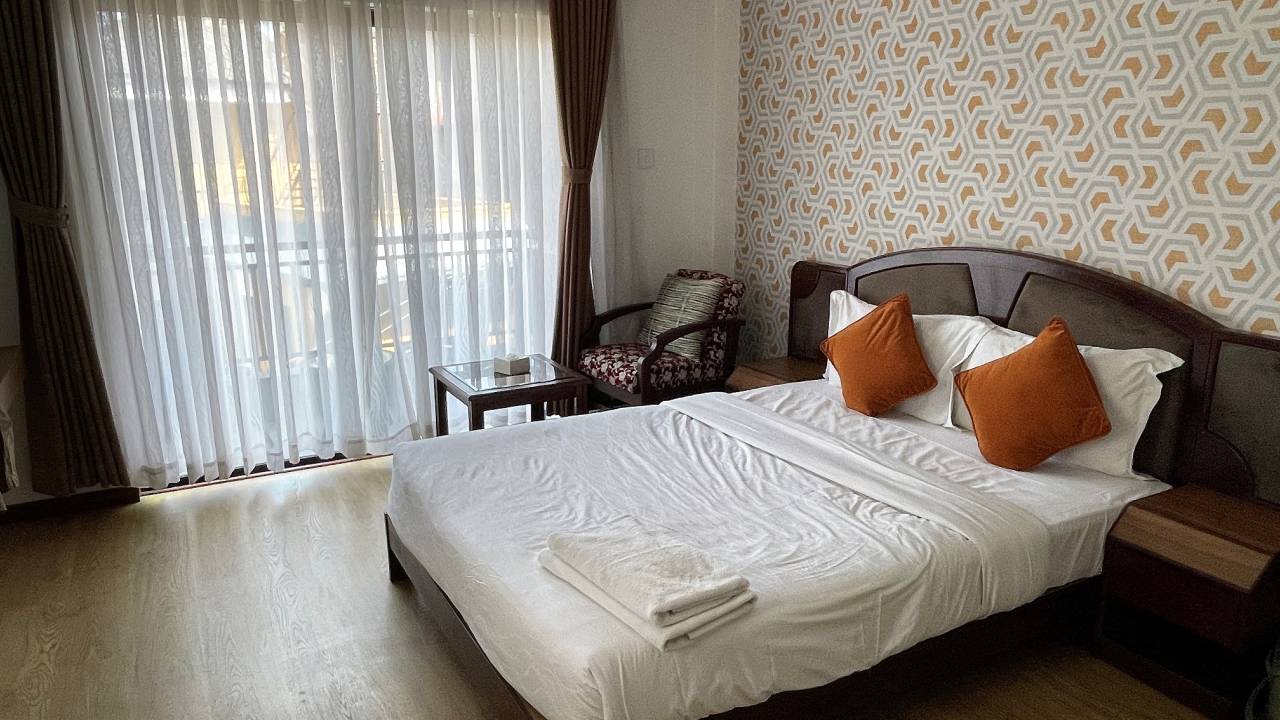
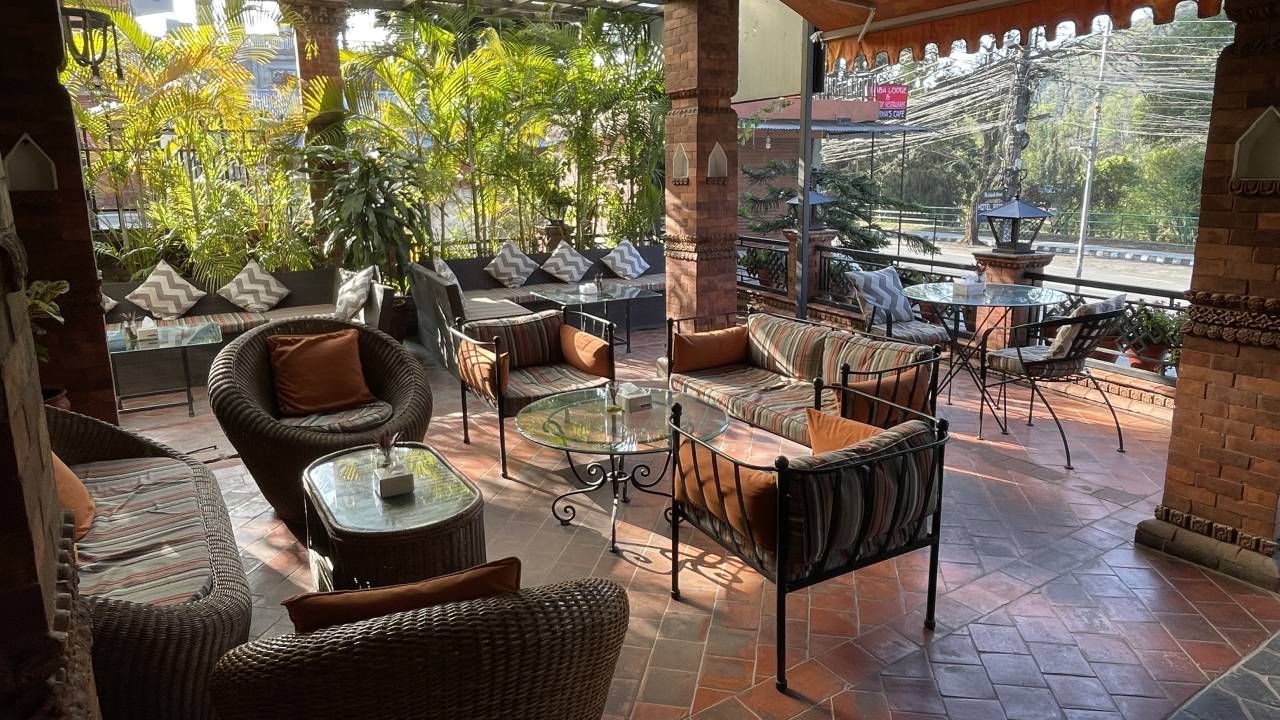
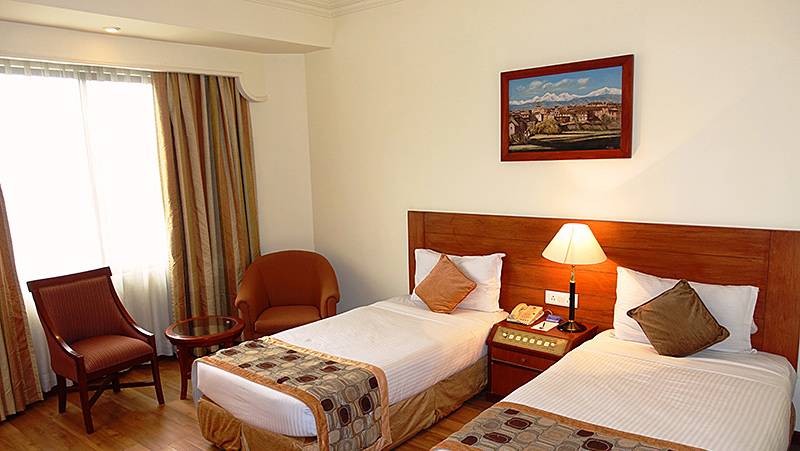
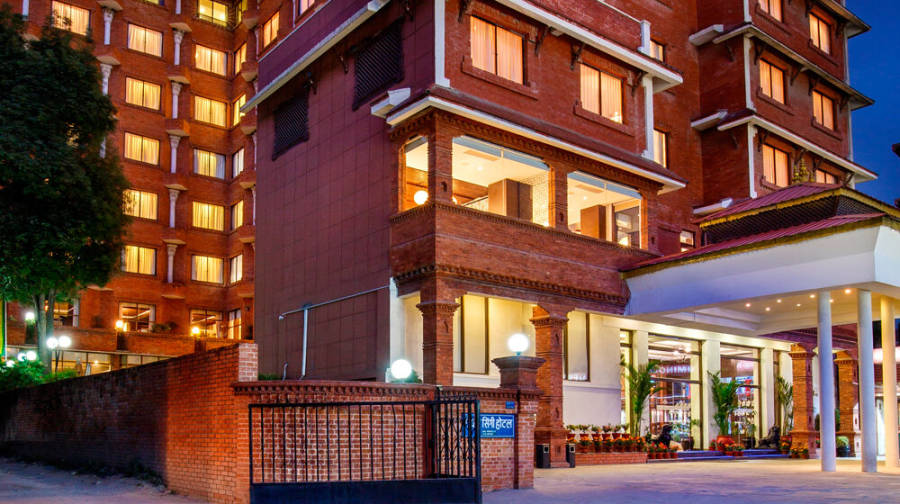
The Royal Singi, a three-star hotel, has been welcoming our groups for more than two decades. The name is inspired by the Snow Lion, a mythical creature in Tibetan Buddhism, which represents immense joy, positivity, delight and comfort. The hotel embraces the name with a restaurant, bar, outdoor courtyard, and complimentary wifi throughout. There’s also an Exodus desk in the lobby and an Exodus representative is usually available daily in the mornings and evenings. The Royal Singi is well located near the Thamel district, close to banks, restaurants, shops and attractions.  

Annapurna: Teahouses (nights 2-18)  

Annapurna Circuit Trek

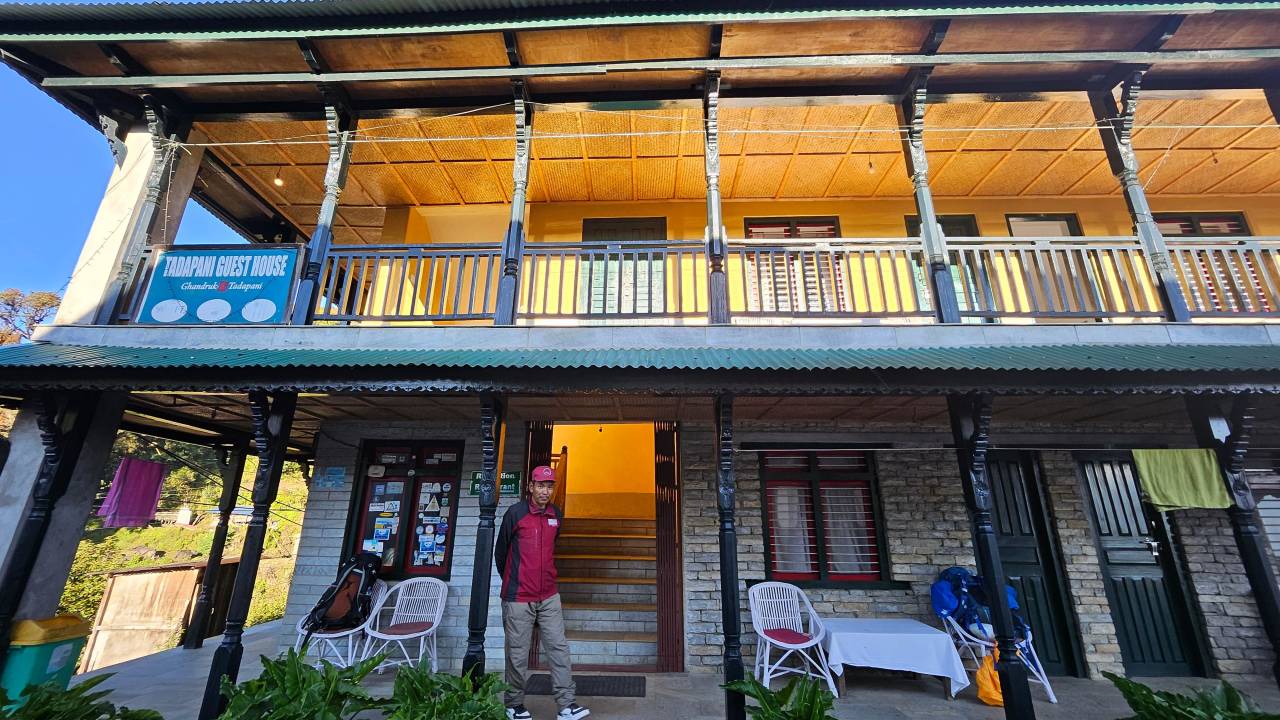
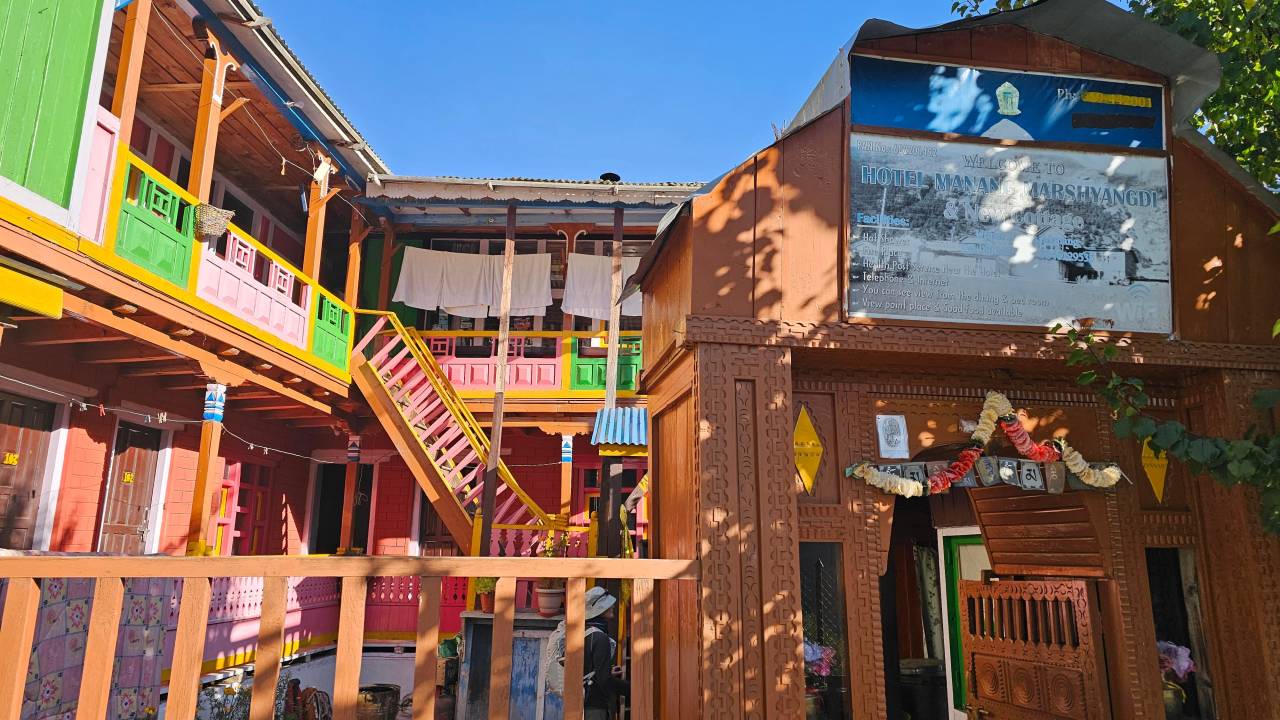
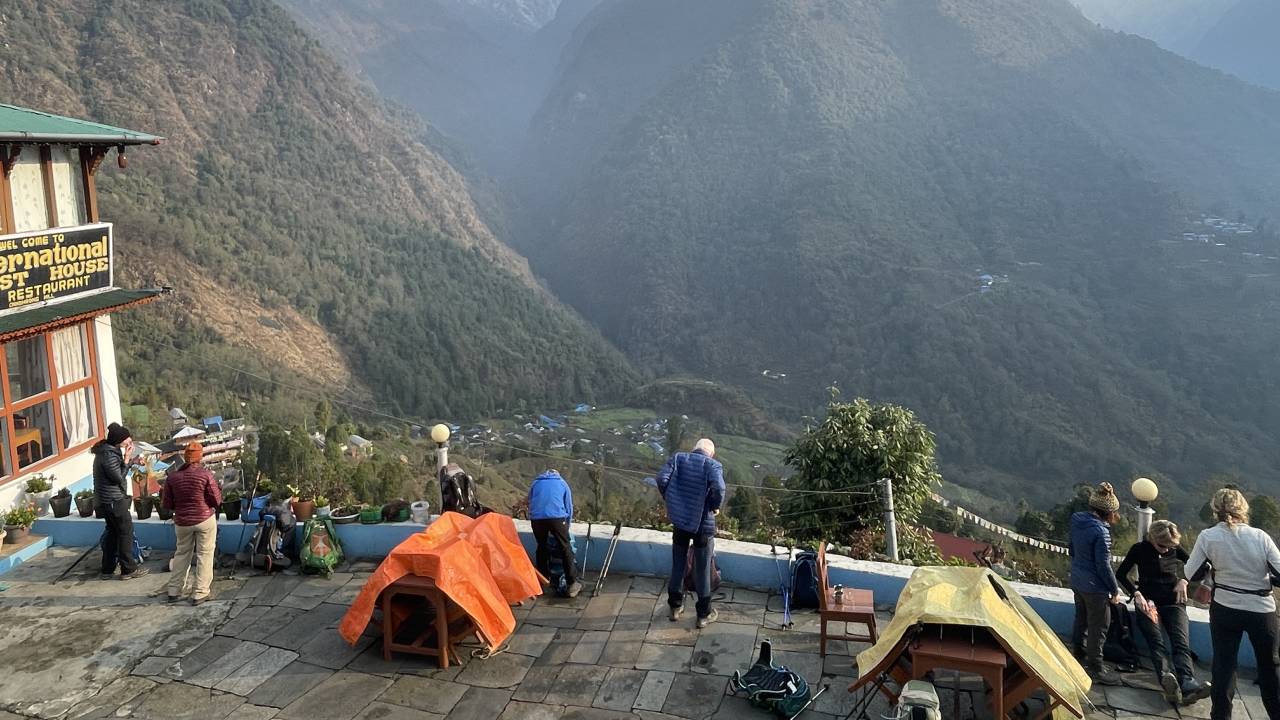
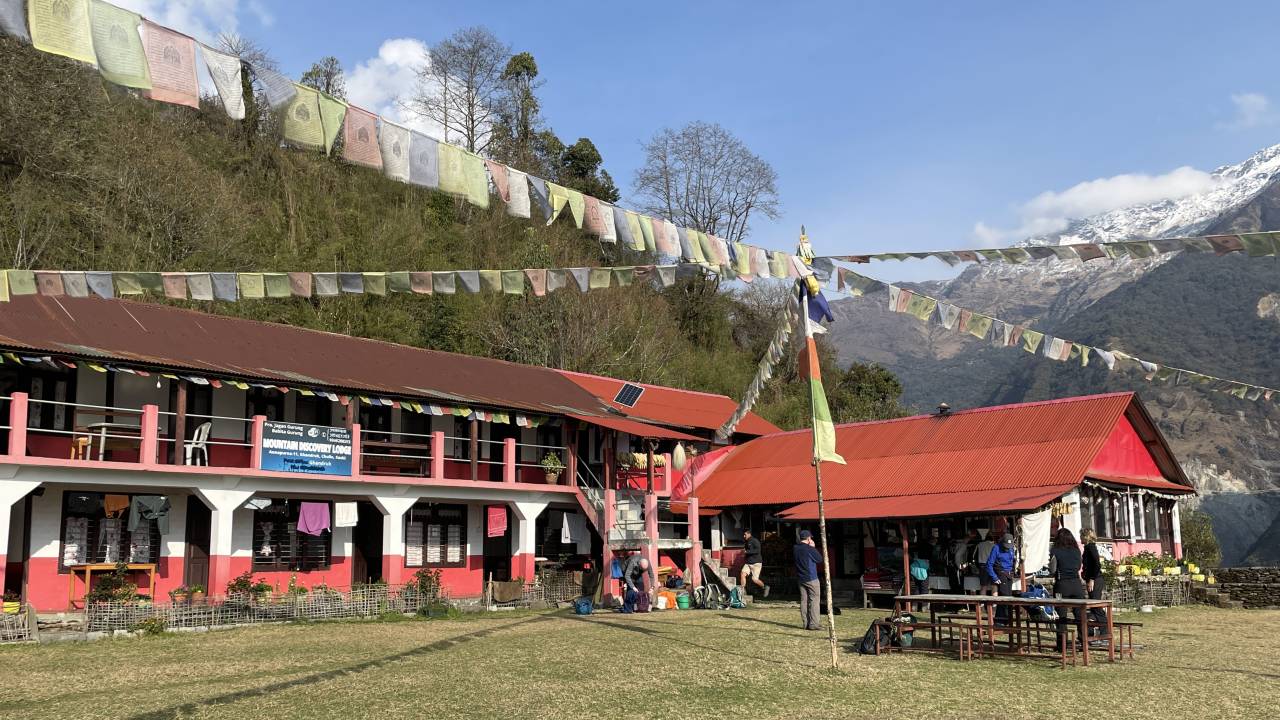
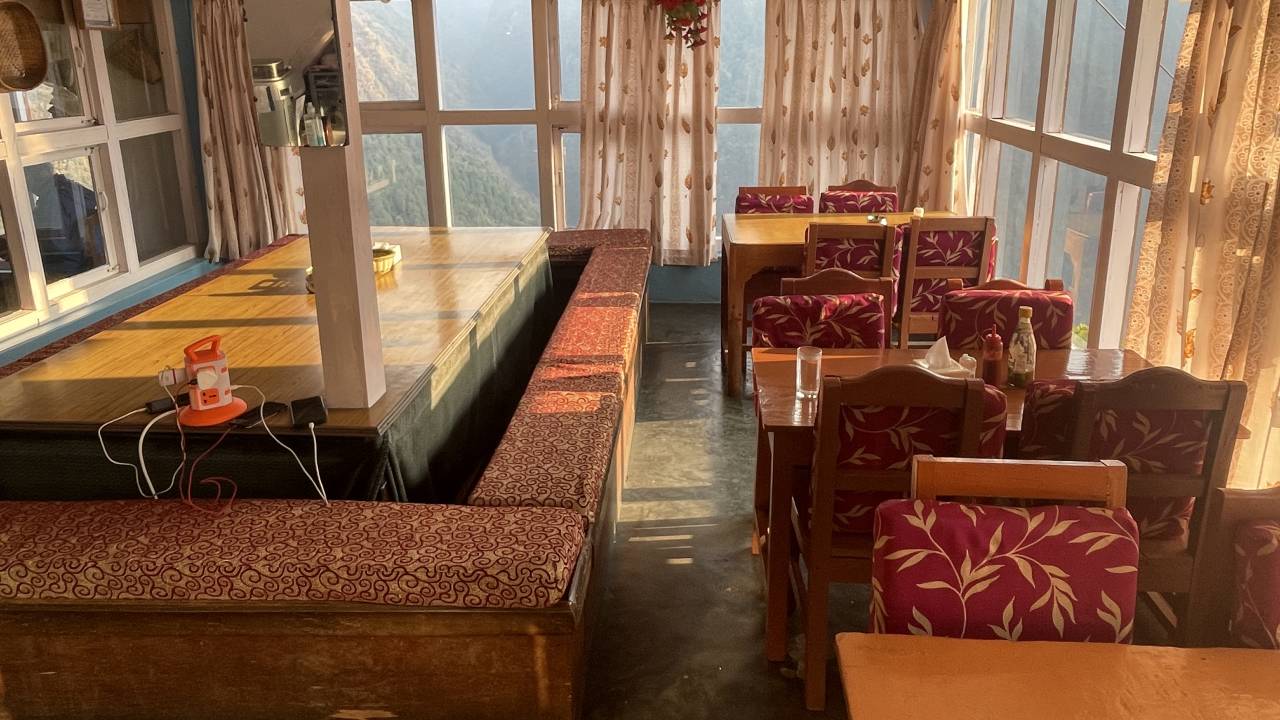
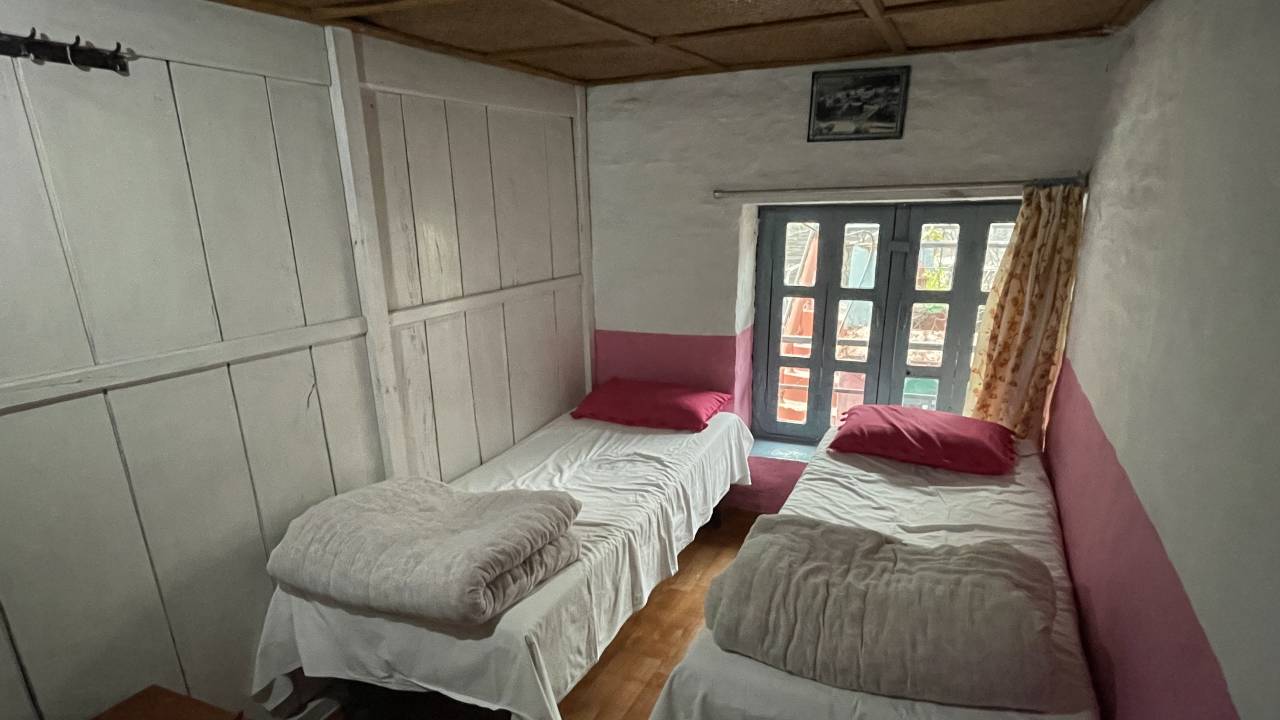
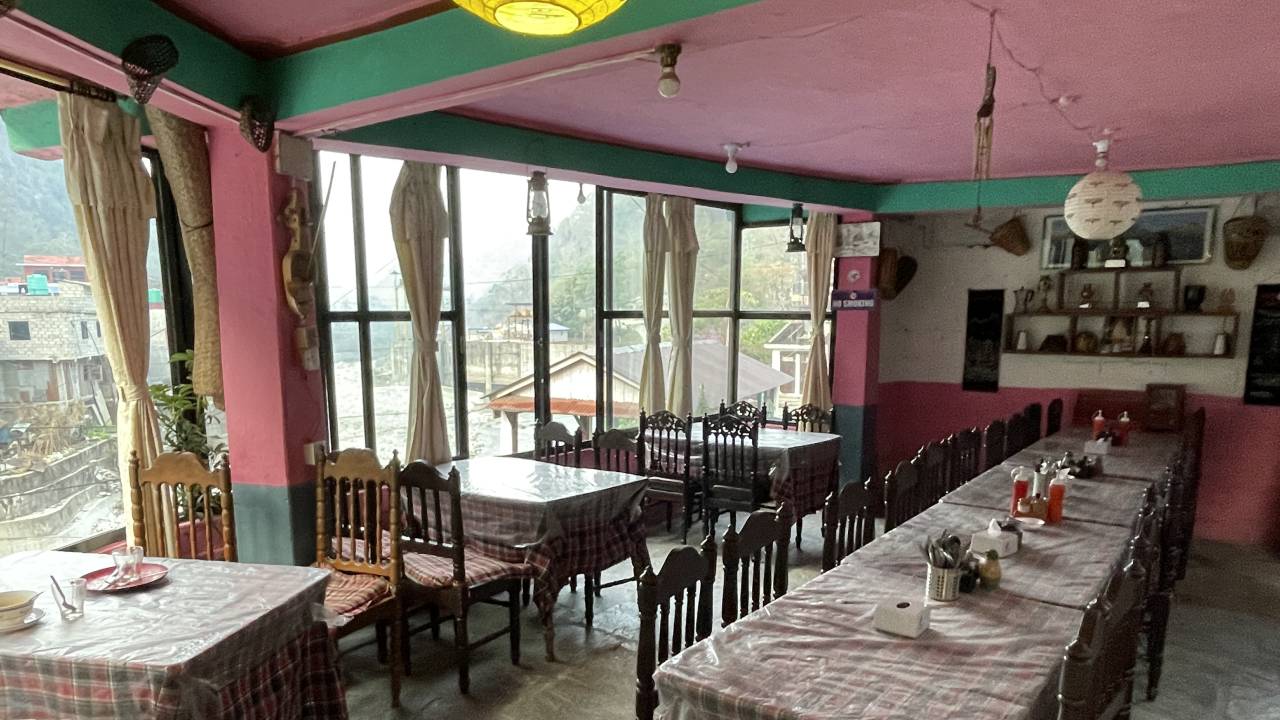
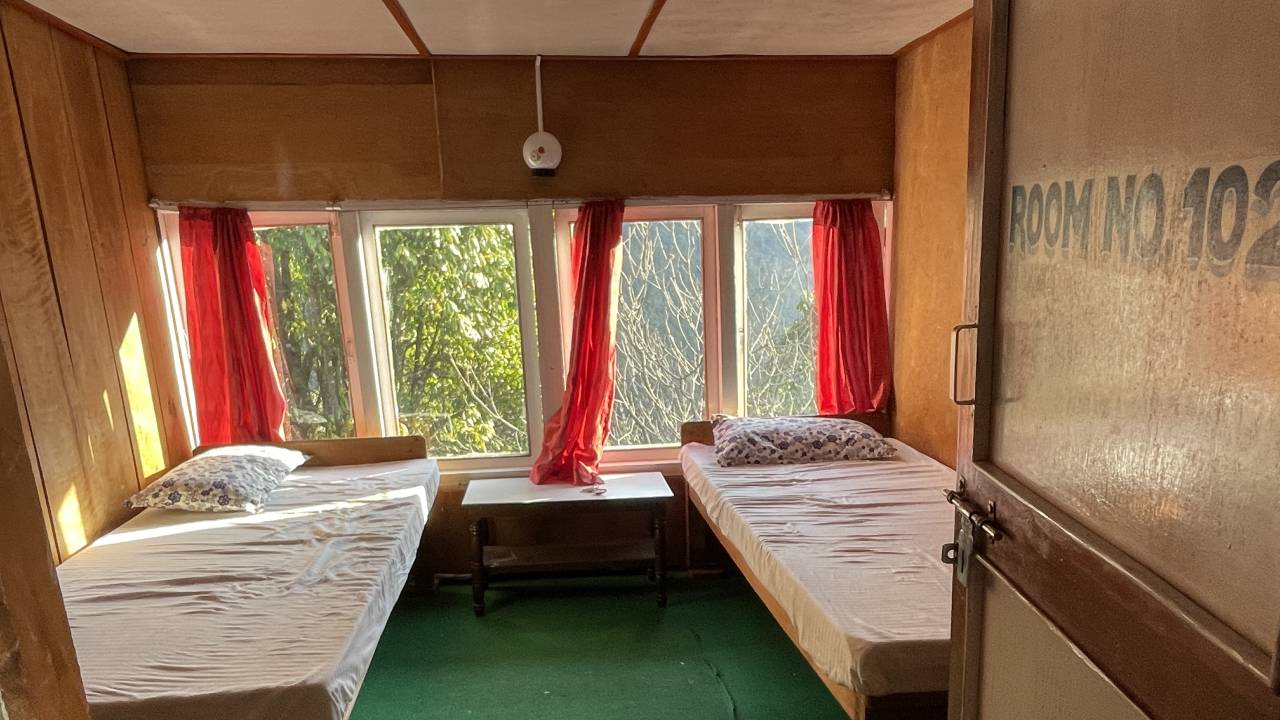
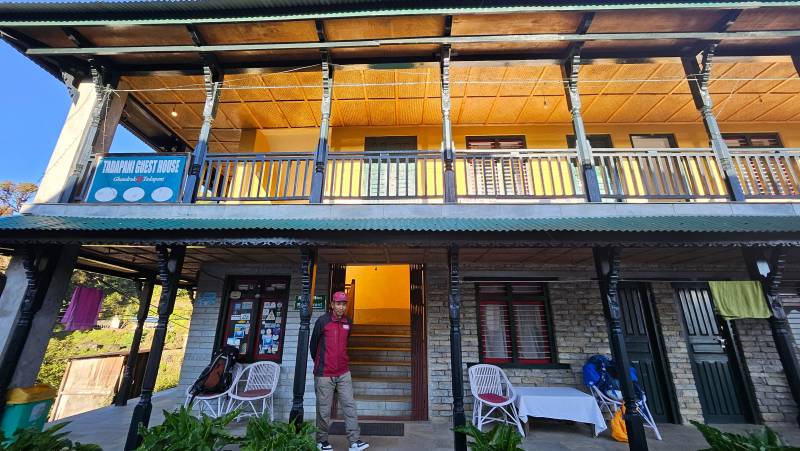
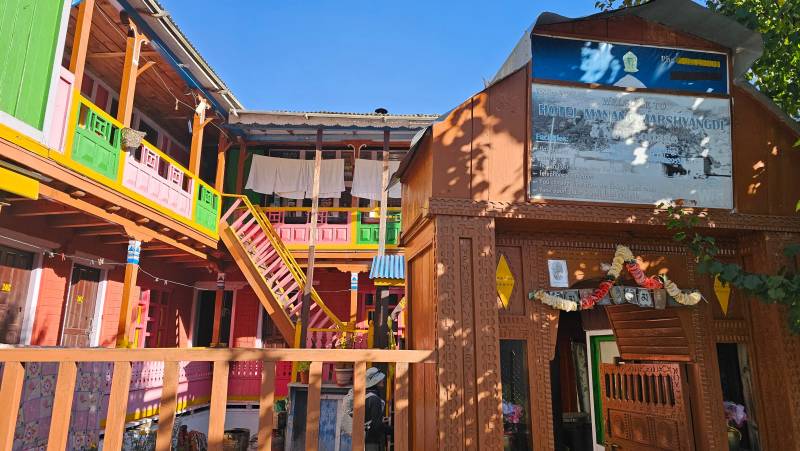
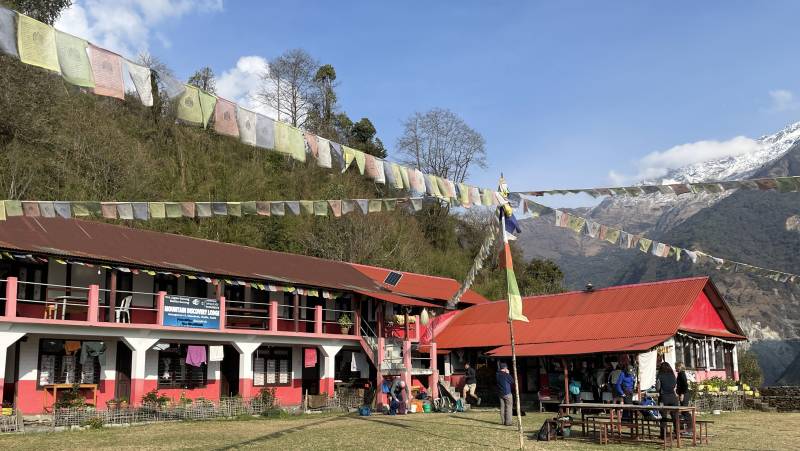
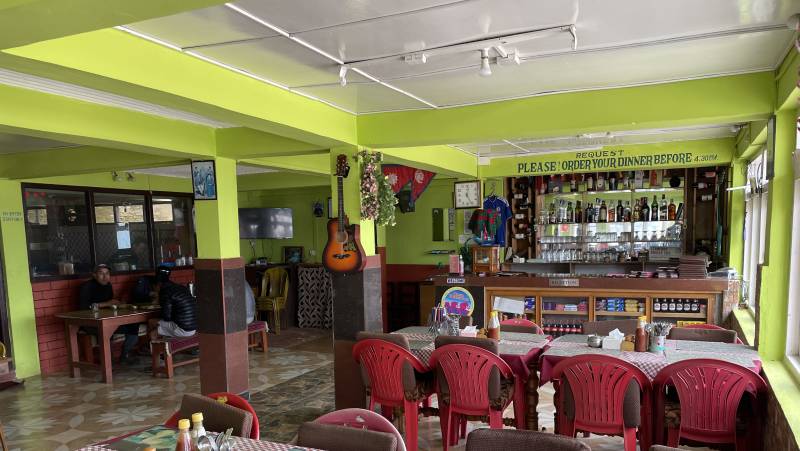
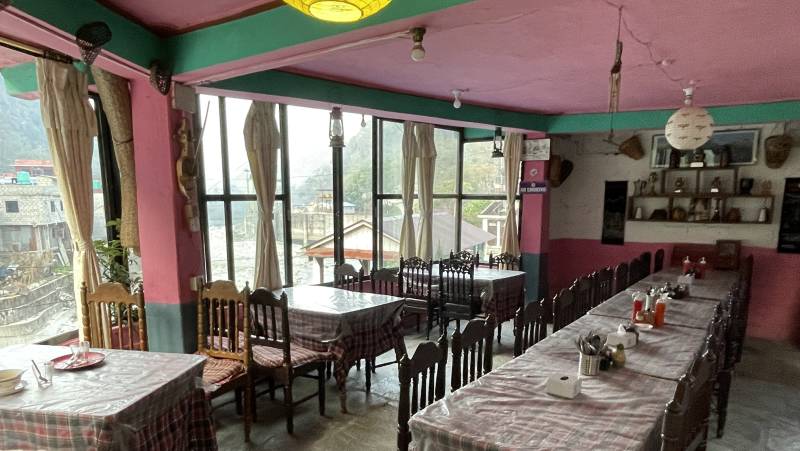
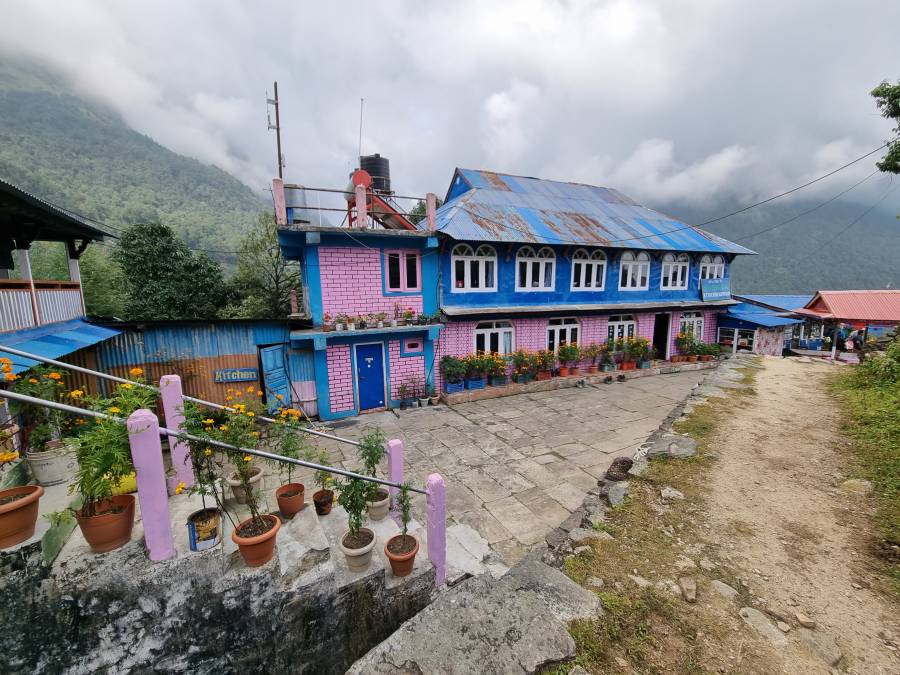
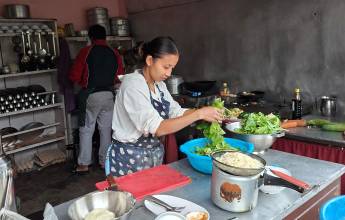
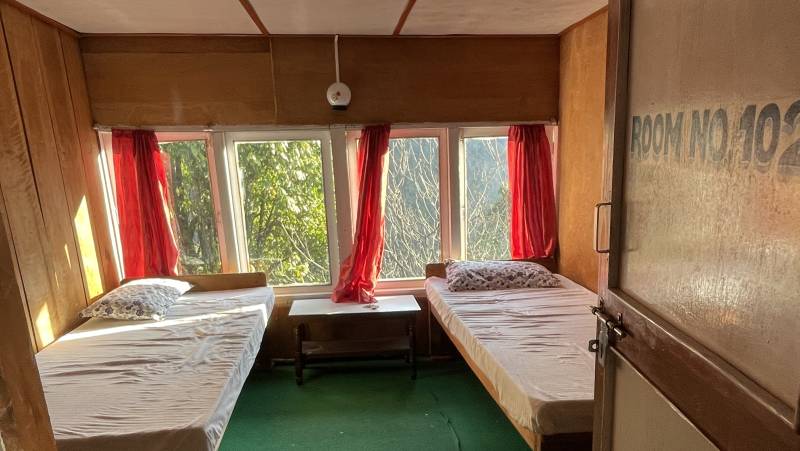
Staying in teahouses is a time-tested tradition for hikers in the Himalaya. They may be basic, but they’re a welcome sight after a day of walking among the spectacular peaks. The hub of teahouse living is the dining room, which is usually decorated with traditional rugs, sometimes with a stove or heater (some lodges charge a fee to put the heater on). Most teahouses sell snacks and other essentials such as tissues, soap and toilet paper.  

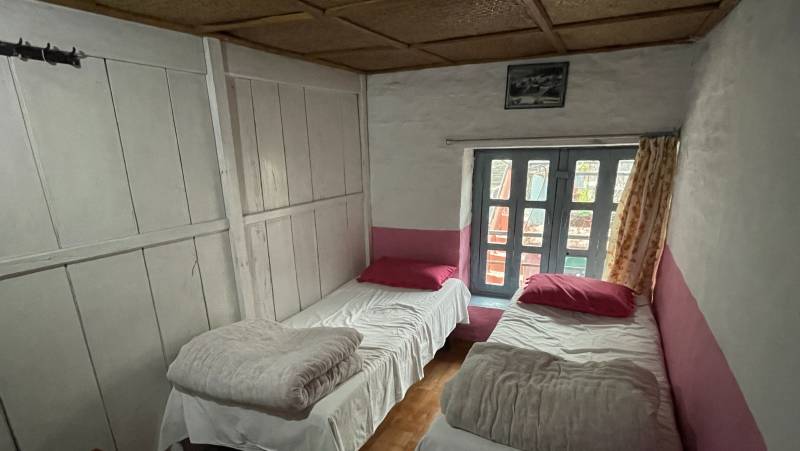
For the majority of the trek, we stay in twin-share bedrooms, which come with foam mattresses, bedsheets and a pillow. Remember to bring (or hire) a sleeping bag, rooms are unheated so they can get cold at night. 

Worth knowing  

  • Some teahouses above 9,845ft (3,000m) may not be heated due to local environmental restrictions. Occasionally, kerosene burners can be used to heat common areas if requested. We recommend against using these due to the risk of carbon monoxide poisoning. Your leader will not offer this to you.  
  • Some lodges are situated in an area controlled by the Annapurna Conservation Area Project. As part of their conservation efforts, there is a limit to the number of lodges available and therefore some of your stays will be in triple or quad shared (same-sex) rooms. 
  • Most teahouses have electricity, but it is not wholly reliable, and lighting may not be bright enough to read by – a torch (flashlight) is essential. Charging facilities are generally only available in the dining room (charged at approximately 200-500 Nepalese rupees/US$1.50-US$3.80 per hour per device). Many of the teahouses use solar power, so sometimes there is not enough electricity for charging. Many also have wifi, though it can be slow and temperamental.  
  • Most teahouses have Western-style toilets, though some may have squat style. Toilet paper is not provided, so you should bring your own or buy it locally (please dispose of it in the receptacle provided). If there is not a flush handle, there should be a container of water to pour down – if it is empty (or frozen), please refill it or ask the lodge to.  
  • Some teahouses have hot ‘showers’ (charged at approximately 250-500 rupees/US$1.90-US$3.80 per shower). Sometimes this is simply a bucket of hot water.  
  • Standards of cleanliness vary, especially in the peak trekking season and in winter when the water freezes at night. Please report any problems to your leader or the teahouse staff and be vigilant in your personal hygiene regime – use soap or hand gel before and after toilet breaks, snacks and mealtimes.  
  • Generally, the higher the altitude, the more basic the teahouse and the more expensive food and services.  

Extra accommodation  

If you require additional accommodation in Kathmandu, either before or after the tour, we can book this for you (subject to availability). Please enquire with your sales representative.  

Single accommodation  

If you prefer your own room, we offer a single supplement for the hotel nights in Kathmandu and Pokhara only (subject to availability). While in the teahouses, single rooms cannot be guaranteed so these have not been included in the single supplement price paid in advance. However, if a single room is available on arrival at a teahouse, you can pay locally on a day-by-day basis, please speak with your leader to request single rooms for the teahouse stays directly. 

Extend Your Trip

Exclusive Add-ons

Chitwan or Kathmandu Valley Add-on Tours

Annapurna Circuit Trek

Extend your adventure by joining one of our add on tours:

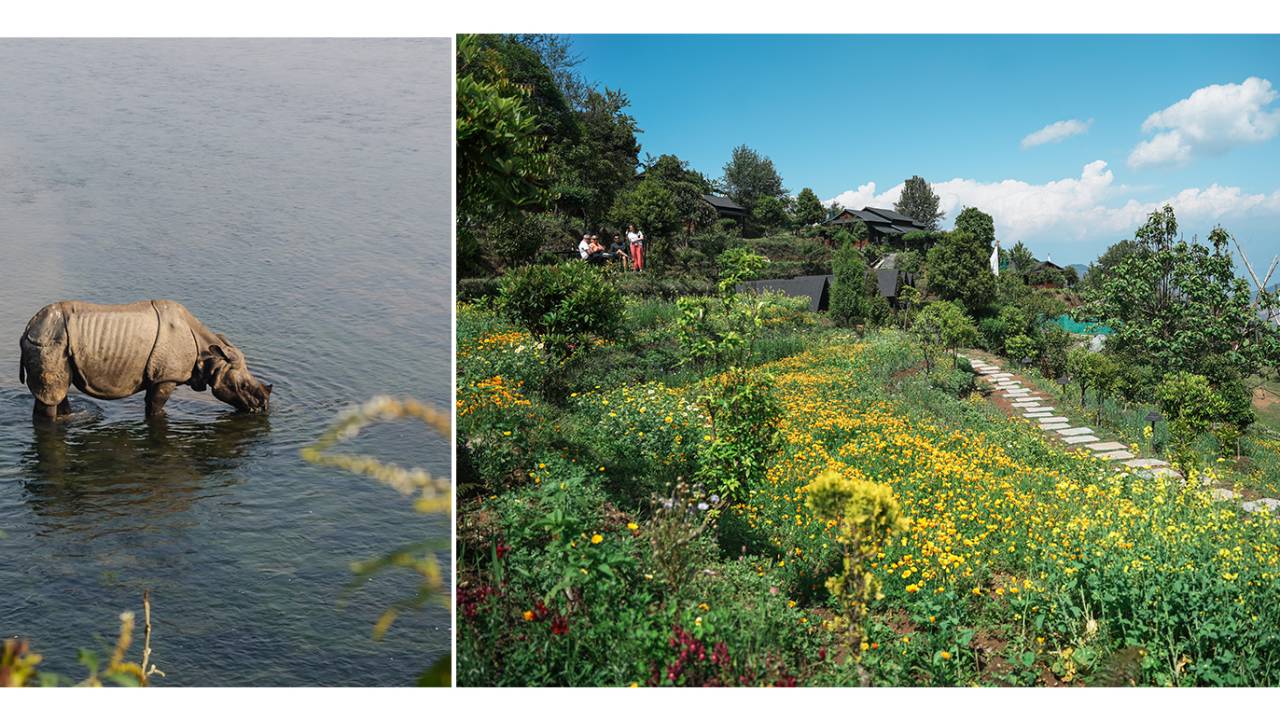
Chitwan: This five-day wildlife adventure is a perfect chance to unwind in Nepal’s lowlands after your trek. From Kathmandu, travel to your jungle lodge near Chitwan National Park, where an expert naturalist will help you spot one-horned rhinos, birds, deer and more. See the full itinerary here.

Kathmandu Valley: Nestled in the Himalayan foothills, the Kathmandu Valley is a perfect prelude to your adventure. This short trek starts and ends in Kathmandu, with gentle trails through villages and rhododendron forests, and sweeping mountain views. See the full itinerary here.

Essential Information

This trip is rated Activity Level 5 (Challenging), mainly due to the number of days walking and the maximum altitude reached. For more information on our trip gradings please visit the Activity Level Guidelines page. If you have any queries about the difficulty of the trip please do not hesitate to contact us.  

Suitability: This is a lodge-based trek with 18 days of walking and full porterage throughout – you need only carry a backpack. The Annapurna Circuit is renowned for offering particularly varied scenery and we recommend it to those who want a thorough overview of the Nepalese Himalaya. It is suitable for those confident of their physical fitness, ideally with some previous trekking experience. If you do not exercise or hill walk regularly, you should do some training or physical preparation beforehand.

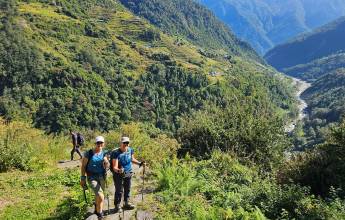
Apart from the Thorong La, the walking is generally quite moderate and the first few days do not involve any long or steep ascents. On most days, we walk for between approximately five and seven hours. The Thorong La crossing takes around 12 hours. The walking is almost entirely on well-established trails. During the Thorong La crossing, we may encounter some snow or ice and it will be extremely cold. It is also likely to be below freezing on several nights. To help you better prepare for your Nepal trip, please also see our Nepal Destination Guide.

Altitude: Much of the walking is at moderate altitude with the exception of the Thorong La, a high pass with a steep approach. Please refer to the Altitude Warning within the Trip Notes for more information and advice on how to limit the effects of altitude sickness.

  • Maximum altitude: 17,778ft (5,416m)
  • Average altitude: 9,186ft (2,800m)
  • Maximum sleeping altitude: 14,501ft (4,420m) at Phedi

Weather: Although we schedule this trek at times of the year when conditions should be favourable, there can be unseasonal snowfall, which very occasionally makes the Thorong La impassable. In this case, we can spend one day waiting. Then, if it is still not possible to cross the pass, we must retrace our steps to Besisahar.

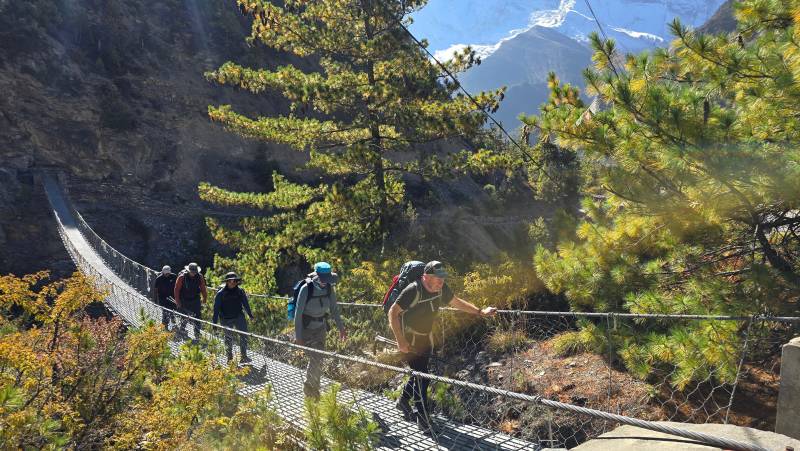
Heights: The trail crosses numerous modern suspension bridges, all of which have mesh sides and none are especially high; however, anyone with a strong fear of heights or vertigo may find them difficult.

Itinerary: A dirt road is currently under construction along part of the main Annapurna Circuit route; however, our itinerary takes alternative trails (known as NATT – New Annapurna Trekking Trails) wherever available to avoid the road as much as possible. These are a combination of new trails and previously disused old trails that have recently been cleared. There are a series of small wooden bridges over the Kali Gandaki constructed every November after the monsoon. Treks in October and November use the suspension bridges and trips departing from late November to April use the wooden bridges to cross the river.

Walking hours stated within the itinerary are given as approximates only. Timings stated exclude lunch stops and vary depending on the group’s pace. Altitude gain given within the itinerary refers to the total ascent that day (ie all the uphill sections added together). Unfortunately, we do not have this data for the altitude loss at present.

Nepal flight safety

Many of our treks in Nepal use domestic flights to reach the trekking areas. The mountainous Nepalese terrain is subject to changeable weather, which makes flying conditions complex and challenging, and unfortunately there are significantly more incidents here than in other countries, including fatalities. The EU highlighted the poor safety record in Nepal in 2013 by including all Nepalese-registered airlines on the EU banned list, which prevents them from flying in EU airspace. While no Nepalese-registered airlines currently fly within the EU, the EU instigated this ban to highlight the risk of flying in Nepal to EU citizens. These airlines are unlikely to be members of any internationally recognised safety audit systems and the Civil Aviation Authority (CAA) of Nepal does not operate to the same standards as those of Western nations.

Flying within Nepal is therefore a known risk, and we strongly encourage you to consider this carefully before booking. We suggest you refer to the following sources:

In response to concerns over this safety record, Exodus arranges for independent air-safety auditors to visit Nepal annually to assess the suitability of the available carriers. We then restrict our use to only those approved as part of this audit. In emergency situations, we will need to use helicopters, so we also have a list of approved helicopter carriers. Should concerns arise regarding the safety of an airline on our approved list, we will remove the carrier from the list immediately, and it would only be reinstated once our air-safety auditors are confident the airline meets acceptable safety standards.

We appreciate that you may have concerns about flying within Nepal, so we ask that you please consider all the information above when deciding to book this trip.

Key information

Start hotel: Royal Singi Hotel, Lal Durbar, Kamaladi, Kathmandu
Phone: +977 144 24190
Recommended arrival time: You can arrive at any time today. There will be a welcome briefing in the evening, but if you miss it the leader will update you separately
Airport: Kathmandu Airport (KTM)

Getting to the start hotel

The start hotel is approximately 30 minutes’ drive from the airport. Exodus provides free arrival transfers to the start hotel from the airport for all customers.

If you would like further information on joining this trip, please speak to your sales representative.

Catching your return flight

Exodus provides free departure transfers for all customers to Kathmandu Airport (KTM) from the end hotel.

Please note, unless specified otherwise, the transfers will be to the start (or pre-tour) hotel and from the end (or post-tour) hotel and will be on the date on which the tour starts/ends; transfers to other hotels in the same city and/or on different dates may attract an extra charge. Transfers should be booked with your sales representative at least two weeks before the tour starts.

Nepal

You can obtain your visa in advance or on arrival. The Immigration Department of Nepal has suspended visas on arrival for certain nationalities – please check if this applies to you with your nearest embassy or consulate.

Visa in advance

To get a visa in advance you can apply online at nepaliport.immigration.gov.np and collect it from your nearest Nepali embassy. Find more information at www.immigration.gov.np.

Visa on arrival

  1. When you arrive at Tribhuvan International Airport in Kathmandu, there will be three lines. If you have already secured your visa, go straight to the Immigration line. If not:
    Fill in a tourist visa form at the electronic kiosks. After inserting your passport, the machine will automatically fill out an application form, take an electronic photograph of you and print a paper slip. If the machine won’t read your passport, complete the details manually using the touchscreen. We recommend taking a passport photo with you just in case.
    Top tip: This process can be completed through the online immigration portal (click ‘Visa On-Arrival’) within 14-days prior to arrival in Kathmandu, helping you to avoid lengthy queues at the kiosks when you come through immigration – ensure you print and bring the confirmation with you. If you have completed your visa on arrival form in advance, go directly to the visa fees counters with your printed confirmation and skip the kiosk queues.
  2. Proceed to the visa fees collection counter and pay the visa fee (in cash, if possible). Make sure to keep the receipt. Card payments are not always possible, so paying in cash is easiest, most currencies are accepted but US dollars are preferred.
  3. Go to the relevant immigration desk and present your tourist visa form, payment receipt and passport to obtain your 15-, 30- or 90-day visa stamp. Please check you have been given the correct visa duration.

In the teahouses, breakfasts comprise of a choice of bread (a slice of toast, chapatti or Tibetan bread), a choice of egg (boiled, fried or omelette), and a choice between either muesli or porridge each day. Hot tea/coffee is also served. On some days, a pancake with jam/honey is served. You may also be able to supplement your included breakfast with additional items on the teahouse menu should you wish, additional items not included in the set menu should be ordered and paid for separately.

Please note, some more remote teahouses/lodges are unable to provide an extensive menu due to irregular delivery schedules and during periods of bad weather or a high volume of trekkers, there may be a more limited menu choice. Also, the higher altitude the more expenses the menus and extras generally are.

Lunch is at a teahouse en route – sometimes one of your guides will go ahead with the group’s order to make it more expedient. Dinner will be in the same teahouse that you sleep at (this is custom in Nepal as teahouses base their room rate on it).

The menus in the lodges are almost identical to one another but offer a varied choice, ranging from traditional Nepalese dhal bhat to pizza and apple pie. Dhal bhat is the staple diet in Nepal and comes in many different forms but generally comprises curried lentils and meat or vegetables, rice, and a pickle/chutney. Another popular snack is momos, a type of Nepalese dumpling, fried or steamed and filled with meat or vegetables.

Although meat is available in the teahouses, we advise against eating it on trek. The meat has often been carried in the heat from lower altitudes for several days before reaching the lodges and can cause stomach upsets or illness. Germs can also be spread by handling dirty money – we recommend using hand sanitiser.

If you have a gluten-free diet, we strongly recommend you bring extra food and snacks with you to supplement the food on trek as there will be little variety available to you, particularly for breakfast. Even many of the soups are from powder/packets and contain gluten. If you buy imported food and drink on trek you will spend more than the suggested amount.

Drinking water

Staying hydrated is important when undertaking any physical activity but particularly so at altitude where it is generally recommended to drink at least 100floz to 135floz (three litres to four litres) per person per day.

However, we strongly encourage you not to buy bottled water on trek as this contributes to the growing problem of plastic pollution in the trekking areas of Nepal.

A few villages along the Annapurna Sanctuary route have safe drinking water stations selling UV-treated water for about 50 rupees (US$0.40) per litre but these are not always open.

The teahouses also sell boiled water for approximately 150-300 rupees (US$1.15-US$2.30) per litre (the price increases the higher you trek) which should not require treating. This is also perfect for a bedtime refill as it can double up as a hot-water bottle.

Alternatively, all teahouses provide free cold water. Although this should not be drunk untreated, we recommend you bring a reusable bottle/water bladder/Camelpak (ideally two) and use an effective form of water treatment. There are a wide range of products available including Steripens or purification tablets, which are the quickest and easiest options to use on trek – we recommend talking to an outdoor retailer for the latest advice as technologies are improving all the time. Make sure to check the product’s performance in cold/freezing conditions and consider battery life (lithium batteries are best in cold conditions).

Exodus has partnered with Water-to-Go, a filtration system that eliminates more than 99.99 percent of all microbiological contaminants from any non-saltwater source – visit Water-to-Go for more information. Exodus customers can claim 15 percent off their first order and, better still, 15 percent of the purchase value will be donated to the Exodus Travels Foundation. These bottles filter the water as you drink through the spout may not be the most efficient while on the go on a trek. Please note, if the water freezes it will clog up the filter. In this event, defrost before use by sitting the filter in lukewarm water for 10-15 minutes.

The main trekking season in Nepal is from October to mid-May when daytime temperatures at most altitudes are generally comfortable for walking, the sky is clear much of the time, and rain and snow are occasional occurrences. Daytime temperatures will vary from 15C to 30C (59F to 86F) in the Kathmandu Valley to around 10C (50F) at 11,800ft (3,600m) and progressively lower the higher we go. Different seasons offer different advantages for trekking.

The crossing of the Thorong La can be cold at any time of year. Sometimes the pass is clear of snow and there is no wind while at other times it is covered in snow (or ice) and is extremely windy and cold. We cannot predict the weather, so you must have adequate clothing and equipment for very cold temperatures. We cannot guarantee you will need them but we suggest you take YakTrax or microspikes (the ones with spikes, not coils) in case of snow or ice as it is best to be prepared.

Snow can be expected on any departure, usually at the higher altitudes above Manang.

Post monsoon/autumn (Mid-September to November): This is the main trekking season in Nepal. Day temperatures in Kathmandu are typically above 20C (68F). Skies are usually clear and days on trek are sunny and mild with clear mountain views. Nights will be colder with temperatures dropping as low as -5C (23F) at higher altitudes.

Winter (December to end of February): An ideal time to trek in Nepal, despite the colder conditions. Skies are usually very clear, especially in December, and the mountain views are at their best. Nights will be very cold with temperatures down to -10C (14F) or lower at the highest altitudes but days are pleasant and sunny. The trails are also much less busy at this time of year. In Kathmandu, maximum daytime temperatures are 19C (66F).

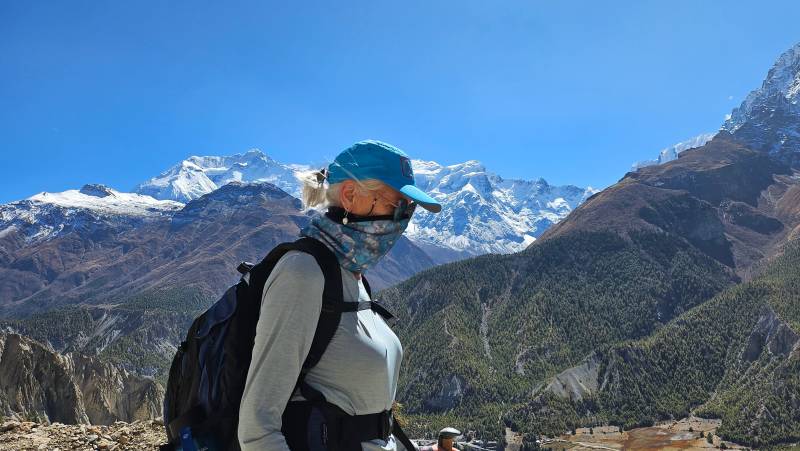
Pre-monsoon/spring (March to May): Both day and night temperatures are warmer in general but haze often builds in the afternoons. It is very hot in the lowlands and temperatures rise to 35C (95F) in Kathmandu. Flowers bloom in this season and this is one of the reasons people chose to trek in spring. A buff is highly recommended as protection against the dusty winds that can occur on certain sections of the trip.

As a certified B Corp, we’re on a mission to improve our social and environmental impact across all our adventures.

We do this through our innovative Thriving Nature, Thriving People plan.

This ‘nature positive’ approach is designed to help nature and communities thrive in harmony through practical solutions, such as reducing carbon and waste on our trips, supporting conservation projects through the Exodus Adventure Travels Foundation, and rewilding 100 square metres for every Exodus traveller.

TNTP Moments

You’ll also find Thriving Nature, Thriving People moments across our trips. These experiences are often a highlight of your adventure, while also benefiting the natural world or local communities. 

In addition, we support local initiatives in this region through our Foundation’s Himalayan Community Project. 

Bee A

Rating: 5

Unforgettable trip along the Annapurnas!

This trip was unforgettable! Many people choose to do the Annapurna Circuit on their own and they mainly follow the Jeep track, which didn’t appeal to us. We were so happy and grateful that we decided to go with Exodus - we had the best guides! Sukman and his assistant...

Most Inspirational Moment

Day 1 was super memorable - we crossed suspension bridges, passing rivers and waterfalls, over rice paddies and hiked up and down many steps through villages. What an intro to what was ahead! One of the most inspiring days for me was Day 7 - starting from Upper Pisang, our Teahouse view was of Annapurna II! We made our way to Ngawal. This day definitely gave us a taste of a continuous climb up as we were just days before the high pass, the views were stunning and it just got better and better as the day unfolded. You look back thinking, I can't believe we came from all the way down *there*.

Thoughts on Group Leader

Sukman was exceptionally caring, kind, and patient throughout the trek. He led from the back, ensuring that everyone in the group was well taken care of. Our safety was his top priority. Sukman’s knowledge of the mountains and local life & culture was very inspiring. We would 100% travel with him again in the future!

Advice for Potential Travellers

Be mindful of what you pack, and keep your KITBAG weight within the 10kilo limit. You travel with local human porters, who work incredibly hard -something many people don’t fully appreciate. Overpacking can be quite selfish. If you forget something, don’t worry—you’ll still find supplies along the route - For example, in Chame and Manang. We were able to pick up our YakTrax right before Yak Kharka. High altitude is no joke, so having a comfort item can make a big difference. Just remember, keep your load within the weight limits.

Ed Barker

Rating: 5

Absolutely Stunning

The most stunning trek you can imagine. The Himalaya's really are great cathedrals of nature. Walk alongside 3 of the top 10 peaks in the world, with an itinerary set up to ensure you succeed at altitude and make it over the amazing Thorong La Pass at 5,416m. Most competitors...

Most Inspirational Moment

The whole group reaching the top of the Thorong La Pass on a stunning blue shy and snow covered floor, together.

Thoughts on Group Leader

Sam was outstanding.

Advice for Potential Travellers

You do need to be fit - 17 days of back to back trekking with over 11,000m of ascent and decent is not for the faint hearted. But if you like a challenge, enjoy walking, then this has to be one of the most amazing treks in the world.

Jim Studer

Rating: 5

Annapurna Circuit (Nov17 - Dec08

An incredible trek during a less crowded time. Drier and cooler at this time of the year though (crossing the pass we started at -5F).

Most Inspirational Moment

Standing in Thorong La pass!

Thoughts on Group Leader

Kumar was outstanding. Positive, knowledgeable, and motivated to make our team succeed. The rest of the guides were great as well.

Advice for Potential Travellers

Don't bother packing food, can purchase in tea houses. If you wish, can buy most supplies in Kathmandu in the bazaars (except good socks - tougher to find). Bring clothes pins. Layers are good, as can start cold and transition to warm (and vice versa). Can get / purchase water (boiled as well) in most tea houses. Sun screen and good sun glasses!

Christine Slat

Rating: 5

Fantastic Adventure

I wanted to complete the Annapurna Circuit before I reached a landmark birthday (70!). It was amazing! Our leader, Valerie was a font of information, especially relating to the cultural aspects - Tibetan Buddhism and local cultural traditions. The accommodation was basic, but comfortable, and the trip notes made it...

Most Inspirational Moment

Getting over the Thorong La Pass with no adverse effects, apart from shortage of breath during the ascent. The scenery on the other side, where there were very few trees, but spectacular pinnacles caused by wind erosion.

Thoughts on Group Leader

Excellent! Knowledgeable, friendly, kind. She took particular care of people who were struggling, and made appropriate adjustments, as necessary to ensure that everyone had a positive experience.

Advice for Potential Travellers

Make sure you are mountain fit, and be extra careful about hand sanitation before meals.

Suggestions

Well done Exodus! I would certainly recommend this tip to peoples, who are fit and recently retired, so that they can take 3 weeks holiday!

Craig Mitchell

Rating: 5

Annapurna Circuit – Trip of a Lifetime.

This trip was an arduous but ultimately very fulfilling trek round 158 miles of some of the most beautiful scenery in Nepal. Luckily, we had no rain and most of the time walked in bright and glorious sunshine.

Most Inspirational Moment

Seeing dawn breaking from the summit of Poon Hill towards the end of the trek. It really took your breath away, both the climb and the views. On the summit the full majesty of the Annapurna massif was gradually revealed in all its splendour.

Thoughts on Group Leader

I have been on a few adventure treks over the years and I can honestly say that Sukman Tamang is the best trek leader and guide that I have ever had. I don’t say that lightly, but he is head and shoulders above the rest. Right from the start when he welcomed us all in Kathmandu, his radiant smile and outgoing personality shone through. He made every individual on that trip feel special as well as expertly looking after the group as a whole, whether they were trekkers, assistant guides or Sherpas. He was enthusiastic, likeable and, most importantly, a great communicator. He was able to share his extensive knowledge of Nepal and the Annapurna region in an engaging, interactive and entertaining way. He was able to give us a fascinating insight into Nepal’s rich history and culture. And each evening he was able to deliver an excellent and informative briefing about the following day’s itinerary and everybody knew what to expect. His organisational skills were outstanding, which was no easy feat trying to balance the needs of 16 trekkers and as many guides and Sherpas as well. He kept an eye on everyone’s welfare and I noticed that he checked on everyone in the group on a daily basis. And if anything unexpected happened he remained calm and dealt with the situation in a patient and methodical manner, whether it was someone with a cut on the head, an injured knee or someone forgetting to bring their micro spikes on the Thorong La pass. One of the main reasons that everyone seemed to be enjoying the trip was down to Sukman’s sense of humour. His ready smile and quick wit led to everyone feeling relaxed and comfortable even during the toughest days. Sukman’s hard work and professionalism went a long way towards making the trek for all of us so rewarding and fulfilling. That is what makes him such a great tour guide.

Advice for Potential Travellers

If you were worried about the altitude I would recommend that you consider taking beetroot capsules as a preventative measure. The naturally occurring nitric oxide in beetroot increases the amount of oxygen in the blood and can help reduce the risk of acute mountain sickness (AMS) at high altitude. I would always seek proper medical advice before taking any supplements, but they certainly worked for me.

Suggestions

I wouldn’t recommend bringing any sweets or candy as presents for the children you will undoubtedly meet on the trek. Instead, some pencils and small notebooks made an ideal gift and seemed very well received.

Sid Withey

Rating: 5

The best Himalayan trek

A very satisfying trek encircling the Annapurna range. A huge variety of landscapes and climatic zones

Most Inspirational Moment

The villages and the people we ecountered and the grandeur of the mountain landscape.

Thoughts on Group Leader

Probably the best leader I have had on many guided trips. Sukman was superbly orgainised and coped with any issues before they deteriorated. His open friendly manner put everyone at ease, and he conveyed his love of Nepal in his talks about Nepali culture and life. Thanks Sukman, for me you made this trek so special.

Advice for Potential Travellers

Bring a buff. It can be dusty when the wind blows. Bring a few pencils and notebooks, as a trip member did, to give to children.

Brian Mumford

Rating: 5

A Fantastic Trek

A great place for a challenging trek. The scenery was amazing and all the people of Nepal, that i met, were friendly and hospitable. The Himalayas really are great cathedrals of nature and were a pleasure to see as the group travelled through the Annapurna Circuit. Our tour leader, Tenzi...

Most Inspirational Moment

The crossing of Thorong La pass was amazing and an unforgettable experience.

Thoughts on Group Leader

A fantastic tour leader who was hard working and inspiring as we trekked around the Annapurna Circuit

Advice for Potential Travellers

Be prepared for amazing views of the mountains and friendly locals. Feb/March was cold in the evening and especially at night. A 4 season sleeping bag and liner is essential to a warm nights sleep. Although the menus in the tea houses is simple, the food was wholesome and great portions.

Suggestions

This trek exceeded my expectations because of the professionalism of the local team that supported us during the trek, the amazing scenery and the great camaraderie of the trekking group.

Jonnie Treharne

Rating: 5

Annapurna, Thorong La and Excellent Guide

Completed the Annapurna Circuit in December 19, as I had previously done the EBC trip and was aware of just how great Nepal is. The ACT did not disappoint and I was again amazed by the scenery, wildlife and the friendliness of the local people. The trek uses tea houses...

Most Inspirational Moment

Crossing the Thorong La pass. This is a demanding climb if starting from Thorong Pedi (base camp) and can be made more difficult by the weather conditions. Therefore the sense of achievement in attaining the pass is well deserved. It should be tempered by the realisation you still have 8 hours of treking left to reach Muktinath!

Thoughts on Group Leader

Dorjee Sherpa was a very knowledgeable and capable guide. He fostered an excellent relationship with all of the group and also facilitated the development of relationships between the group and porters. He was hard working and ensured the experience of each individual within the group was enhanced. He provided an excellent service at each and every tea house ensuring that the needs of all were met. He imparted his knowledge of the area, fauna/flora, religion and legends and was simply outstanding. He conducted dynamic risk assessments when required and I even witnessed him carry the rucksack of a struggling tourist across the pass! He has a bright future in this field and I cannot sing his praises highly enough. Well done!

Advice for Potential Travellers

Bring snacks for the long walking days - despite good food and multiple tea stops I could have done with carrying more carbohydrate/energy bars such as H5. I would carry a few travel squashes as you need to drink a lot of water which becomes boring Read the trip notes concerning tipping and allocate the appropriate funds for this - this is only moral and just for the work that has been done to support you. Bladders and tubes will freeze so Nalgene bottles are essential

Suggestions

The strength of any tour company is in its people, particularly those indigenous employees who deliver the holiday and enhance the experience through their knowledge, approach and good nature. Dorjee Sherpa and his team were second to none and without them the ACT would not have been the success it was. They were outstanding and should be given just recognition for their efforts from Exodus.

Euan Stanwix

Rating: 5

Absolutely Amazing Scenery

This was my first trip to the Annapurna region and chosen because I'm not sure what it will look like in even 5 years time with all the road development going on. Yes, there are a couple of days where you're walking on a dirt road which used to be...

Most Inspirational Moment

Getting to the top of Thorong La pass at 5,400 metres. We got up at 2:30a.m. at around 4,500 metres and set off with head torches for the top of the pass. After a tea stop at 5,000 metres it started to get tough and our group had a collective feeling of relief and achievement when we reached the top of the pass in glorious sunshine. How people climb 8,000 metre peaks without oxygen I do not know. The trek is very well organised inasmuch as you gain altitude slowly in the 8-9 days before Thorong La and so most of the party didn't need Diamox and only had occasional headaches which is quite normal. The sunrise at Poon Hill also deserves a mention as it is absolutely spectacular and not at all arduous compared to Thorong La.

Thoughts on Group Leader

Our group leader was Tsering Dorjee Sherpa. I've been on numerous organised tours with various travel companies and I can say that Dorjee was one of the best leaders I've had teh pleasure of meeting. He was mature beyound his 23 years, extremely well organised, very passionate about Nepal and his Sherpa heritage and went out of his way to ensure the trip ran smoothly and that everyone enjoyed it. He was ably backed up by other guides and a team of porters, all of whom interacted with our group and collectively we had a great experience. If you're lucky enough to have Dorjee as your guide you will have a great trip and will learn a lot about Nepal, it's people and its culture.

Advice for Potential Travellers

(1) Changing money in Kathmandu - the Himalayan bank will give you a much better rate if you bring new £50 notes. Any used £20 notes were scrutinised and any with writing on, slight rips in etc. were not accepted. It's also difficult to change the Rupees back to Sterling in Kathmandu so leave time to go round a few bureau de change. The rates are pretty similar across the bureaux de change (2) Most of the tea houses have power of some description to charge electrical items (USB or Mains) but power banks to charge phones / camera batteries are useful. Take a bag to put all your batteries in and put it in your sleeping bag at night to prevent them losing charge (3) The Exodus sleeping bags / down jackets tend to be on the heavy and bulky side and as weight/bulk is at a premium it's good to bring your own if you can. We had sleeping bags rated down to -2c (comfort) which were fine coupled with merino baselayers at higher altitudes (4) We had a Steripen, as did a number of our group, and they are the best thing for these types of trips as they probably cost the same as all the chlorine dioxide tablets you would need instead but you don't get the nasty aftertaste of tablets. Be sure to bring spare rechargeable batteries and a fast charger to keep the batteries charged. (5) We bought diamox in Kathmandu (£1 compared with £30 for a private prescription in the UK). We didn't need them in the end but we did use Ibuprofen for the occassional headache. Drinking lots of water is essential and a number of the group thought the garlic soup of the trail may have helped alleviate altitude issues

Suggestions

You don't need to be super-fit to do the Annapurna Circuit as most days don't exceed 12 miles but the altitude can be debilitating. As you can't train for altitude just ensure you have a good base level of fitness, your boots are well broken in and you are very familiar with all your gear. For the photographers I took my Canon EOS with a 10-22 and 70-300 lens. Yes, the long lens weighs a fair amount (1 kg) but you get some fantastic close-up photos of the Annapurna range. Also make sure you take a polarising filter because the glare can wash out your photographs.

Susan Goodrich

Rating: 5

Amazing adventure

This was the most wonderful trip. Words really can’t describe it. The Himalayas are awesome, the walking wonderful. Going over the tharong la pass was immensely challenging and we all made it. We saw wonderful sights, a baby vulture still with its white down, magnificent mountains, the sun rising over...

Most Inspirational Moment

The whole thing. Seeing a baby vulture, the mountains, eating a lovely Dahl baht in a mountain village, the wonderful walking, crossing the tharong la pass, the laughs in the group, the fun. I could go on ......

Thoughts on Group Leader

He could not have done more to make the experience better. He was knowledgable, instilled confidence as we were going over the pass, generous with his time, fun. I have nominated him as a guide of the year.

Advice for Potential Travellers

As I said above I think this trek should be rated higher as it is far harder than others I’ve been on, also rated 5. So get fit as you’re walking for 19 days up / along challenging terrain. We crossed the tharong la pass in snow and it took 11 hours. Don’t get too hung up about toiletries, tablets, loo paper. It can be bought most of the way around. There’s plenty of time when you get to Nepal to change money / get permits.

Discounted Price: 2089 £. Regular price: 2199 £
22 Days Excluding Flights

Make an enquiry

TNQ - Annapurna Circuit Trek

To enquire about an existing booking click here

To give you the content requested, we need to store and process your personal data. For information on how to unsubscribe, as well as our privacy practices and commitment to protecting your privacy, please review our Privacy Policy.

Find out more about how we use your data

You may also like

Annapurna Circuit Trek