
Jordan
A Week in Jordan

20% OFF
Jordan
Kingdoms of Jordan

20% OFF

Jordan has a habit of surprising even experienced travellers. Timeless and adventurous, it’s a place where ancient trade routes once carried frankincense and spices through landscapes that lead you to Petra, the Dead Sea, and the sandstone valleys of Wadi Rum. Roman ruins stand beside modern neighbourhoods, and Bedouin hospitality shapes everyday interactions in a genuine, down-to-earth way.
If you’re looking for a destination that brings together history, distinctive natural scenery, and cultural encounters, Jordan earns a solid place on any travel bucket list. Here’s why.

Jordan’s story stretches across millennia, and much of it remains remarkably visible. As you travel, you’re moving through landscapes shaped by Nabataeans, Romans, Crusaders, and the communities that came before and after them.
Ancient facades are carved into cliffs, Roman streets still run through modern towns, and biblical viewpoints unfold from ridge-top plateaus. The country’s past is woven into the places you explore rather than tucked behind museum walls.

Petra is the place many people picture first when they think of Jordan. And rightly so. Walking through the Siq, the narrow sandstone corridor that leads to the Treasury, is a moment that stays with you. Beyond this first glimpse, the ancient city opens into tombs, temples, and trails that reveal its scale. The Theatre and Royal Tombs show how the Nabataeans shaped the mountains around them, while the walk to the Monastery leads you into quieter parts of the site with wide views across the peaks. Petra quickly feels less like a single landmark and more like a city shaped by trade, ingenuity, and a deep understanding of the desert.
Jordan’s stories extend far beyond Petra. In the north, Jerash brings Roman life into focus with its colonnaded streets and remarkably preserved theatres. Across the highlands, Crusader-era castles stand on strategic ridges that once controlled trade routes. On Mount Nebo, broad biblical landscapes link the terrain to stories that have echoed across the region for centuries.

Our most comprehensive Jordan trip. Visit every UNESCO site, plus nature reserves and all the highlights.
Jordan’s natural beauty is just as compelling as its history. Landscapes shift quite quickly as you travel, offering a mix of desert, mountains, and valleys that each feel distinct.
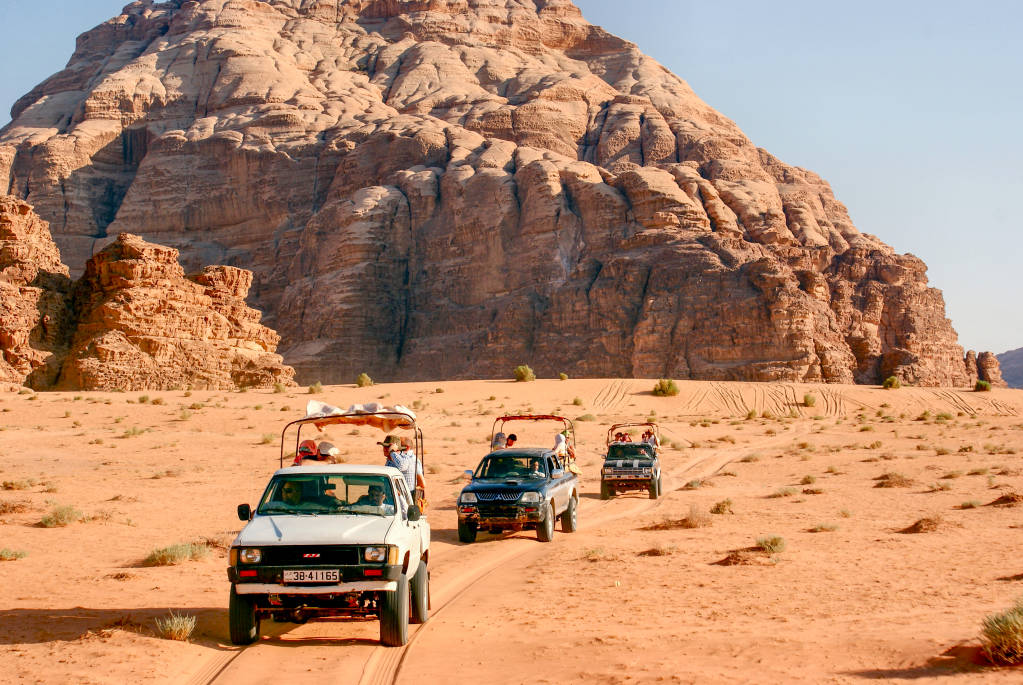
In the far south, Wadi Rum’s sandstone and granite formations rise from red sand plains, creating a landscape that feels both ancient and cinematic. Films such as The Martian, Dune and Lawrence of Arabia have all been shot here, and you can explore the terrain on a 4X4 adventure. The experience is even more evocative when you stay overnight in a traditional Bedouin tent, with an evening spent listening to stories told by Bedouin guides around a campfire.
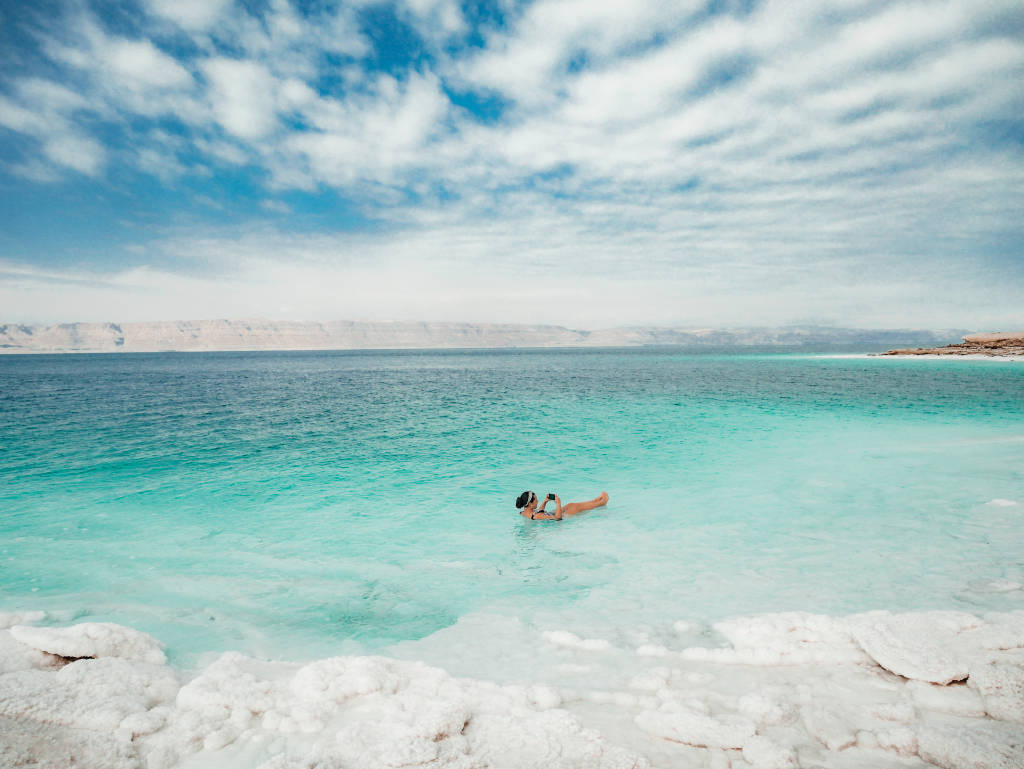
Heading north, the land drops to the Dead Sea, the lowest point on Earth. Steep escarpments, mineral-rich shallows, and salt formations shape the shoreline. For first-timers, the floating sensation can be surprising. The high salt content means you drift without trying, making time here calm and restorative. Many people try applying the mineral-rich mud to their skin, then rinse off in the shallows and take in the views across the water to the hills beyond.
Further north, the Azraq Wetlands reveal a completely different environment. This restored oasis attracts migratory birds and offers calm boardwalks through pools and reeds. In the central highlands, the trails around the Dana Biosphere Reserve showcase terraced villages, canyon routes, and rugged mountain scenery, highlighting one of Jordan’s most important protected landscapes.
Umm Qais is a hilltop site in Jordan’s far northwest, known for its sweeping views across the Jordan Valley and the Sea of Galilee. Its ridge-top setting shows how geography shaped movement and settlement over time. The mix of basalt ruins, Roman streets and remnants of an Ottoman village adds to its sense of layered history.

Cycle through Jordan's desert and visit the most impressive historical UNESCO sites

Enjoy a magical desert trek through Jordan

Jordan’s culture often emerges through small, personal moments. Hospitality here isn’t formal. You’ll find it shows up naturally in conversations, shared meals, and time spent together.

Tea is offered frequently, often a small glass of hot black tea scented with mint or sage, and you will sometimes be handed cardamom-scented Arabic coffee, too. Conversations start easily, whether you are in a family home, a desert camp, or a roadside café on your way to somewhere new.
On many Exodus small-group adventure, you can choose to share a home-cooked meal with a family in Wadi Musa. Dishes such as makloubeh or mansaf are served in an informal, relaxed setting, with conversation often offering a glimpse into local life and customs.
In Amman, Jordan’s capital, Dar Ne’meh offers a thoughtful way to connect with local initiatives. The restaurant is part of a broader project that trains and empowers women through hands-on culinary experience, and its menu reflects regional recipes and food traditions. Eating here gives you a sense of the stories behind the dishes while supporting skills development within the community.
Visiting Jordan on a small-group adventure suits those who want to experience a lot without juggling complicated logistics. Distances are manageable, and the scenery changes quickly, which means you can blend headline sites with smaller cultural stops in a way that feels balanced rather than rushed.
Small-group travel adds context and ease. Expert local guides share the stories behind each place and help you understand how history, geography, and culture overlap across the country. Transport between sites is handled, and the group setting offers a relaxed sense of companionship on the road.
Alongside the well-known highlights, many itineraries include time in quieter locations such as Umm Qais, the Azraq Wetlands, or the mosaic-rich ruins at Umm ar Rasas. These stops add depth without overwhelming the journey, showing how different landscapes and histories weave together across Jordan.
Travelling with an expert guide keeps the pace comfortable and the logistics simple. You have time to appreciate the major sites properly, while the lesser-visited ones offer a more intimate look at Jordan’s cultural and natural heritage.
Jordan is a viable destination year-round, but spring and autumn are widely considered the most comfortable seasons. From March to May and September to November, temperatures are warm without the intensity of summer, making it easier to explore Petra, walk in nature reserves or spend time in Wadi Rum.
Winter brings cooler days and fewer visitors, which suits those who prefer quieter sites and don’t mind layering up in the evenings. Summer is hot, especially in the desert, though early starts and shaded rest stops help keep days manageable.
Jordan has a long-standing reputation as one of the Middle East’s most welcoming countries to travel in. The main routes linking Amman, Petra, the Dead Sea and Wadi Rum are well maintained, and moving between them is often simpler than first-time visitors expect.
Explore our expert-led small-group trips and start planning your adventure.

