From giant glaciers and simmering volcanoes to epic waterfalls and explosive geysers, Iceland walking holidays offer an adventure of a lifetime. Iceland is a country like no other, forged by the inferno of the Earth’s core and sculpted by ancient glaciers – and it is still a work in progress. Volcanic eruptions are commonplace here and while some go unnoticed beneath the massive icecaps, others literally blacken the skies, and the Mid-Atlantic Ridge is literally rending the country apart. Our Iceland trips treat you to an array of impressive geological features as well as many natural wonders.
Our guided group trek of Laugavegur takes you on an unforgettable journey among some of the most dramatic scenery in the world. The world-famous Laugauegur Trail lets you get up close to volcanoes, lava fields and mud pools as you head into the mountains. You’ll also discover the gaping craters of Thorsmork, cross the black desert and hike across the Solheimajokull glacier.
If you choose departures between September and March, you might even get the chance to witness the celestial dance of the Northern Lights. These natural phenomena create an ethereal light display that paints the sky with swirling ribbons of blue, green and pink. Also known as the Aurora Borealis, the lights can be unpredictable, and it’s not guaranteed that you will see them when you’re walking in Iceland.
The world’s most northerly city, Reykjavik is the gateway to many of the country’s natural wonders and is well worth exploring. The Blue Lagoon is a geothermal pool that lies on the Reykjanes Peninsula and lures visitors to its naturally heated waters all year round. Alternatively, wander through the city streets to see the unique modern architecture of the Hallgrimskirkia church and the Harpa concert hall.
As an Exodus staff member, I know how much people love this trip – but experiencing it for myself took my appreciation to a whole new level!
The local team are simply brilliant. It’s fair to say I would have got nowhere near the top without the positivity and knowledge of our leader, Happyness, and assistant guides Lucy, Joyce and Florian, plus all the support crew. On top of that, the group I joined as a solo traveller was so welcoming and funny – every day was a blast.
Additionally, the Lemosho Route itself felt like a great choice. Just having that little bit longer to acclimatise may have been the difference between me getting to the top and not.
Great trek. Excellent guide. Amazing trek crew. Far fewer trekkers than Nepal. Lots of monasteries. Disappointing hotels given price of trip. Much colder than I expected at night.
As an Exodus employee, I was lucky enough to experience Walking in Andalucia and absolutely loved it. Every day felt different, with great walks at a good pace and constantly changing scenery, from mountains and olive groves to time in towns and cities. A lot of the walking felt really off the beaten track, which made it even more special. We had a brilliant group, a fantastic guide and wonderful hosts at the traditional cortijo, with amazing views to wake up to each day.
Top 5 Natural Sights to See on Iceland Walking Tours
Alftavatn Lake: Wedged between the rugged rhyolite mountains on the Laugavegur Trail, Alftavatn Lake, also known as Swan Lake, has a staggeringly beautiful backdrop. The lake is renowned for its many species of fowl that congregate around the water, and it’s likely you’ll be able to spot swans, ducks and other waterfowl here. Alftavatn is a tranquil oasis and a popular spot for avid birdwatchers. While camping here during the summer months, you’ll also get to experience Iceland’s Midnight Sun, a natural phenomenon seen north of the Arctic Circle.
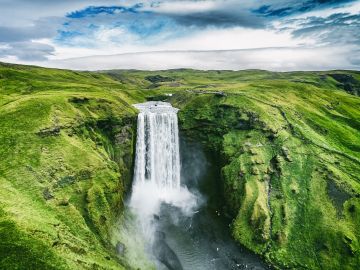
Skogafoss Waterfall: One of the largest and most spectacular of Iceland’s waterfalls is Skogafoss with its waters thundering 60 metres down a sheer cliff face in the Skoga River. If you want to experience the real force of the falls, you can walk right up to the cascade to feel the spray on your face and listen to its almighty roar in stereo sound. Alternatively, climb the steep stairs that wind up to the observation platform and enjoy the magnificent view of the falls from above.
Mt Hekla: Having erupted more than a whopping 20 times, Mt Hekla is the most active volcano in the country. Sadly, it has caused great destruction over the centuries, in particular the surrounding forests of the area, and it is certainly a force to be reckoned with. Mt Hekla makes up part of a volcanic ridge which stretches for 25 miles. The area is a favourite for hikers, and you can follow a trail that takes you almost to the summit.
Myrdalsjokull Glacier: Spanning nearly 600 square kilometres, Myrdalsjokull is one of the country’s biggest glaciers and stands on top of the active Katla volcano. When walking in Iceland, it’s worth taking a tour to the volcanic plains to get a closer look at this frozen wonder. Katla is one of Iceland’s most active volcanoes and erupts around once every 50 years. Because it lies beneath Myrdalsjokull Glacier, the eruptions create huge ash clouds. The landscape surrounding the glacier feels quite surreal and it’s an eerie atmosphere looking out across the vastness.
Markarfljotsglufur Canyon: Cutting through the remote landscape of the Icelandic Highlands, Markarfljotsglufur Canyon is stunningly beautiful gorge that looks like it could have stepped out of ‘Lord of the Rings’. And because it is lesser frequented than many other natural sites owing to its location, you may well be the only visitors here at any one time. The canyon drops a staggering 200 metres and can be seen when trekking along the famous Laugavegur Trail. Markarfljotsglufur was originally formed 2000 years ago from an enormous eruption of the notorious volcano Katla, which caused great flooding in the area.