Current as of: October 19, 2026 - 16:38

Machu Picchu & Galapagos Trip Notes
- Ways to Travel: Classic, Guided Group
- Destination: Ecuador, Peru
- Programmes: Culture
-
Activity Level:
3 out of 7 - Moderate
- 15 Days: Land Only
- Ages: 16+
- Trip Code: APV
- Carbon Footprint: 57.2kg CO2e
Trip Overview
Two wonders, one adventure: Discover the once-lost city of the Incas in Peru and the Enchanted Isles of Ecuador
Combine two of the great adventure destinations in one trip: Machu Picchu, one of the New Wonders of the World, and the wildlife-watching haven of the Galapagos Islands. Starting in Peru, we explore the Inca empire, first visiting Cuzco and the nearby ruins, before taking the train through mountains and cloud forest to the once-lost city of Machu Picchu – hiking a section of the Inca Trail if you wish. It’s then off to the Galapagos, exploring land and sea in search of sharks, giant tortoises, sea lions and more with an expert naturalist guide.
Machu Picchu tickets and Inca Trail Permits can sell out, book early to avoid disappointment!
Is This Trip for You?
This trip is rated Activity Level 3 (Moderate). For more information on our trip gradings, visit the Activity Level Guidelines page. If you have any queries about the difficulty of the trip, please contact us.
Walks: This trip spends time at altitude. Though you do not need to be particularly fit, there is some walking on rough ground and sharp rocks due to the volcanic nature of the Galapagos. The ability to withstand high temperatures and swim will increase your enjoyment of the trip.
Altitude: This trip spends time above 9,842ft (3,000m); please refer to the Altitude Warning within the Trip Notes for more information and advice on how to limit the effects of altitude sickness.
- Maximum altitude: 11,155ft (3,400m)
- Maximum sleeping altitude: 11,155ft (3,400m)
Itinerary: It is not always possible to follow a strict schedule due to weather and sea conditions – sometimes it is better to do the planned activities in a different order (but almost always on the same day as the activity is planned).
Flying to the Galapagos: Time spent at the airport (both on mainland Ecuador and the Galapagos) is currently taking longer than usual due to the implementation of a new system for declaring foods and goods to enter the Galapagos.
Climate in the Galapagos: We spend a lot of time in the sun, so it’s important to come prepared. Sunscreen, sun hats, and regular hydration are essential.
Tourism in the Galapagos: On the islands, visitors may notice the limited infrastructure, such as occasional power cuts, hot water outages and simpler accommodation standards. This is partly due to the remote location and strict environmental protections: 97% of the land is designated as a national park, with only 3% available for human habitation and development. These safeguards prioritise conservation and maintain the islands’ authentic, low‑impact character, resulting in an atmosphere that feels rustic, community‑based, and closely connected to nature.
Boat transfers: Inter-island ferries are small speedboats, and crossings can be rough, particularly during periods of stronger winds or swell. Passengers who are prone to seasickness are strongly encouraged to take motion sickness medication before departure and bring any personal remedies they find effective. Basic life jackets are provided, and seating is typically arranged in rows within a covered cabin. Toilet facilities may be available on board, but they should not be relied upon. Timings are approximate and depend on sea conditions.
Inca Trail Permit and Machu Picchu ticket availability: Access to both the Inca Trail and Machu Picchu is strictly regulated. We purchase your Inca Trail Permit and Machu Picchu ticket on your behalf; both are issued on a ‘first-come, first-served’ basis (Inca Trail Permits are issued from October each year). To avoid ‘stockpiling’, individual traveller passport details are required at the time of application, so we can only apply for these once you book with us.
For these reasons, we highly recommend you book your trip as far in advance as possible.
Additionally, while a specific departure date may show as ‘Guaranteed’ on our website, Inca Trail Permits and Machu Picchu tickets remain subject to availability, and we cannot guarantee they will be available on any given date. Machu Picchu tickets are non-refundable and non-transferable, at a cost of US$75.
In the event permits/tickets are sold out for the departure you are looking at, we will discuss alternative options such as a different travel date, alternative trek or a refund of any monies paid.
We highly recommend you do not book any non-refundable flights until your place, permit and ticket are secured. Booking your flights through us means we take care of all of this for you, giving you full peace of mind over your adventure. For more details on booking flights with us, see our flights page.
Please note, it is essential you read the Inca Trail and Machu Picchu regulations in the Important Information section of the Trip Notes before you book this trip.
Flights: Flights between Peru and Ecuador are included in your trip based on a set flight schedule and cost. Depending on flight availability at the time of booking, there may be a supplement to pay. If applicable, this will be communicated to you at the time of booking.
Snorkelling: Sea conditions in the Galapagos vary, with the chance of currents and waves. If you are not a confident swimmer, or do not have much experience snorkelling, it is essential you inform your tour leader so they can provide you with the right assistance. Please closely follow their guidance before getting in the water.
Water safety: This trip includes time by a lake, river or sea, where there may be opportunities to swim. You should always seek local advice before deciding whether to swim. Open-water or wild swim spots should be treated with extreme caution. Information on how to keep yourself safe while swimming is shown here.
Group
We have a Peruvian tour leader for Days 1 to 5, up to departure from Cuzco. In Quito, we have the services of a local representative for the airport transfers and the city tour. In the Galapagos Islands, a local naturalist guide, registered with the Galapagos National Park Authority, accompanies us on the boat.
Adult min age: 16
Min group size: 6
Max group size: 16
Itinerary
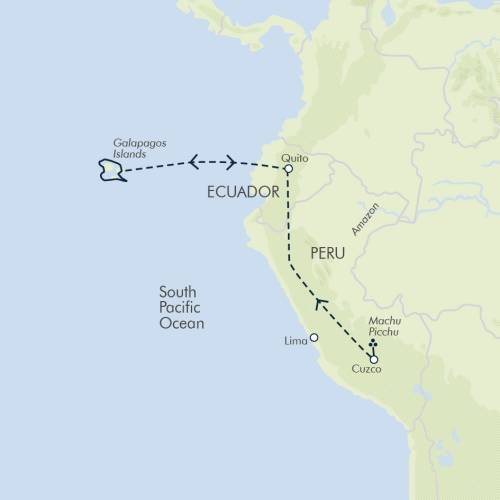
Land Only
- Start City: Cuzco
- End City: Quito
Land Only Itinerary
Adventure starts in Cuzco
Our adventure begins in Cuzco. Set high amid the Andes, the imperial city of the Incas was the centre of a vast empire, which stretched from Colombia to Chile at its peak. After Spanish conquistadors invaded the city, they built on top of the Inca structures, resulting in unique architecture: a fusion of Spanish colonial and Inca styles.
Say hola to your leader and fellow travellers around 6pm, where we gather as a group for the first time to get to know each other and learn more about the adventure ahead.
There are no activities planned today, so take it easy and drink plenty of water to help adjust to the altitude (11,155ft/3,400m). Your tour leader will ensure a big Latin welcome by arranging a group dinner at a local restaurant for your first taste of Peruvian hospitality.
Want to explore Cuzco further? Additional pre-tour hotel nights are bookable through your sales representative.
Upgrade to a superior room today – speak to your sales representative for more details
Accommodation: Hotel Raymi (or similar)
Visit Sacsayhuaman • Afternoon city tour
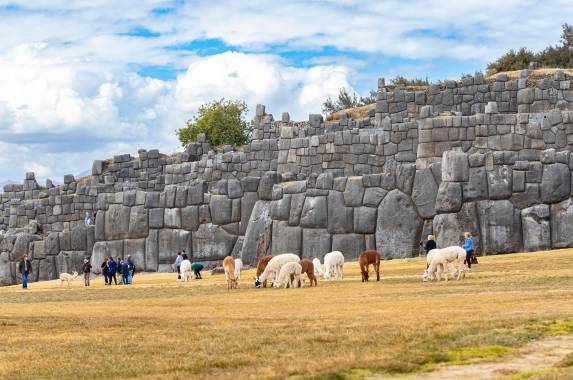
Transfer into the hills above Cuzco to visit Sacsayhuaman, the vast Inca fortress whose precisely cut stonework still raises questions about how it was constructed. From here, we continue to the nearby sites of Qenqo, with its carved rock shrines, PucaPucara, a former military and administrative outpost, and Tambomachay, known for its finely engineered water channels that still flow today. Throughout, our tour leader explains how these sites worked together to defend and supply the Inca capital.
Returning to Cuzco, we take a guided walk through the historic centre on foot. We also visit the Qoricancha Temple, once the most important temple in the Inca Empire, before visiting the Cathedral on the Plaza de Armas, where colonial art and architecture reveal another layer of the city’s history.
Upgrade to a superior room today – speak to your sales representative for more details
Accommodation: Hotel Raymi (or similar)
Sacred Valley tour • Visit Chinchero community for a traditional ‘pachamanca’ lunch • Stay in Ollantaytambo
After breakfast, we travel (1hr 15min) through the Sacred Valley of the Incas, on the outskirts of Cuzco, as we head up to the traditional weaving community of Chinchero. Along with amazing views of the valley and Vilcabamba mountains, Chinchero offers the unique cultural opportunity to enjoy a traditional Andean pachamanca lunch, which is hosted by and supports the local community. This is a real culinary treat, in which the food is wrapped, then buried underground with hot stones to cook it slowly.
After lunch, explore the ancient salt ponds near the village of Maras, where salty springs emerge from the hillside and the Incas built terraces to capture the flows and harvest salt. Also visit Moray, where the Incas built huge circular agricultural terraces on limestone sinks.
We arrive in Ollantaytambo around 6pm, with time to wander around the town.
Accommodation: Tunupa Lodge Hotel (or similar)
Train to Aguas Calientes • Optional Inca Trail hike via Wiñay Wayna ruins

Take the train (1hr 30min) to Aguas Calientes this morning, a lively town in the valley below Machu Picchu. The rest of the day is free to visit hot springs or shop in the large craft market.
Our Machu Picchu entrance ticket is valid for tomorrow; however, should you wish to visit the ruins today as well, you need to purchase an extra ticket in advance – please inform your sales representative at the time of booking the trip.
For those who wish to hike to Machu Picchu, there is an optional full-day trek that meets with the final section of the Inca Trail. Our route starts at Km104 and climbs 1.25mi (2km) to the ruins of Wiñay Wayna, where we continue to the Sun Gate for the iconic view of Machu Picchu with its mountain backdrop. Although this optional hike is available at no extra cost, it must be pre-booked since numbers are strictly limited (and a permit is required). You should request this at the time of booking and note the first part of the hike is a steep climb.
- Travellers not joining the hike board the train at around 11am, with free time beforehand to visit the Ollantaytambo archaeological site independently (entrance ticket included). They’ll travel independently to Aguas Calientes, where a local guide meets them on arrival, escorts them to the hotel for check-in, and then to a restaurant for lunch.
- Travellers taking the optional hike board an earlier train with the main tour leader, who also leads the hike.
Accommodation: Hotel Hatun Inti Classic (or similar)
Morning tour of Machu Picchu • Afternoon return to Cuzco
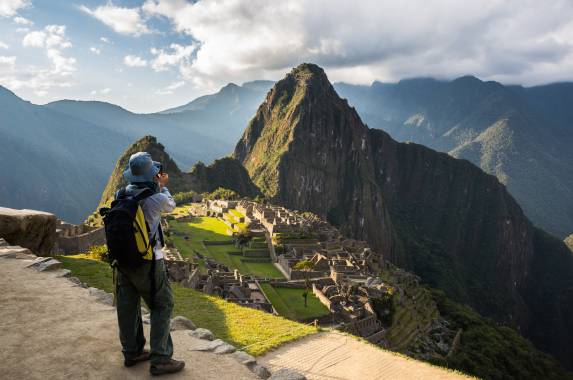
To beat the day-trippers from Cuzco, we get an early start for our 30-minute bus drive up the winding road to Machu Picchu. Machu Picchu is an architectural and engineering marvel with a mountain backdrop of staggering immensity. We typically explore Circuit 3, which covers the lower part of the site, allowing those who completed the optional Inca Trail hike to explore a different route.
Please note, exploring the ruins involves a reasonable amount of walking, including up and down steep and uneven stone steps.
After our tour, we return to Aguas Calientes and the afternoon train back to Ollantaytambo (1hr 30min). From Ollantaytambo, we continue by private bus to Cuzco (1hr 30min).
Upgrade to a superior room today – speak to your sales representative for more details
Accommodation: Hotel Raymi (or similar)
Fly to Quito
Say goodbye to our Peruvian tour leader today, as we leave Cuzco on a flight to Quito, Ecuador, via Lima (sometimes with an additional stop in Guayaquil).
In the western cordillera of the Andes, Quito is the second highest capital in the world and, as always at altitude, it is a good idea not to do anything too strenuous at first!
Our Quito tour leader picks us up from the airport and transfers us to the hotel – holding a welcome briefing in the afternoon/evening.
Upgrade to a suite today – speak to your sales representative for more details
Accommodation: Hotel Vieja Cuba (or similar)
Quito city tour
We have a half-day tour of Quito today, one of the smaller and more attractive capitals in South America. Our adventure takes us to the Plaza Grande, the main square, which is flanked by some of the most important landmarks in the city.
We also visit the impressive Quito cathedral and La Compañia church, plus the small volcanic hill known as El Panecillo. We then have the rest of the day to relax and continuing adjusting to the altitude.
After, you may wish to join an optional excursion to the equator, which is just 40 minutes’ drive north of Quito. Here, you visit the fun – and interactive – Intiñan Equator Museum, which explores indigenous culture and traditions, as well as unique phenomena related to the geographic location.
Upgrade to a suite today – speak to your sales representative for more details
Accommodation: Hotel Vieja Cuba (or similar)
Fly to San Cristóbal • Visit La Lobería

Leave the hotel around 6.30am and transfer (five minutes) to Quito Airport, where we catch our flight to San Cristóbal in the Galápagos via Guayaquil.
Bid farewell to our mainland tour leader at the airport; our Galápagos tour leader (an official Galápagos National Park Naturalist Guide) then meets us at San Cristóbal Airport (where we pay our US$200 Galapagos taxes in cash) and takes us to the hotel for check-in and our first briefing about our time in the archipelago.
Once checked in, we have time to explore the town and enjoy a restaurant lunch before the afternoon activity with two options available, depending on your preference.
Option one: Snorkel from La Lobería beach, a wonderful stretch surrounded by mangroves, volcanic rocks and sea lion colonies. You’ll start by visiting a local store for an equipment fitting – this equipment is yours until the final day in the Galápagos, when our local team returns it for you. Then, guided by our Galápagos tour leader and assistant, we head into the water from the beach, ensuring everyone is paired up for safety.
Please inform your tour leader if you are not a confident swimmer, or if you have never snorkelled before so they can assist you accordingly. Sea conditions can change. At times, the waves and currents can be strong, plus the shore is rocky.
Option two: Enjoy one of the coastal walks on San Cristóbal. A favourite is the Puerto Baquerizo Moreno walk, which takes you to Charles Darwin’s first landing spot.
Accommodation: Hotel Paraiso Insular (or similar)
Tour Isla Lobos and Playa Ochoa
Start with an exciting tour to Isla Lobos, a small, uninhabited island near San Cristóbal. This excursion takes us by boat to one of the best spots in the Galápagos for birdwatching, with a chance to see frigatebirds and blue-footed boobies. It is also a great place to see sea lions in their natural habitat.
This island is made of volcanic rock, so the terrain is uneven. If you would like walking sticks, please let the local team know at the start of the trip.
After our slow walk around the small island, we have a second opportunity to snorkel. From the boat, we enter the clear waters around the island, guided by our tour leader and an assistant. We swim along the coastline hoping to see marine life such as turtles, rays and, occasionally, whitetip reef sharks.
Please let your tour leader know if you would like additional swim aids. You are also welcome to stay on the boat to enjoy the beautiful scenery.
After lunch on board, we head to Playa Ochoa, a white-sand beach with turquoise waters. It’s ideal for relaxing, while also offering excellent birdwatching and further snorkelling opportunities. Once back in town, the rest of the afternoon is free.
Accommodation: Hotel Paraiso Insular (or similar)
Speedboat to Floreana Island • Visit the highlands • Speedboat to Isabela Island

Bid farewell to San Cristóbal and take a three-hour navigation by speedboat to Floreana, one of the first Galápagos Islands to be inhabited. En route, we may see whales, dolphins and seabirds.
After lunch at a local restaurant, we take a short drive up to the highlands, where we spend an hour visiting lava caves once used by pirates and a large enclosure of Galápagos giant tortoises.
In the afternoon, we travel (2hr 30min to three hours) by speedboat to Isabela Island.
See Boat Transfers in the Is This Trip for You? section for more information on our crossings.
Accommodation: San Vicente Hotel (or similar)
Morning visit to Las Tintoreras Islet • Afternoon exploration at the Wall of Tears
Spend 15 minutes travelling to the islets and lava channels of Las Tintoreras, one of the best places in the Galápagos to see whitetip reef sharks, penguins and sea lions. We take a slow 40-minute walk over the uninhabited island, viewing the iguana nesting site and trying to spot endemic creatures, such as lava lizards.
After, we have another fantastic opportunity to snorkel. We enter the water from the boat, led by our tour leader and an assistant.
This afternoon, we have an optional walk (7.5mi/12km round-trip) to the Wall of Tears, a sad reminder of Isabela’s very different past when it was used as a penal colony. Between 1946 and 1959, convicts were forced to build this wall from huge blocks of lava as a form of punishment, which, combined with the harsh conditions, led to many deaths.
Accommodation: San Vicente Hotel (or similar)
Speedboat to Santa Cruz • Optional visit to Charles Darwin Research Station • Visit Tortuga Bay
Navigate by speedboat (two hours to 2hr 30min) to Santa Cruz early this morning.
Upon arrival, we leave our luggage at our hotel and head out to visit the Charles Darwin Research Centre’s breeding facility – the Fausto Llerena Breeding Center. Here, we are introduced to some of the important work that takes place on the island, such as rearing giant tortoises until they reach an age where they can be introduced to the wild. After, we visit the exhibition hall and gift shop, where we can get our passports stamped in commemoration.
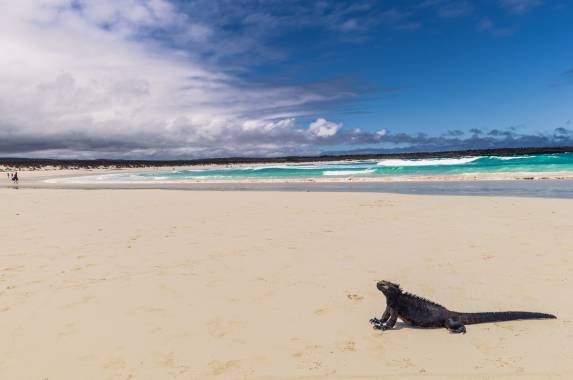
In the afternoon, we walk to Tortuga Bay, a long stretch of white sand that’s regarded as one of the best beaches in the Galápagos. The trail leading to the beach is paved and takes 45 minutes to one hour each way (5.5mi/9km total). There are possibilities to observe Galápagos finches and lizards en route.
The beach is scattered with marine iguanas, which lie among the clusters of black rocks or stroll along the sand. Turtles can sometimes be seen in the water, though swimming is not recommended due to the strong currents.
Santa Cruz is the most inhabited of the Galápagos islands, meaning you can enjoy perusing the souvenir shops and restaurants.
Accommodation: Grand Hotel Leon Marino (or similar)
Full-day boat tour to an uninhabited island
Visit either Bartolomé, South Plaza, Santa Fe or North Seymour. The island we visit depends on the Galápagos National Park Directorate (GNPD) regulations, who monitor tourism closely.
- South Plaza has a remarkable vegetation of succulents and cacti, which provide a unique habitat for land iguanas. The iguanas form small colonies at the base of the tall opuntia cacti, waiting for their flowers and dead pads to fall to the ground so they can feed on them. The island rocks are home to swallowtail gulls, shearwaters and sea lions.
- North Seymour is a flat, boulder-strewn island and a major nesting site for frigatebirds. It’s also a good place to see blue-footed boobies performing courtship rituals and sea lions playing in the powerful surf.
- Bartolomé is a spectacular scene of dramatic lava cones, clear seas and affords perhaps the most famous view of the Galápagos Islands, looking across the red cinder cones to the recent black lava fields on James Island.
If weather permits, we snorkel today where the water is calm. Please ensure you inform your trip leader if you require a swim aid. Lunch is on board the boat.
Accommodation: Grand Hotel Lobo de Mar (or similar)
Fly back to Quito
After a few days following the footsteps of Darwin, Cousteau and world-renowned scientists, it is time to say goodbye to the Enchanted Islands.
After breakfast, we journey to Baltra Island Airport via minibus, boat, and airport shuttle bus – bidding a fond farewell to our Galápagos tour leader – and fly to Quito via Guayaquil.
Our mainland tour leader meets us upon arrival and our groups normally gather for a final dinner this evening, a chance to celebrate the adventures we’ve had together.
Upgrade to a suite today – speak to your sales representative for more details
Accommodation: Vieja Cuba Hotel (or similar)
Adventure ends in Quito
Our adventure ends after breakfast this morning. If you’d like to continue your adventure, speak to your sales representative about extending your stay in Quito.
Post-trip Extensions
Sacha Lodge Add-on Tour
Travel into the untamed wilderness of the Ecuadorian Amazon, where the secluded Sacha Lodge sits immersed in its rainforest surroundings. From this tranquil spot overlooking Pilchicocha Lake, wildlife abounds. Blue-morph butterflies flit through the air, giant otters glide underneath the water and eight species of monkey grace the forest canopy. This expedition lets you experience the variety of the rainforest: take part in forest walks, explore by dug-out canoe, join a night-time exploration or tower above the trees on the Canopy Walk.
Have a look at the detailed itinerary, or speak to your sales representative for more details.
Amazon Add-on Tours
Extend your adventure in Ecuador with a journey into the heart of the Amazon, where winding waterways, dense rainforest and extraordinary wildlife create a world unlike anywhere else on Earth. Whether you’re seeking immersive wildlife encounters, cultural connection or a more refined rainforest retreat, there’s an Amazon add-on tour to suit your style of travel.
Sacha Lodge: Head deep within a private reserve bordering Yasuní National Park for an immersive four-day Amazon experience at Sacha Lodge. Explore canopy walkways high above the rainforest, glide through blackwater creeks by canoe and search for monkeys, macaws and giant otters, before unwinding in spacious lakeside cabins surrounded by jungle.
Yarina Lodge: Journey into a private reserve near Yasuní National Park for a four-day Amazon adventure at Yarina Lodge. Travel by canoe along the Napo River, explore rainforest trails with expert guides and spot monkeys, macaws and caimans, while staying in simple cabins designed to keep you close to the sights and sounds of the jungle.
Napo Cultural Center: Combine wildlife encounters with cultural immersion on this four-day stay at the Napo Cultural Center. Owned by the local Kichwa Añangu community, the lodge pairs guided rainforest exploration with opportunities to learn about local traditions, all from the comfort of spacious cabins overlooking the surrounding forest and lagoon.
Napo Wildlife Center: Perfect for wildlife enthusiasts, this four-day Napo Wildlife Center add-on tour takes you deep into Yasuní National Park, one of the most biodiverse places on Earth. Guided excursions reveal parrots gathering at clay licks, monkeys moving through the canopy and giant otters along the waterways, while spacious cabins beside Lake Añangu provide a wonderfully remote base.
La Selva Lodge: For those seeking a more refined rainforest escape, blend immersive exploration with understated comfort on an unforgettable five-day stay at La Selva Lodge. Elegant suites, excellent guiding and easy access to jungle trails, lakes and canopy towers create an experience that balances exceptional wildlife encounters with thoughtful service and relaxed surroundings.
Altitude warning: This trip includes one or more nights over 9,845ft (3,000m) above sea level, where there is a genuine risk of being affected by acute altitude illnesses; if left untreated, this can be life-threatening. Most should expect to experience some mild symptoms of altitude sickness, such as headaches, shortness of breath or sleeplessness. The Exodus Altitude Safety Guide describes how we will keep you safe on your holiday, but we do need your participation. Our leaders are trained to identify symptoms of severe altitude illnesses and, if a customer requires extra care, arrangements such as a rapid descent will be made.
Exodus itineraries are informed by the Wilderness Medical Society (WMS) Guidelines for the Prevention of Altitude Illnesses and designed to allow for adequate acclimatisation. Due to terrain and/or logistical factors, there may be nights where the sleeping altitude gain is more than 1,640ft (500m), increasing the risk. The WMS highlight that because the rates of acclimatisation and physiologic responses to high altitude vary considerably between individuals, the recommendations given, although generally effective, do not guarantee successful prevention. Participants should be aware of the inherent risk posed by altitude.
Several medical conditions or medications can affect a person’s ability to acclimatise, making them more susceptible to acute altitude illnesses. Those with pre-existing conditions, such as heart or lung conditions, those who have suffered with altitude sickness before, or those with concerns about overall physical ability, should consult their doctor before booking. The drug Diamox (acetazolamide) may aid acclimatisation in some individuals. Those considering using Diamox should speak to their doctor about the drug, its suitability, side-effects, and a prescription. Please note, while we endeavour to assist all our customers in achieving their goals, there may be times when a leader decides to delay or stop someone’s ascent based on their condition.
If you are not taking out the Exodus Travel Insurance policy from our partner Campbell Irvine, please make sure your policy covers you up to the maximum altitude on this trip (if trekking in the Himalayas, your policy should also cover the use of a helicopter for emergency medical evacuation).
Accommodation
Classic hotels in Peru and Ecuador
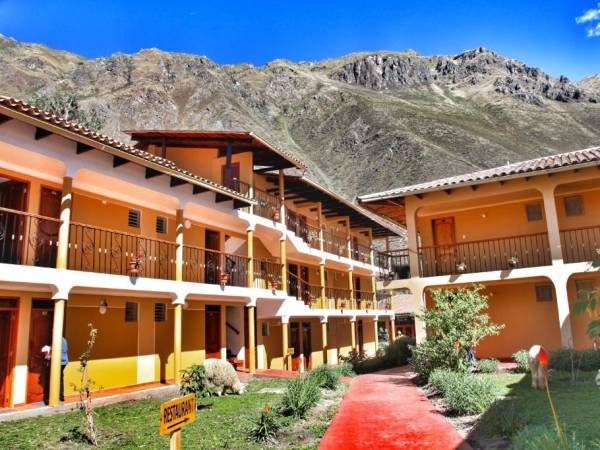
The hotels on this adventure in Peru and Ecuador were chosen for their comfort and convenience, putting us as close to the action as possible. Below are the accommodations typically used.
Upgrade your room on Day 1, 2, 5, 6, 7 and 14 of the itinerary – speak to your sales representative for more details.
Cuzco: Hotel Raymi (nights 1-2 and 5)
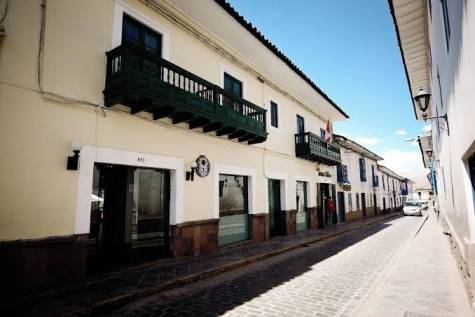
Within easy reach of the airport and the historic centre, Hotel Raymi is in an ideal location for the start of our trip. The hotel is a short walk from restaurants and Plaza de Armas, a great place for a stroll as you get used to the altitude.
Ollantaytambo: Tunupa Lodge Hotel (night 3)
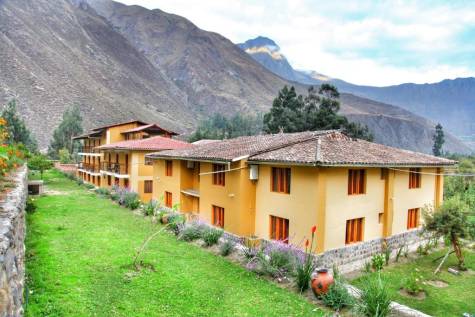
The mountain-wrapped Tunupa Lodge has an undeniably scenic location in the Sacred Valley of the Incas. It also has a bar and restaurant serving delicious local and international cuisines, plus a variety of drinks. Head to the lovely garden to relax and get to know your group a little better.
Aguas Calientes: Hotel Hatun Inti Classic (night 4)
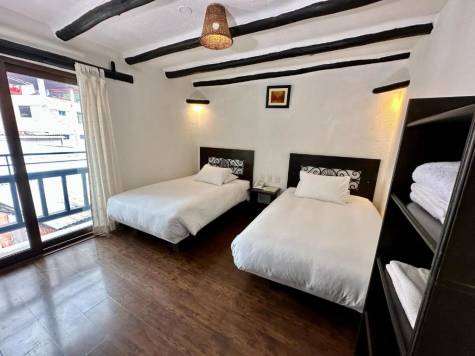
In the heart of Aguas Calientes, Hatun Inti Classic is in the ideal spot to access Machu Picchu, while also being in easy reach of the town stores. In the hotel, there’s also a top-floor restaurant with wonderful views of forested slopes.
Quito: Vieja Cuba Hotel (night 6, 7 and 14)
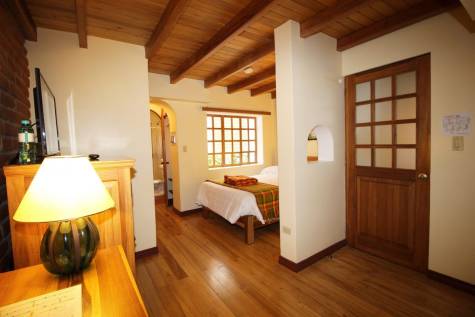
Taking over a pastel-pink colonial mansion, Vieja Cuba has a touch of the old world to it. The 26-room hotel also has a bar serving coffees, cocktails and more, plus a Mediterranean restaurant.
Galapagos: Hotels (nights 8-13)
In the Galapagos, we use small, family-run hotels and guesthouses. They are well located for our adventures, meaning we can spend as much time as possible exploring the extraordinary landscapes and wildlife of the Enchanted Islands.
Worth knowing
- Galapagos accommodation: Given the remote and isolated nature of the Galapagos, accommodation options are limited, and you may experience occasional hot water outages, blackouts and slow wifi. While the facilities may not match the comfort levels of the mainland, the unique opportunity to explore this extraordinary destination makes it a worthwhile experience.
Single supplement from USD 751
Food & Drink
Peru: Food and drink can vary in price enormously in Peru. As a guideline, allow about US$25-US$28 per meal to eat at good restaurants (excluding alcohol). Cheaper food is abundant at small cafes, although sanitary conditions cannot be guaranteed. Bottled water and soft drinks are available for around US$2-US$4.
Ecuador and Galapagos: Drinks and incidentals are quite expensive in the Galapagos, as everything is imported from the mainland. The choice of meals in some areas can be limited but special dietary requirements can usually be catered for if we are advised at the time of booking. Budget for around US$20-US$25 per meal.
Worth knowing:
- We cannot guarantee wheat-/gluten-free products are available for breakfasts in all locations in Peru – you may wish to bring your own breakfast food if you have an intolerance.
- The included lunches are usually a set menu with two or three options. If you hike the Inca Trail, you also have a packed lunch that day.
- Breakfasts are a mix of continental and boxed breakfasts, depending on the hotel. They are generally simple in the Galápagos, but sufficient to fuel you for a day of adventure.
The choice of meals in some areas of the Galápagos can be limited but special dietary requirements can usually be catered for if we are advised at the time of booking.
Transport
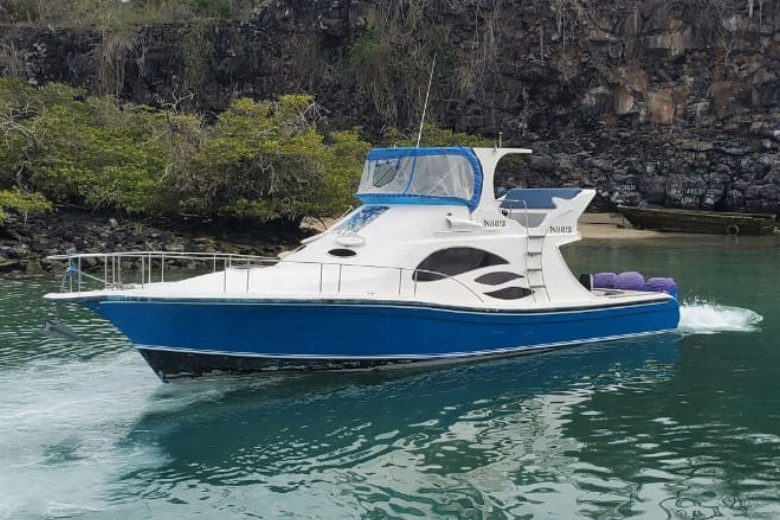
We use a private bus throughout this trip. We also travel by boat (above) between the Galapagos islands and internal flights.
The Baltra Island Airport transfer is in an airport shuttle bus, which usually takes less than 10 minutes. The road used is dedicated only to the airport buses and the vehicles do not have seatbelts, similar to standard public transport buses.
Weather & Seasonality
Cuzco and the Andes: April to November is the dry season. Expect strong sunshine in the mornings, sometimes clouding over as the day progresses. However, as in all mountains, the weather is variable at all times of year in the Andes, which includes cloud rolling up from the Amazon basin, rain or even snow, and rapid and unexpected changes! During the dry season, temperatures can dip at night to around the freezing mark (and sometimes below).
Aguas Calientes and Machu Picchu: Within the cloud forest, these experience large amounts of precipitation all year as clouds move up from the Amazon Basin. Rain can be heavy but is seldom prolonged.
Quito: Maximum daytime temperatures are almost constant throughout the year at 20C (68F), nights 8C (46F). Expect some rain in February to May and October to November; storms, though heavy, are generally short, and Quito is considered to have quite a pleasant climate.
Galapagos: The Galapagos climate is naturally variable. While the descriptions below reflect typical conditions, weather, ocean temperatures, rainfall, and sea conditions can be influenced by El Niño and La Niña events and may differ from year to year.
- January-June: Warm, humid weather, sunny skies, warmer ocean waters, and generally calmer seas make this the best time for snorkelling, and inter-island boat travel. Short tropical rainfall particularly from January to April, but they are often heavy and brief and followed by sunshine. Wildlife is active year-round, with many species nesting or breeding during this period.
- July-December: Cooler temperatures with lower humidity, morning mist (garúa), increased cloud cover, and occasional drizzle, especially in the highlands. Cooler, nutrient-rich waters attract abundant marine life, while stronger southeasterly trade winds can create rougher sea conditions, particularly on inter-island ferry crossings.
When to Go: Animals in the Galapagos
There are plenty of wildlife highlights throughout the year:
January: Nesting land birds; green sea turtles arrive to lay eggs on the beaches; land iguanas breed on Isabela
February: Nesting marine iguanas on Santa Cruz; greater flamingos start nesting on Floreana
March: The bright-red throat pouches of frigatebirds are inflated during mating season on Genovesa and San Cristóbal
April: Huge numbers of waved albatross on Española displaying courtship rituals; eggs of green sea turtles hatch; land iguana eggs hatch on Isabela
May: Courtship of blue-footed boobies begins on North Seymour; waved albatross on Española start laying eggs
June: Giant tortoises migrate to the lowlands and start nesting; migrating birds stop in the Galapagos to rest; migrating humpback whales can often be seen around the western islands
July: Dolphins and whales are more likely to be seen around the western islands; blue-footed boobies on Española start breeding
August: Nazca boobies nest on Genovesa Island; sea lions start giving birth to pups
September: Penguins seen in the water when snorkelling around Bartolome
October: Galapagos fur seals start mating; blue-footed boobies start raising chicks
November: Curious sea lion pups found in the water among snorkellers
December: Mating green sea turtles; waved albatross chicks fledge
Joining Instructions
Key information
Start hotel: Hotel Raymi, C. San Agustin 371, Cusco 08002, Peru
Phone: +51 84 214741
Recommended arrival time: You can arrive at any time today, there will be a welcome briefing around 6pm.
Airport: Alejandro Velasco Astete International Airport (CUZ)
Getting to the start hotel
The start hotel is approximately a 15-minute drive from the airport. We provide free arrival transfers to the start hotel from the airport for everyone. If you would like further information on joining this trip, please speak to your sales representative.
Please note, unless specified otherwise, the transfers are to the start hotel on the date the tour starts; transfers to other hotels in the same city and/or on different dates may attract an extra charge. Transfers should be booked with your sales representative at least two weeks before the tour starts.
Catching your return flight
There’s one group transfer to Mariscal Sucre Quito International Airport (UIO), which you can join at no extra cost. Please speak to your sales representative for the time of the transfer. If the group transfer does not suit your flight time, speak to your sales representative to arrange an alternative.
Full joining instructions including local emergency numbers will be sent to you as part of our Final Joining Instructions. If you do not receive these at least a week before departure, or require them earlier please contact our office or your travel agent.
Location start: Cuzco
Location end: Quito
What To Take
Essential Equipment
- Good sturdy shoes or walking boots
- Warm fleece jacket
- Layers of warm clothing
- Hats (for sun protection and warmth)
- Waterproofs
- Large water bottle
- Sunglasses
- High SPF sunscreen
- Closed-toe sandals or water shoes for wading ashore and walking on the islands (strong footwear is needed because of the very rough lava: flip-flops or similarly flimsy shoes are not suitable)
- Swimwear
- Sandals
- Insect repellent
- Seasickness tablets (the sea can be rough at times)
- Backpack or other smaller kitbag. You will be asked to pack a smaller overnight bag for the trip to Aguas Calientes/Machu Picchu, while your main luggage is kept in a secure location in Cuzco. This is because there is a luggage limit of 11lb (5kg) per person for the train journey between Ollantaytambo and Aguas Calientes.
- Reef safe sunscreen (a Galapagos requirement)
- Rash guard
- Rehydration medication/drinks
Please note: The luggage allowance on internal flights in this destination is 44lb (20kg). If required, you can leave excess luggage at the hotel in Quito and collect this on your return from the Galapagos.
Water included: Plastic bottles are a big issue in many countries where recycling isn’t yet widely available; they often end up in landfill or get burned. Both processes are harmful to the environment and we would like to reduce our impact here. For your trip, we provide an alternative to single-use plastic bottles to reduce the plastic used. This means that safe drinking water will be available throughout; all you need to do is bring a bottle to refill along the way. Please add this to your packing list.
Prohibited items: Many single-use plastic items are effectively banned in the Galapagos. Please only bring reusable items with you and check with your tour leader if you’re unsure. Additionally, food must be limited to small amounts of packaged, commercially prepared products. Fresh fruits, vegetables, meat, and dairy are not permitted to protect the islands’ ecosystem.
Optional Equipment
- Snorkel and face mask (free-to-use equipment is available, but you may prefer your own)
- Snorkel gear: You may prefer to bring your own snorkel gear; however, we do provide snorkel gear for you free of charge. The cost to rent a wetsuit locally varies per island but is US$6-US$12 per day, payable locally in cash
- Wetsuit (particularly during the cooler dry season)
- Camera with telephoto lens
- Spare camera battery and memory cards
- Binoculars
- Small sewing kit with safety pins
- Hand sanitiser
- Anti‐bacterial handwash or wipes
- Torch (flashlight) – headtorches (head lamps) are ideal
- Cold-water detergent or laundry soap (biodegradable)
Please note, walking poles are not permitted inside Machu Picchu without a medical certificate detailing their necessity.
Practical Info & Visa
Visa
Peru
Travellers from the UK, US and EU normally do not need a visa to enter Peru. Please note, visa requirements often change and it is your responsibility to obtain any required visas for this trip. Therefore, we recommend that you check with the nearest embassy or consulate of your chosen destination(s), including any countries you may be transiting or transferring through.
Some local governments provide guidance on what visas their citizens need. To help, we’ve gathered a selection of useful links below.
- Australia: www.smartraveller.gov.au/destinations/americas/peru
- Canada: www.travel.gc.ca/destinations/peru
- United Kingdom: www.gov.uk/foreign-travel-advice/peru/entry-requirements
- USA: www.travel.state.gov/content/travel/en/international-travel/International-Travel-Country-Information-Pages/Peru.html
Ecuador
Travellers from the UK, US and EU normally do not need a visa to enter Ecuador. Please note, visa requirements often change and it is your responsibility to obtain any required visas for this trip. Therefore, we recommend that you check with the nearest embassy or consulate of your chosen destination(s), including any countries you may be transiting or transferring through.
Some local governments provide guidance on what visas their citizens need. To help, we’ve gathered a selection of useful links below.
- Australia: www.smartraveller.gov.au/destinations/americas/ecuador
- Canada: www.travel.gc.ca/destinations/ecuador
- United Kingdom: www.gov.uk/foreign-travel-advice/ecuador/entry-requirements
- USA: www.travel.state.gov/content/travel/en/international-travel/International-Travel-Country-Information-Pages/Ecuador.html
Entering the Galapagos
- There is a compulsory Galapagos Tax of US$200, which can only be paid locally in cash (US dollars) and will be collected by the National Park Service on arrival at San Cristóbal.
- You also need a Transit Control Card. This is included in the cost of the tour and will be organised by your tour leader before entering the Galapagos.
- Before departing for the Galápagos, all visitors are required to complete a declaration form. Your leader will explain the process and assist with completing the form, which can take a little time.
If you are travelling via the USA and are eligible to transit under the Visa Waiver Program, you are required to register in advance for an ESTA (Electronic System for Travel Authorization). There is a US$40 charge, which is only payable online.
Please note: not all nationalities have the same eligibility for travel to or transit via the USA, and you may not be covered by the Visa Waiver Program. Regulations stipulate that any person who has travelled to Iran, Iraq, Libya, North Korea, Somalia, Sudan, Syria or Yemen since March 2011, or have dual nationalities of these countries, may no longer qualify. In addition, if you have travelled to Cuba since 12 January 2021 you will not be eligible for the visa waiver program and should instead apply for a visa.
If you are in doubt of your eligibility, please check the visa requirements with your local US embassy.
Vaccinations and Health
Peru
There are no required vaccinations. However, recommended vaccinations include tetanus, hepatitis A, hepatitis B, rabies, typhoid, tuberculosis and yellow fever. Additionally, Zika fever, a mosquito‐borne viral disease, is a known risk in Peru. There is currently no vaccine or prophylaxis available, so you should take the usual precautions to avoid mosquito bites. Please check all vaccination recommendations with your doctor or travel clinic.
Amazon: If you are travelling to the Tambopata reserve in the Amazon rainforest, the risk of malaria is slight, but you may wish to consult your doctor or travel clinic for further advice. We also strongly recommend that you obtain a yellow fever vaccination. Additionally, dengue fever and chikungunya are known risks in the Amazon region. Both are tropical viral diseases spread by daytime biting mosquitoes. There is currently no vaccine or prophylaxis available for either, and therefore the best form of prevention is to take the usual precautions to avoid mosquito bites.
Methanol: The FCDO warns travellers to be cautious of methanol poisoning when travelling in destinations visited on the trip.
Ecuador
All visitors to Ecuador must show valid medical insurance on arrival and cannot enter the country without it.
You also need a yellow fever vaccination certificate (vaccinated at least 15 days before you travel) if you are arriving from the Democratic Republic of Congo or Uganda, including if you have transited for more than 12 hours through an airport of those countries.
As updates may happen at any time, please check the latest requirements with your doctor or travel clinic.
Malaria is also a risk in some areas of the country (including the Amazon Rainforest) so we suggest you consult a doctor for more advice. Additionally, dengue, chikungunya and zika, all viral diseases spread by mosquitoes, are known risks in places visited. There are currently no vaccines or prophylaxes available, so take the usual precautions to avoid mosquito bites.
Recommended vaccinations include tetanus, hepatitis A, hepatitis B, rabies, tuberculosis, typhoid and yellow fever.
Please check all vaccination recommendations with your doctor or travel clinic.
Methanol: The FCDO warns travellers to be cautious of methanol poisoning when travelling in destinations visited on the trip.
Zika fever is a mosquito‐borne viral disease and a known risk in places visited on this trip. There is currently no vaccine or prophylaxis available, we therefore strongly recommend you take the usual precautions to avoid mosquito bites.
Local Time
Peru and Ecuador’s time zone: UTC -05:00
Electricity
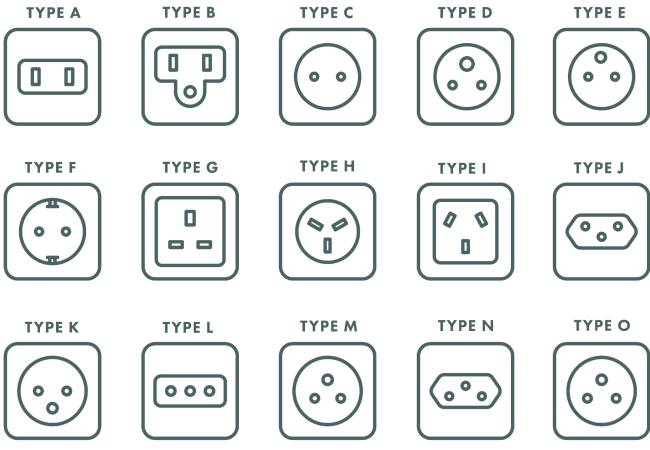
Peru’s electricity: Plug types A (two flat pins), B (three pins: two flat, one round) and C (two round pins)– 220V, 60Hz.
Ecuador’s electricity: Plug types A (two flat pins) and B (three pins: two flat, one round) – 120V, 60Hz
Money
Peru's currency: Peruvian nuevo sol (PEN)
Ecuador's currency: US dollar (USD)
ATM Availability
There are plenty of ATMs in Cuzco and Quito. Exchange rates are usually good and ATMs in Peru normally allow you to withdraw either soles or US dollars. Most international credit and debit cards are accepted, but you should inform your bank you are travelling to Ecuador and Peru and check if your card works in the local ATMs. There are several ATMs in Aguas Calientes, but they sometimes run out of cash, so it is a good idea to take your spending money for Machu Picchu from Cuzco.
Credit card acceptance is increasing, but generally they can be used only at the large (and more expensive) restaurants and shops.
Worth knowing
Peru: We recommend using ATMs to obtain soles in Peru; if you take cash, most major currencies including British pounds, euros and US dollars can easily be changed into local currency at all exchange desks, although US dollars usually attract the best exchange rates. Torn, damaged or marked foreign bills are usually refused in Peru. Although it is possible to obtain Peruvian soles before you travel, you should carefully check the exchange rates as they can be lower than changing money locally.
You are best exchanging cash into soles as you go, so you are not left with excess at the end of your trip. It is a good idea to change a small amount into soles at the counters in the baggage hall. Change is often in short supply, so try to break up large notes at the earliest opportunity and ask for small denomination banknotes when changing money.
Some larger establishments in Peru accept US dollars but most places only accept soles.
Ecuador: In the Galapagos, there are ATMs in Santa Cruz, San Cristóbal and Isabela; however, these can run out of cash (particularly during the peak seasons or over weekends) and they do not take all bankcards, so we recommend taking cash to the Galapagos.
Obtaining change for larger denomination banknotes (US$100 and US$50) can be difficult and, in some cases, they may not be accepted. Carry small notes (US$1 or US$5) for small transactions, as many small businesses and taxis do not carry large amounts of change.
Extra Expenses & Spending Money
Peruvian passport or identity card holders
The cost of Exodus trips in Peru are based on the assumption you do not hold a Peruvian passport or resident’s card. If you are officially resident in Peru or are a Peruvian passport holder, you are liable to an additional 18 percent tax on most services, and this extra sum is payable locally to our local partner. Other nationalities are exempt from this tax. Please notify us at the time of booking if you are legally resident in Peru or hold a Peruvian passport so we can advise you of the total cost of these taxes.
For those days where we do not include meals in Ecuador, budget roughly US$15-US$20 for lunch and US$20-US$25 for evening meals. It is possible to eat more cheaply or expensively than this, and the cost estimates don’t include alcohol. Drinks and incidentals are quite expensive in the Galápagos, as everything is imported from the mainland.
Optional excursions
Your tour leader can tell you about the full range of optional excursions available throughout your trip; however, a selection of the most popular ones are listed below:
Quito
- Visit to the Intiñan Equator Museum (US$5)
Cuzco
A Partial Tourist Ticket (BTG) is required for entrance to the sites in and around Cuzco and the Sacred Valley – this is not included in the excursion prices below but can be purchased locally from 70 soles (approximately US$21).
- City tour and four ruins (five hours): From US$48 per person (based on four participants), excludes BTG. This includes visits to the nearby ruins of Sacsayhuaman, Qenqo, Tambomachay and Puca Pucará plus a tour of the city itself, including: the Plaza de Armas, where the cathedral is located; Qorikancha Sun Temple (entrance included); and San Pedro Market.
- Sacred Valley tour (eight hours): From US$58 per person (based on four participants), excludes BTG. Drive to the Sacred Valley, stopping at El Mirador viewpoint en route. Visit Pisac Market and fortress and Ollantaytambo; return to Cuzco.
- South Valley tour (seven hours): From US$66 per person (based on four participants), excludes BTG. Visit the little-known valley to the south of Cuzco, including the terraces at Tipon, the pre-Inca ruins of Pikillaqta and the Sistine Chapel of the Americas in Andahuaylillas (entrance included); return to Cuzco.
Prices of excursions vary depending on the number of people taking part. The prices given within these Trip Notes are based on four participants and are intended as a guideline only. All tours use private transport and there is an English-speaking guide. For some activities, a minimum number of participants may be required.
Some shorter optional activities are also available around Cuzco:
- Bean to bar workshop at the Chocomuseum: US$29 per person (shared service, two hours)
- Pisco sour class & tasting in local bar in San Blas neighborhood: US$50 per person (private, including hotel pick up, minimum two participants, three hours)
- Andean music experience at a local musicians home: US$59 per person (private, including hotel pick up, minimum two participants, two hours)
Some activities may not always be possible due to weather, seasonality, national holidays, or unforeseen circumstances. Please note, cash is the preferred method of payment for any of the optional activities.
Tipping
Tips are a personal decision but are customary in Peru and Ecuador. As we are often asked how much is appropriate for different individuals, we have prepared some guidelines.
Peru (soles preferred)
- Tipping kitty: 85 soles (US$25) total
- Tour leader: 85 soles (US$25) total
Ecuador (US dollars preferred)
- Tipping kitty: US$60 total
- Galapagos tour leader: US$4-US$7 per person, per day
- Local guide in Quito: US$3-US$5 per person, per day
Tipping is customary in restaurants and cafes throughout Ecuador, and we recommend leaving 10%-15% to the total bill if the service charge is not already included. While widespread in Latin America, tipping is entirely voluntary.
Sustainability and Impact
As a certified B Corp, we’re on a mission to improve our social and environmental impact across all our adventures.
We do this through our innovative Thriving Nature, Thriving People plan.
This ‘nature positive’ approach is designed to help nature and communities thrive in harmony through practical solutions, such as reducing carbon and waste on our trips, supporting conservation projects through the Exodus Adventure Travels Foundation, and rewilding 100 square metres for every Exodus traveller.
You’ll also find Thriving Nature, Thriving People moments across our trips. These experiences are often a highlight of your adventure, while also benefiting the natural world or local communities.
On this trip, we:
- Visit the weaving community of Chinchero to learn about Andean textile traditions that continue to be practised today.
- Share a traditional pachamanca lunch with the local community, helping celebrate regional culinary heritage and ancestral cooking methods.
Important Information
Your Safe Participation
When booking this trip, you should be confident in your ability to participate in all activities described in these Trip Notes. If you have any doubt about your suitability, please call us and ask to speak to one of the experts on this itinerary.
Although our leaders are well trained to deal with different capabilities, if they have any concerns about someone’s ability to safely take part in an activity, or their impact on other people’s enjoyment, we authorise them to take necessary action which, in some circumstances, may involve asking someone to miss that activity.
By booking this trip you agree to our Booking Conditions which clearly state that our leaders have the authority to do this. In these rare instances we will ensure anyone sitting out is safely provided for and offered alternative options where possible. Refunds will not be provided for activities missed and customers may be liable for additional costs incurred.
Seatbelts
All vehicles used by us should be equipped with working seatbelts, except where approved by us based on the vehicle type or journey. Wherever seatbelts are available, we require our customers to use them for their own safety, even where it may not be a legal requirement.
Travel Safety
For additional information please have a look at the travel safety advice page on our website.
Machu Picchu regulations
- Tickets are valid for one entry, and all visitors must follow one of the pre-determined routes
- We spend approximately three hours at Machu Picchu and our guided tour lasts about two hours
- Upon finishing our one-way Machu Picchu guided tour, we must exit the site (re-entry is not permitted)
- Tickets are linked to your passport, details of which we take at the time of booking. It is essential that you inform us of any passport updates before departure. Passport numbers can be updated free of charge. However, only the passport number can be changed, and this update can only be made once. If a second change is required, or if any other details such as your name need to be changed, a new ticket must be purchased at the full cost. Failure to inform us of any update can result in refused entry to the site. If entry is still possible, our local operator will charge you an administration fee locally to update your details. Failure to inform us of any update can result in refused entry to the site. If entry is still possible, our local operator will charge you an administration fee locally to update your details.
Please note, we visit Machu Picchu in the morning or afternoon to avoid the peak entry time (10am to midday).
Inca Trail regulations
- Spaces on the Inca Trail are on a ‘first-come, first-served’ basis and we urge you to book as early as possible.
- If you cancel your booking more than eight weeks before departure and wish to transfer your deposit to another departure or another trip the transfer fee is approximately £150 (US$210 / CA$252 / AU$308 / €191) as we will lose the permit we have purchased on your behalf. This is an amendment to our Booking Conditions. No transfers are possible within eight weeks of departure.
- Bookings can only be made if we are supplied with your full name, passport details, date of birth and nationality, exactly as per the passport you will be using to travel to Peru (this information is used to purchase your Inca Trail permit). If your passport details do not match those on your permit you will be refused entry to the Inca Trail by the local authorities.
- The Inca Trail Permit is linked to your passport details, which we collect upon booking. It is essential you inform us of any passport updates before departure. To do this, you must provide copies of both your old and new passports in advance of travel. For this reason, we strongly recommend making a copy of your passport at the time of booking and keeping it somewhere safe. Passport numbers can be updated free of charge. However, only the passport number can be changed, and this update can only be made once. If a second passport change is required, or if any other details such as your name need to be changed, a new permit must be purchased at the full cost. Failure to inform us of any passport update may result in refused entry to the Inca Trail.
- Please be aware that these regulations may change at any time, and Exodus is not responsible for the decisions made by Peruvian authorities.
- There is a possibility the Peruvian authorities may increase the entrance fees to the Inca Trail, Machu Picchu and other major sights at any time. If they do so, we will inform you of this increase and the extra amount will need to be paid locally in cash in Peru.
Please note: While your departure date may be ‘Guaranteed’, your Inca Trail permit itself will initially be ‘On Request’. If you’re travelling within the current year, we try to purchase your permit immediately upon receiving your booking. If travelling next year, we will apply for your permit as soon as they are released for sale. If we are unable to get your permit, we will contact you to discuss your options.
How To Book
Speak to our friendly team of experts to plan your adventure:
- Check availability: our website shows real-time availability of our guided group tours, or contact our team by phone, email or live chat.
- Hold a space: You can provisionally hold a space on any guided group tour to give you time to finalise your travel plans.
- Confirm your booking: Payment of a deposit will complete your booking and secure your place on the trip.
After booking
You will receive a confirmation document and invoice, which includes extra information and guidance about your travel arrangements. Our dedicated Customer Operations team will help you with any pre-travel questions or arrangements and can easily add extensions or extra accommodation to your booking. Final Joining Instructions will usually be sent out two to three weeks prior to departure.
Adding transfers to your booking
If you have arranged your own flights and would like to add transfers to your booking, please provide your arrival and departure details to our Customer Operations team around four to six weeks before departure.
- Where complimentary transfers are included, they are available for any flight but can only be added to your booking once we have received your flight schedule.
- Where group arrival and departure transfers are available, these operate at fixed times. You will need to arrive in time to meet the scheduled transfer. If the timings don’t align with your travel plans, our team can arrange private transfers once they receive your flight schedule.
Trip Note validity
Trip notes may be updated after booking; if any updates significantly impact the inclusions or itinerary you will be advised in writing. A link to the most up-to-date Trip Notes will be sent out with your Final Joining Instructions before departure.
The information in these Trip Notes is given in good faith. All holidays can be subject to unexpected changes, and occasionally it may not be possible to follow the itinerary as planned. In these circumstances we will make the best-possible alternative arrangements that maintain the integrity of the original itinerary.
