Current as of: October 20, 2026 - 19:18

Lares Trek to Machu Picchu Trip Notes
- Ways to Travel: Classic, Guided Group
- Destination: Peru
- Programmes: Walking & Trekking
-
Activity Level:
4 out of 7 - Moderate & Challenging
- 8 Days: Land Only
- Ages: 16+
- Trip Code: TPA
Trip Overview
Take the quieter route to Machu Picchu, visiting remote Quechua villages and crossing Andean passes
The Lares Trek suits those craving a more personal Andean hiking experience on the way to Machu Picchu, offering a culture-rich and quieter alternative to the Inca Trail (and no Inca Trail permit required!). After time to acclimatise and explore Cuzco and the Sacred Valley, we follow quiet paths through high mountain landscapes and Quechua-speaking villages supported by an experienced crew. Nights are spent camping in remote valleys, giving a real sense of scale and isolation, and we end with a soak in natural hot springs, before exploring one of the Seven New Wonders of the World: Machu Picchu.
Machu Picchu tickets can sell out, book early to avoid disappointment!
Is This Trip for You?
This trip is graded Activity Level 4 (Moderate & Challenging). For more information on our trip gradings, visit the Activity Level Guidelines page. If you have any queries about the difficulty of the trip, please contact us.
Suitability: Though strenuous in parts, this trek is possible for anyone with good health and fitness, though we would not recommend this trip to someone with no previous walking experience. There are three days of point-to-point walking with full porterage.
- Maximum altitude: 15,175ft (4,625m)
- Maximum sleeping altitude: 12,695ft (3,870m)
If you are not a regular walker, you should put in physical preparation beforehand. The trek is not suitable for those with bad knees due to the number of steep and uneven steps. The use of trekking poles will reduce strain on the knees.
Walking hours stated within the itinerary are given as approximates only. Timings stated include lunch and photo stops and vary depending on the group’s pace.
Delays: Protest action/strikes are not uncommon in Peru; while these are generally peaceful, they can involve roadblocks and cause disruption to travel. Occasionally, your leader may have to adapt your itinerary in response to this.
Machu Picchu ticket availability: Access to Machu Picchu is strictly limited, and we purchase the requisite Machu Picchu ticket on your behalf. Tickets are issued on a ‘first-come, first-served’ basis; to avoid stockpiling; individual traveller passport details are required at the time of booking, so we can only apply for these once you book with us. For these reasons, we highly recommend you book your trip as far in advance as possible.
Therefore, while a specific departure date may show as ‘Guaranteed’ on our website, Machu Picchu remains subject to availability, and we cannot guarantee the tickets will be available on any given date. Machu Picchu tickets are non-refundable and non-transferable, at a cost of US$55.
In the event tickets are sold out for the departure you are looking at, we will discuss alternative options such as a different travel date, alternative circuits or a refund of any monies paid. We highly recommend you do not book any non-refundable flights until your place and tickets are secured.
Booking your flights through us means we take care of all of this for you, giving you full peace of mind over your travel arrangements. For more details on booking flights with us, see our flights page.
Please note, it is essential you read the Machu Picchu regulations in the Important Information section of the Trip Notes before you book this trip.
Water safety: This trip includes time by a lake, river or sea, where there may be opportunities to swim. You should always seek local advice before deciding whether to swim. Open-water or wild swim spots should be treated with extreme caution. Information on how to keep yourself safe while swimming is shown here.
Group
On the Lares Trek, there is a full crew of porters, cooks and assistant guide.
Adult min age: 16
Min group size: 4
Max group size: 16
Itinerary
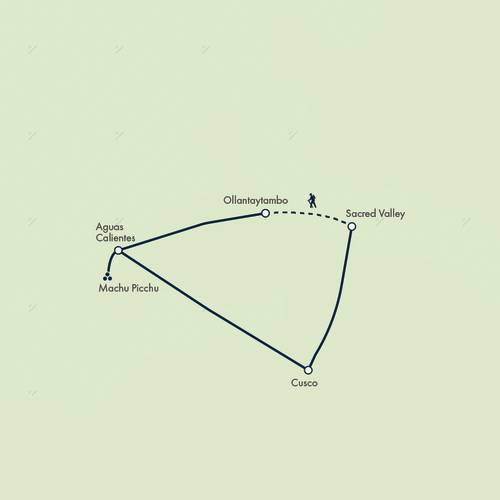
Land Only
- Start City: Cuzco
- End City: Cuzco
Land Only Itinerary
Adventure starts in Cuzco
Begin your adventure in Cuzco, once the geographic, cultural and political centre of a vast Inca empire. After Spanish conquistadors invaded, they built on top of Inca structures, resulting in unique architecture, a fusion of Spanish and Inca styles.
Around 6pm, say hola to your tour leader and fellow travellers, when we gather as a group for the first time to get to know each other and learn more about the adventures ahead.
Your tour leader then ensures a big Peruvian welcome by arranging a group dinner.
Want more time in Cuzco? Secure pre-tour hotel nights through your sales representative.
Upgrade to a superior room today – speak to your sales representative for more details
Accommodation: Inkarri Hotel (or similar)
Acclimatise in Cuzco and choose your own adventure

We keep today deliberately flexible to help with acclimatisation at altitude. Those staying in Cuzco join our tour leader for an orientation walk through the historic centre, introducing key landmarks and giving useful context for the days ahead.
Alternatively, there is the option to join a full-day hike to Palcoyo Rainbow Mountain, a quieter alternative to Vinicunca with broad views across multicoloured ridgelines. Travellers choosing this hike will not take part in the orientation walk.
The remainder of the day is free to rest, explore independently or enjoy a long lunch in one of the city’s cafes.
Upgrade to a superior room today – speak to your sales representative for more details
Accommodation: Inkarri Hotel (or similar)
Explore the Sacred Valley of the Incas

Travel by private vehicle into the Sacred Valley (departing around 8am), following the Urubamba River through a landscape shaped by agriculture for centuries. Terraced hillsides and maize fields still define the valley floor.
Midway through the journey, we spend time with an Andean community, learning about traditional weaving techniques and making our own bracelets under local guidance. Lunch is a pachamanca, cooked using hot stones in the earth – a method that predates the Incas.
In the afternoon, we visit the Maras salt ponds, where thousands of shallow pools have been used for salt extraction since pre-Inca times. We then continue to our hotel in the valley, arriving mid to late afternoon.
Upgrade to a suite today – speak to your sales representative for more details
Accommodation: San Agustin Urubamba Hotel (or similar)
Begin the Lares Trek
Transfer from the Sacred Valley to Huaran village, the start point of the Lares Trek. From here, we begin our hike into the quieter highlands north of Cusco.
The trail climbs steadily to Cancha Cancha campsite, passing grazing land and small settlements. We have time to explore the local community, where Quechua remains the first language for most residents, before settling in for the night.
Our support team prepares dinner at camp, with the surrounding peaks catching the last of the evening light.
Accommodation: Cancha Cancha campsite (altitude: 12,695ft/3,870m)
Cross the high pass of the Lares Valley
Set off early, climbing gradually towards the highest point of the trek at 15,175ft (4,625m). Along the way, the landscape opens up to reveal a high-altitude lake and a small waterfall, with snow-covered peaks lining the horizon.
From the pass, we begin a long descent through scattered villages, where traditional dress is still part of everyday life. The trail leads us to Quishuarani campsite, where we arrive in the afternoon and enjoy a well-earned dinner.
Accommodation: Quishuarani campsite (altitude: 12,470ft/3,800m)
Finish the trek and unwind in hot springs
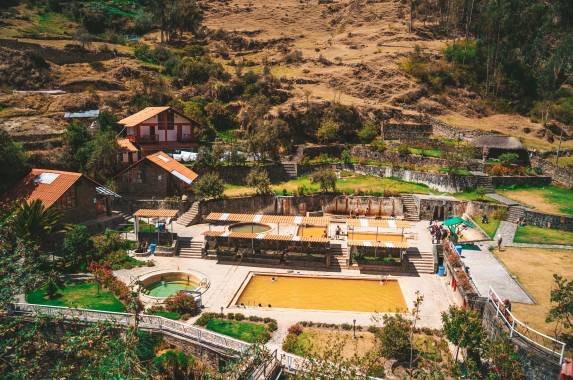
Our final walking day takes us over Huillquicasa Pass (13,945ft/4,250m). The route passes small settlements and open grazing land, with frequent sightings of llamas and alpacas. With luck, we may also spot the Andean cock-of-the-rock, Peru’s national bird.
After descending to Cuncani, we transfer by vehicle to Lares village, where there is time to relax in the hot springs – a welcome reward after several days on the trail.
Later, we continue (2hr 30min) by road to Ollantaytambo. Arriving in the early evening, we have time to raise a toast to our trek with chicha, an ancient corn beer, in a local bar.
Accommodation: Samanapaq Hotel (or similar)
Explore the ruins of Machu Picchu • Return to Cuzco
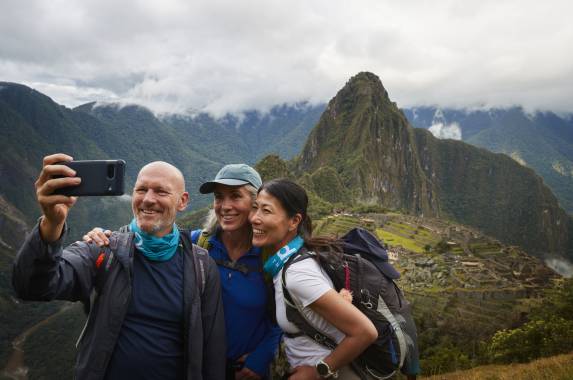
An early start sees us board the 6.30am tourist train from Ollantaytambo to Aguas Calientes (1hr 30min). From here, a shuttle bus takes us up to Machu Picchu.
We spend around two to three hours exploring the site, following the designated circuit with our guide, who explains how the Incas engineered the city and why it was abandoned within a century of its construction.
After returning to Aguas Calientes, there is free time to explore the town or visit the market before our afternoon train journey back to Ollantaytambo (1hr 30min), followed by a private transfer to Cuzco (2hr 30min).
Upgrade to a superior room today – speak to your sales representative for more details
Accommodation: Inkarri Hotel (or similar)
Adventure ends in Cuzco
You’ve trekked through the Lares Valley, soaked in Andean hot springs and explored Machu Picchu, but now it’s time to begin your return journey home.
Alternatively, if you’d like to extend your adventure, speak to your sales representative about our range of extension options, including Lake Titicaca, the Amazon Rainforest or additional time in Cuzco.
Extend Your Trip
Amazon Rainforest Add-on Tour (from Cuzco)
Easily accessible via a short flight to Puerto Maldonado from Cuzco, the Amazon is the largest rainforest in the world and home to an astonishing array of wildlife, plus countless plant species. Spending three nights at a lodge in the incredibly rich Tambopata Reserve, we use motorised canoes to explore lakes and rivers, and follow jungle trails to navigate dense forests.
Have a look at the detailed itinerary, or speak to your sales representative for more details.
Post-trip Extensions
Lake Titicaca Add-on Tour
Journey across the spectacular altiplano to Lake Titicaca, the highest navigable freshwater lake in the world at 12,467ft (3,800m). Explore the waters by boat and visit the indigenous Uros community who live on floating reed islands and produce fine textiles.
Have a look at the detailed itinerary, or speak to your sales representative for more details.
Altitude warning: This trip includes one or more nights over 9,845ft (3,000m) above sea level, where there is a genuine risk of being affected by acute altitude illnesses; if left untreated, this can be life-threatening. Most should expect to experience some mild symptoms of altitude sickness, such as headaches, shortness of breath or sleeplessness. The Exodus Altitude Safety Guide describes how we will keep you safe on your holiday, but we do need your participation. Our leaders are trained to identify symptoms of severe altitude illnesses and, if a customer requires extra care, arrangements such as a rapid descent will be made.
Exodus itineraries are informed by the Wilderness Medical Society (WMS) Guidelines for the Prevention of Altitude Illnesses and designed to allow for adequate acclimatisation. Due to terrain and/or logistical factors, there may be nights where the sleeping altitude gain is more than 1,640ft (500m), increasing the risk. The WMS highlight that because the rates of acclimatisation and physiologic responses to high altitude vary considerably between individuals, the recommendations given, although generally effective, do not guarantee successful prevention. Participants should be aware of the inherent risk posed by altitude.
Several medical conditions or medications can affect a person’s ability to acclimatise, making them more susceptible to acute altitude illnesses. Those with pre-existing conditions, such as heart or lung conditions, those who have suffered with altitude sickness before, or those with concerns about overall physical ability, should consult their doctor before booking. The drug Diamox (acetazolamide) may aid acclimatisation in some individuals. Those considering using Diamox should speak to their doctor about the drug, its suitability, side-effects, and a prescription. Please note, while we endeavour to assist all our customers in achieving their goals, there may be times when a leader decides to delay or stop someone’s ascent based on their condition.
If you are not taking out the Exodus Travel Insurance policy from our partner Campbell Irvine, please make sure your policy covers you up to the maximum altitude on this trip (if trekking in the Himalayas, your policy should also cover the use of a helicopter for emergency medical evacuation).
If you are not taking out Exodus Travel Insurance, make sure your policy covers you up to the maximum altitude on this trip (if trekking in the Himalaya your policy should also cover the use of a helicopter for emergency medical evacuation).
Ascents, descents and distances: All ascents, descents and distances listed in the daily itinerary have been measured by our local partners or tour leaders, in many cases with satellite-based mapping software. However, different GPS measuring devices can give differing results, particularly on winding paths or in mountainous terrain. Measurements stated throughout these Trip Notes are given to help you understand the types of terrain and distances you will encounter. Timings stated will vary depending on the pace of your group.
Accommodation
Hotels and camping
The three-star hotels selected on our Andean trips feature an excellent blend of quality and comfort, with easy walking access to city and town attractions. The Lares Trek is offered on a full-service camping basis with full porterage, meaning our camp staff put up and take down the tents for you, cook, and do all the camp chores. You need only carry your backpack for the day and enjoy your time on the trek.
Upgrade your room on Day 1, 2, 3 and 7 of the itinerary – speak to your sales representative for more details.
Cuzco: Inkarri Hotel (nights 1-2 and 7)

Just a short walk from the Plaza de Armas, Inkarri occupies a restored colonial house with peaceful internal patios. Simple, comfortable rooms provide a restful base between explorations of the former Inca capital.
Sacred Valley: San Agustin Urubamba Hotel (night 3)

Set in the heart of the Sacred Valley, the San Agustin Urubamba is a converted colonial-style hacienda surrounded by landscaped gardens. Rooms are simple and comfortable, providing a calm pause between Cusco and the high Andes. The on-site restaurant focuses on regional Peruvian dishes, and the hotel’s grounds offer space to relax and acclimatise while enjoying views across the Urubamba Valley.
Lares Trek: Camping (nights 4-5)
We sleep and dine in good-quality four-season tents. We also have a toilet tent set up both in camp and during lunch stops. Boiled and filtered drinking water is provided to guests in the mornings, at lunch and dinner times so we can refill our water bottles. While on the trek, a bowl of warm water for washing is provided each morning and evening. On the Inca Trail, we stay in official campsites where additional bathroom facilities are available.
Ollantaytambo: Samanapaq Hotel (night 6)

A short walk from Ollantaytambo’s Inca ruins and cobbled streets, Samanapaq is a small, family-run property with views towards the surrounding mountains. Rooms are bright and well kept, and the courtyard garden is a pleasant spot to unwind after a day exploring the town. Its location makes it an easy base for wandering Ollantaytambo in the early evening or before our onward journey.
Worth knowing
- Tailor your trip: Extend your adventure by securing extra hotel nights before or after the main itinerary. Speak to your sales representative to book.
- Private rooms: Like most tour operators, we room solo passengers together. If you’d prefer to have a private room, it’s normally possible to do this for a supplement. Speak to your sales representative to book.
Single supplement from CAD 643
Food & Drink
Peruvian cuisine is loved for its flavours and originality; it’s well worth digging into the local delicacies. Among these are: ceviche, seafood or fish marinated in lime juice; lomo saltado, a Peruvian take on a beef stir-fry; and various hearty soups, including the delicious quinoa soup. Other dishes include roasted cuy (guinea pig) and alpaca steak. To drink, there’s pisco sour, the national beverage.
Drinking water is included throughout the trip as the tap water in Peru is not safe to drink; boiled and filtered drinking water is provided on the trek; elsewhere your leader buys large water containers from which you can refill your bottle.
Hotel breakfasts are normally simple buffets, usually including bread/toast, preserves, cereal, sometimes eggs or cooked dishes, sometimes fruit, tea/coffee and fruit juice. Regrettably, we cannot guarantee that wheat-free or gluten-free products are available for breakfast in all locations – if you have an intolerance you may wish to bring your own breakfast food.
During the hike, hearty breakfasts are served and good-quality cooked lunches and dinners are provided. They usually consist of soup to start, a main course with meat/fish and some carbohydrates, followed by a dessert. Between meals, snacks are also provided. Tea/coffee is brought to your tent each morning and juice or hot drinks are provided with all meals during the trek.
Transport
A variety of transport is used during this tour and vehicle types may vary depending on group size: travel is by minibus/minivan and train.
We travel by train between Aguas Calientes (the town below Machu Picchu) and Ollantaytambo in expedition/executive class. Seating is four seats to a table, the carriages have panoramic windows and there is air conditioning/heating.
We take the public bus for the short journey between Aguas Calientes and Machu Picchu; this is the only transport available on this route as private vehicles are not permitted. The wait can be very long first thing in the morning, especially during the peak summer months.
This point-to-point trekking trip requires you to walk between each overnight stay under your own steam. Other forms of transport may be available along the route (horses, mules etc) but Exodus is not able to take responsibility for the safety or the cost of any transport you choose to take, even if provided with the assistance of our tour leader or staff.
Weather & Seasonality
The diverse geography of Peru results in a very varied climate between different regions. Cuzco and the Andes have a temperate climate. December to March is the rainy season in Cuzco/the Andes. April to November is the dry season, which is characterised by clear skies and strong sunshine in the mornings, sometimes clouding over as the day progresses.
Daytime temperatures are usually pleasant (20C/68F on average) but nights are lower (7C/44F), except for May, June, July and August when days are cooler and nights are often close to, or a few degrees below, freezing. In the Andes, however, anything is possible at any time of year, including cloud, rain or even snow, with rapid and unexpected changes.
Aguas Calientes and Machu Picchu are in the cloud forest and experience large amounts of precipitation all year as clouds move up from the Amazon Basin. Rain here can be heavy but is seldom prolonged. Cold fronts sometimes occur from July to August.
Peru is affected by El Niño, a weather phenomenon where warming of Pacific Ocean surface water off South America drives a shift in the atmospheric circulation, resulting in abnormally high levels of rainfall over parts of South America. These events occur at irregular intervals of two to seven years, and last nine months to two years.
Joining Instructions
Start hotel: Inkarri Hotel, Collacalle 204, Cusco 08003
Phone: +51 84 242 692
Recommended arrival time: You can arrive at any time today. There is a welcome briefing around 6pm this evening.
Airport: Alejandro Velasco Astete International Airport (CUZ)
Getting to the start hotel
Our Cuzco hotel is approximately 20 minutes’ drive from the airport. We provide free arrival transfers to the start hotel from the airport for everyone. If you would like further information on joining this trip, please speak to your sales representative.
Collecting baggage in Lima
If you are flying via Lima, you need to collect your baggage in Lima, even if your bag has been checked all the way through to Cuzco. After collecting the bag, you are required to clear customs, and you should then drop it off at the bag drop for the onward flight. If you do not pick up your bag, there is a chance it may not reach Cuzco for the start of the trek. This is a requirement of Lima airport and applies to your return flight.
Catching your return flight
We provide free departure transfers for everyone to Alejandro Velasco Astete International Airport (CUZ) from the end hotel.
Please note, unless specified otherwise, the transfers will be to the start hotel and from the end hotel and will be on the date on which the tour starts/ends; transfers to other hotels in the same city and/or on different dates may attract an extra charge. Transfers should be booked with your sales representative at least two weeks before the tour starts.
Full joining instructions including local emergency numbers will be sent to you as part of our Final Joining Instructions. If you do not receive these at least a week before departure, or require them earlier please contact our office or your travel agent.
Location start: Cuzco
Location end: Cuzco
What To Take
Essential Equipment
For full details of what to take, please see our Inca Trail kit list.
In Cuzco, we provide an inflatable Therm-a-Rest sleeping mat for the duration of the trek. The mat is full length and approximately 1.57in (4cm) thick when inflated.
A sleeping bag is not included but is required for the trek – these can be hired locally through your leader in Cuzco from US$26.
Baggage
Any normal luggage or suitcase can be used for this trip, but a soft kitbag or duffel bag (measuring approximately 27in x 12in/70cm x 30cm) must be used for the trek (since porters cannot carry hard suitcases or bags with wheels etc).
Waterproof poncho: The weather on the Lares Trek can be unpredictable, and rain showers are possible at any time of year. A good-quality waterproof poncho will help keep you and your gear dry.
Exodus kitbag: If you book this trip, we provide an Exodus kitbag to pack your luggage in while on trek. Once you have booked, you will be sent instructions on how to claim your free bag (they will not be sent out automatically). There are also details on how to claim for another item from the Exodus shop should you already have one of these. If you book via an agent, it is at the agent’s discretion, and you should speak directly to them to arrange delivery. Please note that if you book less than three weeks before the departure date, we cannot guarantee that your kitbag will arrive before your trip starts; if this is the case, please contact us on datateam@exodus.co.uk to let us know. For full T&Cs see www.exodus.co.uk/kitbags.
The kitbags do not have wheels, so you may prefer to pack it inside your own wheelie case for ease of travelling to, and moving through, the airport. Your suitcase can then be left in Cuzco with anything not needed for the trek, while the kitbag will be carried by your porter on the trek. If, however, you can’t fit the Exodus kitbag in your main luggage (or do not receive one in time) then our local partners will provide a soft kitbag in Cuzco (this should be returned to your leader after the trek).
Weight restriction: There are regulations regarding luggage, which are strictly enforced and were created to reduce environmental damage and comply with porter work laws.
Porterage for up to 15lb (7kg) of personal gear is allowed. This is inclusive of your sleeping bag, which usually weighs approximately 4.1lb (1.8kg). Your sleeping mat, however, does not count towards your personal weight limit. If your packed kitbag exceeds the allowed weight, you must transfer excess items to your backpack.
Donations for porters: The porters we work with are mostly from farming communities. If you have any old walking gear you no longer need, or any unwanted warm children’s clothing, these would be much appreciated by the porters and their families. Please leave any donations with your leader in Cuzco, or you can give items directly to your porters on the last night of the trek.
Environmental considerations: We believe in reducing our negative environmental impact wherever possible, even when nature calls. If no facilities are available, you may need to go behind a tree, bush or rock. To avoid leaving toilet paper behind, we recommend taking biodegradable bags with you. Once you have done your business, put the used paper in the bag and dispose when appropriate facilities are available.
Water included: Plastic bottles are a big issue in many countries where recycling isn’t yet widely available; they often end up in landfill or get burned. Both processes are harmful to the environment and we would like to reduce our impact here. For your trip, we provide an alternative to single-use plastic bottles to reduce the plastic used. This means that safe drinking water will be available throughout; all you need to do is bring a bottle to refill along the way. Please add this to your packing list.
Optional Equipment
Trekking poles: We strongly recommend taking collapsible trekking poles as the number of steps can be hard on the knees. Due to recent environmental legislation, poles must have a plastic tip or protector fitted on the end. Walking poles with rubber tips can be hired through your leader in Cuzco from US$20 for a pair of walking poles. Walking poles are not permitted inside the Machu Picchu ruins without a medical certificate detailing their necessity.
We also recommend:
- Small sewing kit (with safety pins)
- Wet wipes
- Biodegradable cold-water detergent or laundry soap
- Personal music player/books/pack of cards
We strongly recommend storing electronics in a sealed waterproof bag to prevent damage during rain
Practical Info & Visa
Passport
Remember to check the expiration date of your passport if travelling internationally. Many countries require your passport to be valid for at least six months after the date of your scheduled return.
Visa
Peru
Travellers from the UK, US and EU normally do not need a visa to enter Peru. Please note, visa requirements often change and it is your responsibility to obtain any required visas for this trip. Therefore, we recommend that you check with the nearest embassy or consulate of your chosen destination(s), including any countries you may be transiting or transferring through.
Some local governments provide guidance on what visas their citizens need. To help, we’ve gathered a selection of useful links below.
- Australia: www.smartraveller.gov.au/destinations/americas/peru
- Canada: www.travel.gc.ca/destinations/peru
- United Kingdom: www.gov.uk/foreign-travel-advice/peru/entry-requirements
- USA: www.travel.state.gov/content/travel/en/international-travel/International-Travel-Country-Information-Pages/Peru.html
If you are travelling via the USA and are eligible to transit under the Visa Waiver Program, you are required to register in advance for an ESTA (Electronic System for Travel Authorization). There is a US$40 charge, which is only payable online.
Please note: not all nationalities have the same eligibility for travel to or transit via the USA, and you may not be covered by the Visa Waiver Program. Regulations stipulate that any person who has travelled to Iran, Iraq, Libya, North Korea, Somalia, Sudan, Syria or Yemen since March 2011, or have dual nationalities of these countries, may no longer qualify. In addition, if you have travelled to Cuba since 12 January 2021 you will not be eligible for the visa waiver program and should instead apply for a visa.
If you are in doubt of your eligibility, please check the visa requirements with your local US embassy.
Vaccinations and Health
There are no mandatory vaccination requirements; however, recommended vaccinations are polio, tetanus, typhoid, hepatitis A.
Also note, zika virus, a mosquito‐borne viral disease, is a known risk in places visited on this trip. There is currently no vaccine or prophylaxis available. We therefore strongly recommend you take the usual precautions to avoid mosquito bites.
If you are travelling to the Tambopata reserve in the Amazon rainforest, the risk of malaria is slight, but you may wish to consult your GP or travel health clinic for further advice. We also strongly recommend you obtain a yellow fever vaccination.
Dengue and chikungunya are also known risks in the Amazon region. Both are tropical viral diseases spread by daytime biting mosquitoes. There is currently no vaccine or prophylaxis available for either, and therefore the best form of prevention is to avoid being bitten. We recommend you take the usual precautions to avoid mosquito bites: always apply insect repellent and wear long-sleeved shirts and trousers while in the rainforest to avoid being bitten.
Methanol: The FCDO warns travellers to be cautious of methanol poisoning when travelling in destinations visited on the trip.
Local Time
Peru's time zone: America/Lima (UTC -05:00)
Electricity
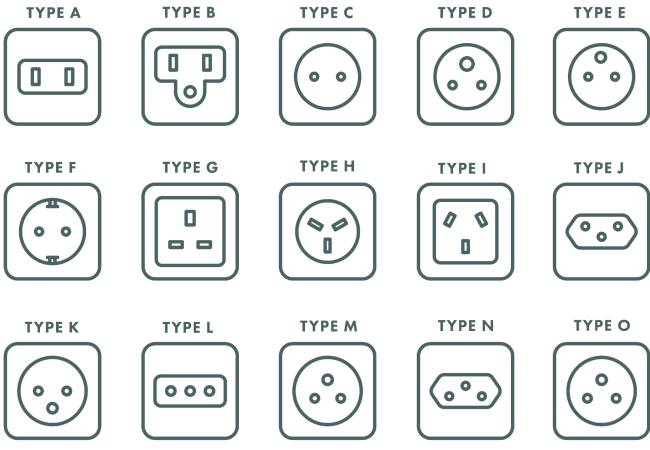
Peru’s electricity: Plug types A (two flat pins), B (three pins: two flat, one round) and C (two round pins) – 220V, 60Hz. There are no charging facilities available on the Inca Trail, so we recommend you take spare batteries or a solar charger with you.
Amazon extension: There is no mains electricity in the Amazon lodges; a generator provides power for a few hours a day only in the main lodge/dining area, while lanterns, torches (flashlights) or candles are provided in the bedrooms.
Money
Peru's currency: Peruvian nuevo sol (PEN)
ATM Availability
ATMs are available in the larger cities and towns and are particularly recommended since they often allow you to withdraw either dollars or soles and exchange rates are generally good. Most international credit and debit cards are accepted, but you should inform your bank you are travelling to Peru and check if your card will work in the local ATMs.
There are some ATMs in Aguas Calientes, but they can run out of cash so it is a good idea to take your spending money for Machu Picchu with you on the trek itself. Credit card acceptance is increasing, but generally they can be used only at the large (and more expensive) restaurants and shops. Check with your card provider to ensure your card can be used in Peru.
Extra Expenses & Spending Money
We recommend either taking cash with you to change into sol locally or using local ATMs to withdraw money in Peru as you go, so you are not left with excess at the end of your trip. It is a good idea to change a small amount into sol at the counters in the baggage hall upon arrival. Change is often in short supply, so ask for small denomination banknotes and try to break up any large notes at the earliest opportunity.
It is possible to obtain Peruvian sol before you travel but exchange rates can be lower than exchanging money locally in Peru. Some larger establishments and hotels accept US dollars, but most places only accept sol.
Food, drinks and similar incidentals can vary in price enormously in Peru and are relatively expensive compared to other developing nations. Allow about 55-75 soles (US$25-US$28) per meal to eat at tourist-class restaurants. Cheaper food is abundant at small local cafes, although sanitary conditions at these places cannot be guaranteed. Bottled water and soft drinks are readily available for around 3.75-7.50 soles (US$2‐US$4) each.
You may want to hire equipment for your trek in Cuzco – please see the Packing Section for prices. Peruvian airport taxes are included in the price of your flight ticket and there will be no need to pay these locally. Please note, there is a possibility the Peruvian Ministry of Tourism may increase entrance fees to archaeological sites at any time. If this happens, we will inform you of the increase and the additional amount will be payable locally.
Peruvian passport or Identity Card holders
Our trips in Peru are based on the assumption you do not hold a Peruvian passport or residents card. If you are officially resident in Peru or a Peruvian passport holder, you are liable to an additional 18 percent tax on most services, and this extra sum is payable locally to our local partner.
Other nationalities are exempt from this tax. Please notify us at the time of booking if you are legally resident in Peru or hold a Peruvian passport so we can advise you of the total cost of these taxes.
Optional excursions
Cuzco
- Full-day hike to Palcoyo Rainbow Mountain – from US$72 per person (please let your sales representative know before departure if you would like to join this excursion)
- Four-hour cooking class with a visit to a local market and dinner – from US$72 per person
- Bean-to-bar workshop at Chocomuseum (two hours) – from US$31 per person (shared experience with other tourists)
- Private pisco sour class and tasting (three hours) – from US$53 per person (minimum two people)
- Private Andean music experience at local musician’s home (two hours) – from US$62 per person (minimum two people)
Prices of excursions vary depending on the number of people taking part. The prices given within these Trip Notes are intended as a guideline only. Actual prices will be more for smaller group sizes and less for larger group sizes. All tours use private transport and there will be an English-speaking guide. Please note that cash is the preferred method of payment for any of the optional activities.
For some activities, a minimum number of participants may be required. Some activities may not always be possible due to weather, seasonality, national holidays, or unforeseen circumstances.
Tipping
Our local staff are paid fairly for their work but tipping is customary in Peru. Tipping is greatly appreciated, but not compulsory and based on service provided. Whether and how much to tip is a personal decision; however, we have included some guidelines below.
Please note, Peruvian sol is the preferred currency for tips (but US dollars are also fine).
Tipping kitty: We recommend running a tipping kitty on this trip. A tipping kitty means we tip as a group, and individuals don’t need to worry about giving out small tips to various people who have helped during the trip (ie drivers, local guides, hotel staff). The tipping kitty excludes tips for the trekking crew and the tour leader. The contribution we suggest is 25 soles (US$6) per person per day.
Tour leader: Leaders are paid fairly for their role but are always grateful for recognition of their skills and hard work. Tips for your leader should be based on their performance and engagement with the group. If you are happy with the tour leader’s work, we recommend somewhere around 25 soles (US$6) per person per day, but customers are encouraged to contribute what they feel happy giving.
Trekking crew: The trekking crew is made up of guides, cooks, kitchen staff and porters. Tips are best arranged on a group basis, and a volunteer from the group should gather the money and split the total collected into smaller amounts for each person. This is normally done on the last night of the trek. Your leader is happy to assist as needed.
Around 200-300 soles (US$50-US$75) of the total collection would normally be allocated to the main trek guide.
Based on the above distributions, tips for everyone (inclusive of a tipping kitty and a tip for your trekking crew and tour leader) for the whole tour duration should amount to a total of around 575-655 soles (US$145-US$165) per person, depending on the group size.
Sustainability and Impact
As a certified B Corp, we’re on a mission to improve our social and environmental impact across all our adventures.
We do this through our innovative Thriving Nature, Thriving People plan.
This ‘nature positive’ approach is designed to help nature and communities thrive in harmony through practical solutions, such as reducing carbon and waste on our trips, supporting conservation projects through the Exodus Adventure Travels Foundation, and rewilding 100 square metres for every Exodus traveller.
You’ll also find Thriving Nature, Thriving People moments across our trips. These experiences are often a highlight of your adventure, while also benefiting the natural world or local communities.
On this trip, we:
- Spend time with an Andean community learning traditional weaving techniques and creating bracelets under local guidance.
- Share a traditional pachamanca lunch, helping preserve an earth-cooking method that dates back to pre-Inca times.
Important Information
Your Safe Participation
When booking this trip, you should be confident in your ability to participate in all activities described in these Trip Notes. If you have any doubt about your suitability, please call us and ask to speak to one of the experts on this itinerary.
Although our leaders are well trained to deal with different capabilities, if they have any concerns about someone’s ability to safely take part in an activity, or their impact on other people’s enjoyment, we authorise them to take necessary action which, in some circumstances, may involve asking someone to miss that activity.
By booking this trip you agree to our Booking Conditions which clearly state that our leaders have the authority to do this. In these rare instances we will ensure anyone sitting out is safely provided for and offered alternative options where possible. Refunds will not be provided for activities missed and customers may be liable for additional costs incurred.
Seatbelts
All vehicles used by us should be equipped with working seatbelts, except where approved by us based on the vehicle type or journey. Wherever seatbelts are available, we require our customers to use them for their own safety, even where it may not be a legal requirement.
Travel Safety
For additional information please have a look at the travel safety advice page on our website.
Machu Picchu regulations
- Tickets are valid for one entry, and all visitors must follow one of the pre-determined routes
- We spend approximately three hours at Machu Picchu and our guided tour lasts about two hours
- Upon finishing our one-way Machu Picchu guided tour, we must exit the site (re-entry is not permitted)
- Tickets are linked to your passport, details of which we take at the time of booking. It is essential that you inform us of any passport updates before departure. Passport numbers can be updated free of charge. However, only the passport number can be changed, and this update can only be made once. If a second change is required, or if any other details such as your name need to be changed, a new ticket must be purchased at the full cost. Failure to inform us of any update can result in refused entry to the site. If entry is still possible, our local operator will charge you an administration fee locally to update your details. Failure to inform us of any update can result in refused entry to the site. If entry is still possible, our local operator will charge you an administration fee locally to update your details.
Please note, we visit Machu Picchu in the morning or afternoon to avoid the peak entry time (10am to midday).
How To Book
Speak to our friendly team of experts to plan your adventure:
- Check availability: our website shows real-time availability of our guided group tours, or contact our team by phone, email or live chat.
- Hold a space: You can provisionally hold a space on any guided group tour to give you time to finalise your travel plans.
- Confirm your booking: Payment of a deposit will complete your booking and secure your place on the trip.
After booking
You will receive a confirmation document and invoice, which includes extra information and guidance about your travel arrangements. Our dedicated Customer Operations team will help you with any pre-travel questions or arrangements and can easily add extensions or extra accommodation to your booking. Final Joining Instructions will usually be sent out two to three weeks prior to departure.
Adding transfers to your booking
If you have arranged your own flights and would like to add transfers to your booking, please provide your arrival and departure details to our Customer Operations team around four to six weeks before departure.
- Where complimentary transfers are included, they are available for any flight but can only be added to your booking once we have received your flight schedule.
- Where group arrival and departure transfers are available, these operate at fixed times. You will need to arrive in time to meet the scheduled transfer. If the timings don’t align with your travel plans, our team can arrange private transfers once they receive your flight schedule.
Trip Note validity
Trip notes may be updated after booking; if any updates significantly impact the inclusions or itinerary you will be advised in writing. A link to the most up-to-date Trip Notes will be sent out with your Final Joining Instructions before departure.
The information in these Trip Notes is given in good faith. All holidays can be subject to unexpected changes, and occasionally it may not be possible to follow the itinerary as planned. In these circumstances we will make the best-possible alternative arrangements that maintain the integrity of the original itinerary.
