Current as of: October 14, 2026 - 16:25

Discover Mongolia Trip Notes
- Ways to Travel: Guided Group, Originals
- Destination: Mongolia
- Programmes: Culture
-
Activity Level:
2 out of 7 - Easy & Moderate
- 13 Days: Land Only
- Ages: 16+
- Trip Code: ACMA
- Carbon Footprint: 32kg CO2e
Trip Overview
Discover the remote Mongolian steppe, the Gobi Desert and nomadic traditions
The rolling steppe of Central Asia makes way to stark desert; across this vast landscape, nomadic ger camps are peppered, camels and goats are herded on horseback, fermented mare’s milk is the tipple of choice, dunes sing and the first intact dinosaur eggs were found. Genghis Khan went forth from here to conquer the biggest land empire in history and, to this day, Buddhist and Animist traditions mix. Join this trip and travel along rough tracks through steppe, mountain and the Gobi Desert to encounter the nature and culture of this fascinating, yet little known, country.
We also offer festival departures of this itinerary, see Naadam Festival (June) or Naadam Festival (July)
Is This Trip for You?
This trip is graded Activity Level 2 (Easy & Moderate). For more information on our trip gradings please visit the Activity Level Guidelines page. If you have any queries about the difficulty of the trip, please do not hesitate to contact us.
Journeys: We go further into the wilderness than the average visitor to Mongolia and, while this allows us to travel through stunning parts of the country, encountering few people other than the odd nomad, it does mean some days involve long and bumpy drives. Much of our time is spent in areas where roads are barely tracks through the landscape. These drives are balanced with time to relax and take in the incredible surroundings often with the option of going for a walk or, sometimes, a horse or camel ride.
Suitability: There are some scheduled hikes. These are no more than one or two hours, on mostly flat or rolling terrain. The Flaming Cliffs hike may not be suitable if you have an acute fear of heights and can involve some scrambling; however, it’s still possible to enjoy great views of the cliffs and opt out of the walk.
Climate: The climate in central Mongolia is generally pleasant in summer when the trip runs. In the Gobi Desert, however, temperatures can get well above 30C (86F), even approaching 40C (104F).
Group
We are led by a local tour leader who is accompanied by an experienced Mongolian guide. Other trip staff include drivers and local assistants as needed.
Adult min age: 16
Min group size: 4
Max group size: 16
Itinerary

Land Only
- Start City: Ulaanbaatar
- End City: Ulaanbaatar
Land Only Itinerary
Adventure begins in Ulaanbaatar
Begin your adventure in Ulaanbaatar, Mongolia’s capital, where Soviet-era architecture, Buddhist monasteries and glass towers stand side by side on the high-altitude steppe.
Around 6pm, say sain baina uu (hello) to your tour leader and fellow travellers, when we gather as a group for the first time to get to know each other and learn more about the adventures ahead.
Your tour leader then ensures a big Mongolian welcome by arranging a group dinner.
Want more time in Ulaanbaatar? Secure pre-tour hotel nights through your sales representative.
Accommodation: Bayangol Hotel (or similar)
Explore Mongolian religious life in Gandan Monastery • Journey into Terelj National Park

Leave the capital and head into the wide-open landscapes of Terelj National Park, where forested mountains, granite rock formations, and flower-filled meadows reveal a very different side of Mongolia.
Before departing Ulaanbaatar, we visit Gandan Monastery, the largest functioning Buddhist monastery in the country and an important centre of Mongolian religious life. Among the highlights is the gold-and-bronze Migjid Janraisig statue, standing 65ft (20m) high inside the main temple hall. If we’re lucky, we may hear the deep chanting of monks during morning prayers.
The drive (approximately two hours) to Terelj National Park takes us east into rolling grasslands and alpine scenery.
In the afternoon, we walk up to the Aryabala Meditation Temple, a Tibetan-style monastery built into the hillside. Along the path, wooden plaques display Buddhist teachings and reflections, while the temple itself overlooks the valleys and rock formations of the park. The climb involves several steps but rewards us with far-reaching views over the surrounding wilderness.
Tonight, we experience our first stay in a traditional Mongolian ger, the circular felt homes still used by nomadic families across the country.
Total drive time: 2hr 30min
Accommodation: Guru Eco Ger Camp
To the Little Gobi Desert • Track takhi, the last truly wild horses in the world

Today we head to the Mongol Els (Little Gobi Desert), where grassland gives way to dunes and semi-desert landscapes.
En route, we detour to Khustain Nuruu National Park, one of Mongolia’s great conservation success stories. The park is best known for the reintroduction of the takhi (Przewalski’s horse). Once extinct in the wild, the species now roams freely here again thanks to decades of conservation work led by Mongolian and international organisations.
After visiting the information centre, we take a guided hike through the steppe in search of the horses. The contrast of Bactrian camels crossing the dunes while horses graze nearby captures the unique geography of central Mongolia, where desert and grassland meet.
Continue to the Mongol Els for another night in a ger camp beneath expansive desert skies.
Total drive time: six to seven hours
Accommodation: Hoyor Zagal Camp
Discover the ancient capital of Karakorum

Travel deeper into Mongolia’s history, travelling to Karakorum, the 13th-century capital of the Mongol Empire founded by Ogedei Khan, son of Genghis Khan.
First, however, we head to the nearby Khogno Khan Mountain, an isolated granite massif known for its birdlife, including steppe eagles and vultures. At the foot of the mountain sits a small monastery, quietly positioned between the rocks and sand dunes.
Continue to Karakorum, once the political heart of the largest land empire in history. Though little remains of the original city, the surrounding landscape still carries enormous historical significance.
After lunch, we visit Erdene Zuu Monastery, established in 1586 using stones from the ruins of ancient Karakorum. Although much of the complex was destroyed during the Stalinist purges of the 1930s, the monastery walls, lined with 108 stupas, remain one of the most important religious monuments in Mongolia.
Later, we visit the Karakorum Museum, where artefacts recovered from the area help piece together the story of the Mongol Empire and Silk Road trade routes that once passed through here.
Total drive time: 1hr 30min
Accommodation: Anja Ger Camp
Continue along the edge of the Gobi Desert to Arvaikheer
Follow the northern fringe of the Gobi Desert to Arvaikheer, the capital of the Ovorkhangai Province
Along the way, we stop at Shankh Monastery, one of the oldest monasteries in Mongolia and once associated with Zanabazar, the revered Buddhist scholar, artist and spiritual leader often considered the father of Mongolian Buddhism. The monastery remains an active religious site, and our tour leader helps bring its history and symbolism into context.
Arriving in Arvaikheer in the afternoon, we visit the local museum, where exhibits include ancient stone figures, archaeological finds and Turkic inscriptions that trace the deep human history of the Mongolian steppe. Depending on timing, we may also stop at the local market for a glimpse into everyday provincial life.
Total drive time: three hours
Accommodation: Local Hotel
Drive into the remote landscapes of Bayan Gobi
Today is the longest drive of the trip, but also one of the most rewarding as we leave the main tourist route behind and enter the more remote reaches of the Gobi.
After breakfast, the paved road soon disappears and the scenery steadily changes. Vast gravel plains, dry riverbeds and distant mountain ranges dominate the horizon as we travel deeper into the desert. In the distance, the Ikh Bogd Mountain rises above the landscape, the highest peak in the Gobi Altai range and an important landmark for local herding communities.
The journey takes approximately nine hours including stops, giving us time to appreciate the sheer scale and isolation of Mongolia’s southern wilderness. Encounters with other vehicles are rare, and the silence of the open steppe becomes part of the experience itself.
Arrive at our remote ger camp by evening for a night surrounded by desert landscapes and uninterrupted skies.
Total drive time: five to six hours
Accommodation: Ger camp
Cross desert passes • Visit the White Cave
Continue through classic Gobi scenery, where rocky plains, isolated outcrops and pockets of sand stretch across the Khatan Suudal Steppe.
After crossing a desert pass, we visit the White Cave, known for its pale quartz-rich rock formations and archaeological significance. The surrounding landscape feels increasingly remote, with little beyond open steppe and distant mountain silhouettes.
We stop for a picnic lunch overlooking Arts Bogd Mountain before continuing towards the Khongoriin Els dunes. The gradual arrival of the dunes is particularly memorable, their vast ridges rising unexpectedly from the flat desert terrain.
Reach our ger camp in the late afternoon.
Total drive time: five to six hours
Accommodation: Ger camp
Experience the Singing Dunes • Meet camel herders to learn about their nomadic life

Spend the day among the Khongoriin Els, the largest dune system in Mongolia, stretching approximately 125mi (200km) across the South Gobi.
Some dunes reach heights of almost 985ft (300m), and when the wind conditions are right, the shifting sand creates the low vibrating sound that gives them the nickname Singing Dunes.
Later, we visit a local camel-herding family to learn more about nomadic life in the desert. The South Gobi is home to around 100,000 Bactrian camels, still widely used to transport goods and gers across remote areas in one of the world’s harshest environments.
Total drive time: 30 minutes
Accommodation: Ger camp
Hike into Yolyn Am canyon in Gobi Gurvansaikhan National Park
Drive through Gobi Gurvansaikhan National Park, whose name translates as Three Beauties of the Gobi, referring to the mountain range that dominates the region.
The landscapes here are remarkably varied, shifting between rocky desert, sand plains, narrow ravines and isolated oases. Our main destination is Yolyn Am, also known as Vulture’s Mouth, a canyon so deep and narrow that winter ice can remain on the valley floor even in the height of summer.
We visit the local museum before walking into the canyon itself. The area supports a surprising range of wildlife, including ibex, lammergeiers, argali sheep and, more rarely, snow leopards. Our tour leader helps identify the signs of life in what initially appears to be a harsh and empty environment.
Later, transfer to a nearby ger camp.
Total drive time: four hours
Accommodation: Ger camp
Hike among the Flaming Cliffs of Bayanzag

Enjoy a slower-paced day with time to relax at camp before visiting one of the most important palaeontological sites in Mongolia.
Either in the morning or afternoon, we drive approximately 43mi (70km) to Bayanzag, better known as the Flaming Cliffs. The name comes from the deep red-orange colour of the sandstone.
The cliffs became internationally famous in the 1920s, when American explorer Roy Chapman Andrews uncovered some of the world’s first dinosaur eggs here. Even today, fossil fragments can occasionally be spotted on the ground. During our hike through the area, our tour leader explains the significance of the discoveries and how they changed scientific understanding of dinosaurs forever.
Return to camp later in the day.
Total drive time: three hours
Accommodation: Ger camp
Discover the dramatic rocks of Baga Gazryn Chuluu
Begin the journey back towards Ulaanbaatar, staying overnight by the dramatic granite formations of Baga Gazryn Chuluu.
Rising abruptly from the steppe, these weathered rock formations have long been associated with Buddhist pilgrimage and local legends. We visit the ruins of Lovonchombo Monastery, once an important religious centre hidden among the rocks, before continuing to a nearby natural spring believed by local people to have healing properties for the eyes.
The surrounding landscape is particularly atmospheric in the evening light, when the granite formations cast long shadows across the grasslands. Tonight is our final stay in a traditional ger camp.
Total drive time: six to seven hours
Accommodation: Ger camp
Visit the iconic statue of Genghis Khan • Return to Ulaanbaatar
Travel back to the capital, stopping first at the Genghis Khan Equestrian Statue Complex at Tsonjin Boldog.
Standing 130ft (40m) high atop a 33ft (10m) visitor centre, the stainless-steel statue depicts Genghis Khan on horseback and has become one of the most recognisable landmarks in modern Mongolia. It is possible to climb inside the structure for views from the horse’s head across the surrounding steppe.
After lunch near the complex, continue to Ulaanbaatar (approximately 174mi/280km on paved roads). Back in the capital, there may be the opportunity this evening to attend a traditional music and dance performance at the National Academic Drama Theatre, featuring throat singing, folk music and contortion performances.
End the journey with a final group dinner, a chance to reflect on desert crossings, monastery visits and nights spent beneath Mongolia’s vast skies.
Total drive time: five to six hours
Accommodation: Bayangol Hotel (or similar)
Adventure ends in Ulaanbaatar
You’ve tracked wild horses across the steppe, crossed the landscapes of the Gobi Desert and visited ancient monasteries linked to the Mongol Empire, but now it’s time to begin your return journey home.
Alternatively, if you’d like to extend your adventure, speak to your sales representative to discuss our large range of extension options.
Accommodation
Hotels and ger camps

We use hotels in Ulaanbaatar and Arvaikheer and ger camps elsewhere. This traditional accommodation is airy and usually contains a central wood-burning stove (in the summer the stoves are not normally needed). The bathrooms are normally shared and all have hot water (due to the remoteness of the camps this can, at times, be erratic).
Many of the ger camps now have 24-hour electricity in the ger itself for charging batteries. If there is no charging facility inside the ger, there are charging facilities in the common area (though this may be during limited periods of the day when the generator is turned on). There is normally no more than two people per ger; however, in some cases, due to availability issues, we may need to have triples in the ger. There may also be rare occasions when a single cannot be guaranteed in a particular ger camp.
Single supplement from USD 1317
Food & Drink
Traditional Mongolian diets are very meat and dairy heavy. While there are opportunities to try some of these products, such as dry curd and fermented mare’s milk, the meals provided in the ger camps are generally Western meals, at times with an Asian influence. There is normally some form of soup and salad plus a main course and desert. Vegetarians are generally well catered for; if you are vegetarian or have other dietary requirements, please inform us in advance.
Breakfasts can vary from place to place, some are buffets while others are set, normally cereal, bread and possibly a hot dish. On some days, a pack lunch is provided, this is often still a proper meal (though without the soup). Water is provided and is generally from large water containers, so make sure to bring a refillable water bottle. Tea, coffee, soft drinks, beer, vodka and (most of the time) wine are available to buy at the ger camps. There is the opportunity to buy snacks in Ulaanbaatar and on a couple of other occasions along the way when we drive through towns or villages.
Transport
We travel in a convoy of 4x4s (four passengers per vehicle) as we make our way around central Mongolia and the Gobi Desert.
Driving in the wilderness can be hard going on minivans/larger vehicles. They may experience punctures and may need to be cooled down as overheating is common. We use Jeeps as they are much more reliable and able to navigate rough roads better than the larger minivans often used. Although rare, punctures/issues can occur so please come with an open mind.
We may also use a coach for getting around Ulaanbaatar and Terelj National Park.
Weather & Seasonality
July and August is summer in Mongolia and daytime temperatures should be a pleasant 20C (68F) in Ulaanbaatar and central regions. Temperatures can reach a maximum of 33C (91F) in the capital and high 30Cs (around 100F) in the Gobi Desert in July. Although the average is lower, expect some very warm weather. Evening temperatures are uniformly 15C-20C (59F-68F). Humidity is very low. These months are also the wet season. Over a trip of this duration, expect some rain but showers do not normally last long and the total rainfall during this period is very low.
Joining Instructions
Key information
Start hotel: Bayangol Hotel, Chinggis Avenue-5, Ulaanbaatar 14251, Mongolia
Phone: +976-11-312255
Recommended arrival time: You can arrive at any time today. There will be a welcome briefing around 6pm this evening.
Airport: Chinggis Khaan International Airport (UBN)
Getting to the start hotel
The start hotel is approximately 1hr 30min drive from the airport. We provide one group arrival transfer from the airport, which is timed to coincide with the arrival of a chosen flight.
You may join this transfer, provided you can be at the airport before the transfer leaves. Speak to your sales representative for the group arrival transfer times or to arrange a private transfer.
Catching your return flight
There’s a group departure transfer to the airport. Please speak to your sales representative if you wish to join. If the group departure transfer does not suit your flight time, speak to your sales representative to arrange an alternative transfer.
Full joining instructions including local emergency numbers will be sent to you as part of our Final Joining Instructions. If you do not receive these at least a week before departure, or require them earlier please contact our office or your travel agent.
Location start: Ulaanbaatar
Location end: Ulaanbaatar
What To Take
Essential Equipment
In addition to your normal daily clothes, you need the following:
- Sunhat
- Sunglasses
- Strong sunscreen
- Mosquito repellent
- Rain jacket
- Soap and shampoo
- Walking shoes or boots
- Water bottle
- Torch (flashlight)/headtorch (head lamp)
- Warm sleepwear (the nights in the camps can get cold)
Bedding, including blankets and clean sheets, are provided at the ger camps.
Water included: Plastic bottles are a big issue in many countries where recycling isn’t yet widely available; they often end up in landfill or get burned. Both processes are harmful to the environment and we would like to reduce our impact here. For your trip, we provide an alternative to single-use plastic bottles to reduce the plastic used. This means that safe drinking water will be available throughout; all you need to do is bring a bottle to refill along the way. Please add this to your packing list.
Optional Equipment
Small gifts from home for local herders are a nice touch. Ideal gifts include:
- Pictures from home
- Pictures of family
- Children’s presents (colouring‐in books and pencils etc)
- Anything practical for the home, sewing kits etc (not knives)
Practical Info & Visa
Visa
Mongolia
Travellers from UK, US, CA and EU normally do not need a visa to enter Mongolia. Please note, visa requirements often change and it is your responsibility to obtain any required visas for this trip. Therefore, we recommend that you check with the nearest embassy or consulate of your chosen destination(s), including any countries you may be transiting or transferring through.
Some local governments provide guidance on what visas their citizens need. To help, we’ve gathered a selection of useful links below.
- Australia: www.smartraveller.gov.au/destinations/asia/mongolia
- Canada: www.travel.gc.ca/destinations/mongolia
- United Kingdom: www.gov.uk/foreign-travel-advice/mongolia/entry-requirements
- USA: www.travel.state.gov/content/travel/en/international-travel/International-Travel-Country-Information-Pages/Mongolia.html
Vaccinations and Health
Mongolia
There are no required vaccinations. However, you may want to consider vaccinations for tetanus, typhoid, hepatitis A, hepatitis B, rabies, tuberculosis and tick-borne encephalitis.
Dengue fever, a tropical viral disease spread by daytime biting mosquitoes, is a known risk in places visited. There is currently no vaccine or prophylaxis available; therefore, we recommend you take the usual precautions to avoid mosquito bites.
Local Time
Mongolia's time zone: Asia/Ulaanbaatar (UTC +08:00)
Electricity
Mongolia's electricity:
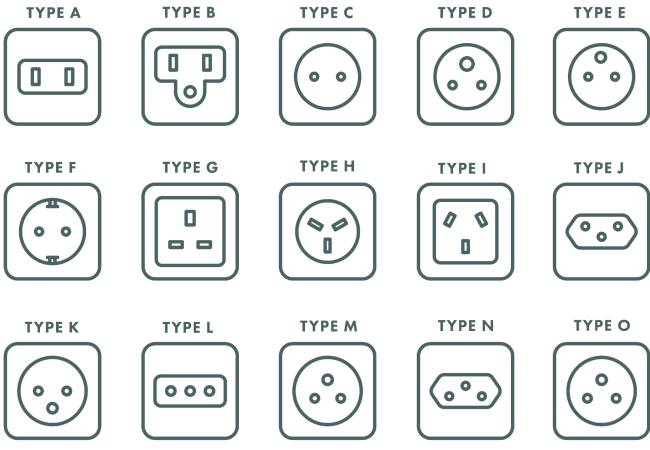
Plug types C (two round pins) and E (two round pins) – 230V, 50Hz
Money
Mongolia's currency: Mongolian tögrög (MNT)
ATM Availability
There are several ATMs, including in the hotel we normally use in Ulaanbaatar. Credit and debit cards can also be used in various shops, hotels and restaurants in Ulaanbaatar, though not in small shops in smaller towns and villages or at some souvenir stands.
Major currencies such as US dollars, British pounds and euros can be changed at banks while hotels generally only change US dollars (at a worse rate).
Extra Expenses & Spending Money
Budget an extra US$150 for incidental expenses such as laundry, telephone and excursions into the nightlife of Ulaanbaatar. Cashmere, leather products, carpets, woodcarvings, watercolour paintings and traditional Mongolian dolls all make great souvenirs – US$150 is a modest souvenir budget.
Optional excursions
Horse riding (for experienced riders) may be available at some locations within the itinerary. The price will be confirmed at the time as these are operated independently by local horsemen. Please note, riding helmets and instruction are very unlikely to be available and, where they are provided, the quality may not be the highest standard. Mongolian ponies are generally unpredictable and more suited to confident and experienced horse riders. Any horse riding undertaken in Mongolia is done entirely at your own risk.
Theatre show: US$15
Tipping
Tipping is at your discretion but is customary in Mongolia and has become standard for tourism. We have found that a tipping kitty is the easiest way to ensure the correct levels are given out. This includes tips for local staff at the camps, hotels and airports plus your driver. Your leader will advise the amount, which will depend on the group size. Budget around US$80-US$110 for this.
This tip kitty will not include the tip for your leader, which is discretionary, though US$35-US$55 is common.
Sustainability and Impact
As a certified B Corp, we’re on a mission to improve our social and environmental impact across all our adventures.
We do this through our innovative Thriving Nature, Thriving People plan.
This ‘nature positive’ approach is designed to help nature and communities thrive in harmony through practical solutions, such as reducing carbon and waste on our trips, supporting conservation projects through the Exodus Adventure Travels Foundation, and rewilding 100 square metres for every Exodus traveller.
You’ll also find Thriving Nature, Thriving People moments across our trips. These experiences are often a highlight of your adventure, while also benefiting the natural world or local communities.
On this trip, we:
- Visit the Project Information Centre and join a guided hike to learn about conservation efforts protecting Przewalski’s horses.
- Visit a camel-breeding family to learn about nomadic herding practices and rural livelihoods.
Important Information
Your Safe Participation
When booking this trip, you should be confident in your ability to participate in all activities described in these Trip Notes. If you have any doubt about your suitability, please call us and ask to speak to one of the experts on this itinerary.
Although our leaders are well trained to deal with different capabilities, if they have any concerns about someone’s ability to safely take part in an activity, or their impact on other people’s enjoyment, we authorise them to take necessary action which, in some circumstances, may involve asking someone to miss that activity.
By booking this trip you agree to our Booking Conditions which clearly state that our leaders have the authority to do this. In these rare instances we will ensure anyone sitting out is safely provided for and offered alternative options where possible. Refunds will not be provided for activities missed and customers may be liable for additional costs incurred.
Seatbelts
All vehicles used by us should be equipped with working seatbelts, except where approved by us based on the vehicle type or journey. Wherever seatbelts are available, we require our customers to use them for their own safety, even where it may not be a legal requirement.
Travel Safety
For additional information please have a look at the travel safety advice page on our website.
Optional activities and excursions
If you would like to join an optional activity or excursion outside those listed in the itinerary, your leader may be able to assist with selecting a provider. However, Exodus has not assessed the safety standards of activities or excursions that are not listed in the Trip Notes. All optional activities or excursions are undertaken at your own risk.
How To Book
Speak to our friendly team of experts to plan your adventure:
- Check availability: our website shows real-time availability of our guided group tours, or contact our team by phone, email or live chat.
- Hold a space: You can provisionally hold a space on any guided group tour to give you time to finalise your travel plans.
- Confirm your booking: Payment of a deposit will complete your booking and secure your place on the trip.
After booking
You will receive a confirmation document and invoice, which includes extra information and guidance about your travel arrangements. Our dedicated Customer Operations team will help you with any pre-travel questions or arrangements and can easily add extensions or extra accommodation to your booking. Final Joining Instructions will usually be sent out two to three weeks prior to departure.
Adding transfers to your booking
If you have arranged your own flights and would like to add transfers to your booking, please provide your arrival and departure details to our Customer Operations team around four to six weeks before departure.
- Where complimentary transfers are included, they are available for any flight but can only be added to your booking once we have received your flight schedule.
- Where group arrival and departure transfers are available, these operate at fixed times. You will need to arrive in time to meet the scheduled transfer. If the timings don’t align with your travel plans, our team can arrange private transfers once they receive your flight schedule.
Trip Note validity
Trip notes may be updated after booking; if any updates significantly impact the inclusions or itinerary you will be advised in writing. A link to the most up-to-date Trip Notes will be sent out with your Final Joining Instructions before departure.
The information in these Trip Notes is given in good faith. All holidays can be subject to unexpected changes, and occasionally it may not be possible to follow the itinerary as planned. In these circumstances we will make the best-possible alternative arrangements that maintain the integrity of the original itinerary.
