Current as of: August 11, 2026 - 12:04
Galapagos Walking Adventure Trip Notes
- Ways to Travel: Guided Group
- Destination: Ecuador
- Programmes: Walking & Trekking
-
Activity Level:
2 out of 7 - Easy & Moderate
- 14 Days: Land Only
- Ages: 16+
- Trip Code: TPG
- Carbon Footprint: 53kg CO2e
Trip Overview
Hike volcanic landscapes, snorkel with sea lions, island hop by boat – experience the wild wonders of the Galapagos
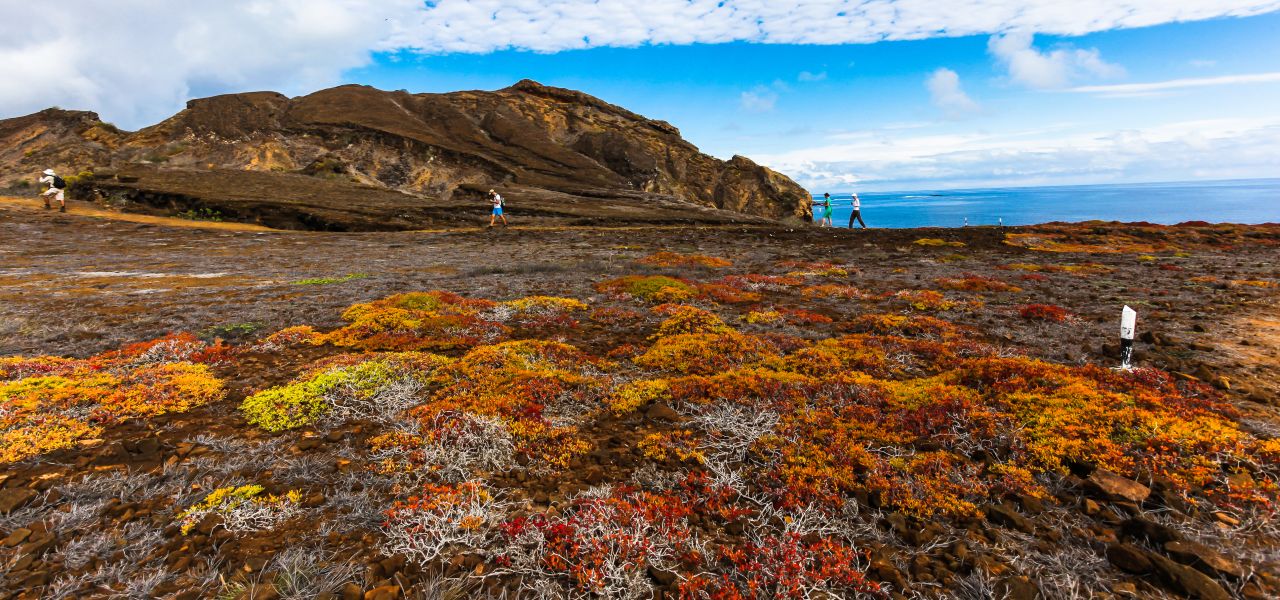
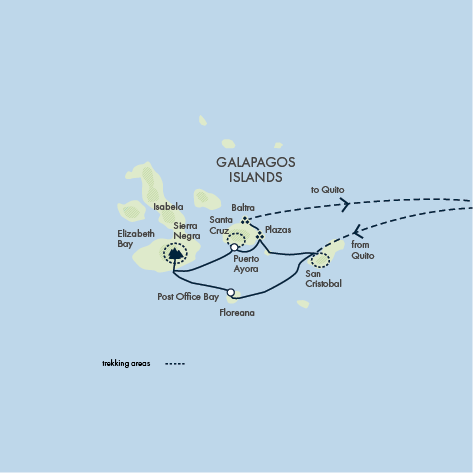
Step into a nature documentary on this active exploration of the Enchanted Isles. Travelling between San Cristóbal, Floreana, Isabela and Santa Cruz, we hike across lava fields and up the active Sierra Negra volcano, snorkel wildlife-rich waters in search of turtles, rays, reef sharks and penguins, and island hop by motorboat through this extraordinary archipelago. Along the way, walk among Galapagos giant tortoises, swim near playful sea lions and discover the remarkable creatures and landscapes that inspired the world’s great natural historians.
Is This Trip for You?
This trip is rated Activity Level 2 (Easy & Moderate). For more information on our trip gradings, visit the Activity Level Guidelines page. If you have any queries about the difficulty of the trip, please contact us.
Fitness levels: Most walking is at a leisurely pace, but the Sierra Negra volcano trek is rated as a moderate hike. Therefore, we suggest you come prepared and enjoy reasonably regular walks at home.
Walking times: The stated walking times, which include lunch and photo stops, are given as approximations only and depend on the group’s pace.
Terrain: Underfoot conditions are often demanding, with sharp lava rocks, loose gravel and uneven ground requiring careful foot placement. There is no shade on these walks, and the strong UV can make conditions feel particularly hot as the dark lava reflects the sun.
Itinerary: A little patience and flexibility are required, as it is not always possible to follow a strict schedule due to weather and sea conditions – sometimes it is better to do the planned activities in a different order (but almost always on the same day as the activities are originally planned).
Boat transfers: Inter-island ferries are small speedboats, and crossings can be rough, particularly during periods of stronger winds or swell. Passengers who are prone to seasickness are strongly encouraged to take motion sickness medication before departure and bring any personal remedies they find effective. Basic life jackets are provided, and seating is typically arranged in rows within a covered cabin. Toilet facilities may be available on board, but they should not be relied upon. Timings are approximate and depend on sea conditions.
Flying to the Galapagos: Time spent at the airport (both on mainland Ecuador and the Galapagos) is currently taking longer than usual due to the implementation of a new system for declaring foods and goods to enter the Galapagos.
Climate: We spend a lot of time in the sun, so it’s important to come prepared. Sunscreen, sun hats, and regular hydration are essential.
Snorkelling: Sea conditions in the Galapagos vary, with the chance of currents and waves. If you are not a confident swimmer, or do not have much experience snorkelling, it is essential you inform your tour leader so they can provide you with the right assistance. Please closely follow their guidance before getting in the water.
Water safety: This trip includes time by a lake, river or sea, where there may be opportunities to swim. You should always seek local advice before deciding whether to swim. Open-water or wild swim spots should be treated with extreme caution. Information on how to keep yourself safe while swimming is shown here.
Group
The trip has two tour leaders: one for Quito, and another for the Galapagos, who is a registered naturalist guide.
Adult min age: 16
Min group size: 4
Max group size: 16
Itinerary
Land Only
- Start City: Quito
- End City: Quito
Land Only Itinerary
Adventure starts in Quito
Begin the adventure in Quito, Ecuador’s capital, high in the Andes. To make things easy, there are free transfers from the airport to the hotel for everyone today – check the Joining Instructions for further details.
Around 6pm, say hola to your Quito tour leader and fellow travellers, when we gather as a group for the first time to get to know each other and learn more about the adventures ahead.
Want more time in Quito? Secure pre-tour hotel nights through your sales representative.
Upgrade to a suite today – speak to your sales representative for more details
Accommodation: Hotel Vieja Cuba (or similar)
Quito Old Town tour

This morning, we take a guided tour of the Old Town. Quito is the second-highest capital in the world, standing at 9,350ft (2,850m) on the western cordillera of the Andes. It is one of the smaller and more attractive of the colonial capitals in South America. Due to the altitude, you are advised to take it easy at first and drink plenty of water.
After, you may wish to join an optional excursion to the equator, which is just 40 minutes’ drive north of Quito. Here, you visit the fun – and interactive – Intiñan Equator Museum, which explores indigenous culture and traditions, as well as unique phenomena related to the geographic location.
Your tour leader ensures a big Ecuadorian welcome by arranging a group dinner tonight.
Upgrade to a suite today – speak to your sales representative for more details
Accommodation: Hotel Vieja Cuba (or similar)
Fly to San Cristóbal • Visit the Galapagos Interpretation Center

Transfer to Quito Airport and fly to San Cristóbal in the Galapagos Islands.
On arrival, we settle into our hotel and have time for a light lunch in the small town and a visit to the Galapagos Interpretation Center, a great introduction to the natural history of the archipelago.
This afternoon, we walk (3mi/5km) to the cliffs at Las Tijeretas to see frigatebird colonies and there’s time to swim and snorkel close to a sea lion colony.
Please inform your tour leader if you are not a confident swimmer, or if you have never snorkelled before so they can assist you accordingly. Sea conditions can change. At times, the waves and currents can be strong, plus the shore is rocky.
Accommodation: Hotel Paraiso Insular (or similar)
Snorkel León Dormido and walk along a white-sand beach

Travel (40 minutes) by small motorboat to León Dormido (also known as Kicker Rock), an impressive lava tuff formation. Several species of nesting seabirds reside here, including masked boobies. We can snorkel in the deep water and, with any luck, spot eagle rays, Galapagos turtles, hammerhead sharks and a great variety of fish.
Continue by boat, enjoying lunch en route, to one of three white-sand beaches for a walk: Playa Ochoa, Playa Manglecito or Cerro Brujo. Playa Ochoa is an expanse of white sand dominated by a large sea lion colony and is home to many birds and marine iguanas. Playa Manglecito offers both the opportunity to visit a white-sand beach and a mangrove area. Cerro Brujo is in a volcanic zone, has abundant vegetation and is home to sea lions, marine iguanas and many birds.
Accommodation: Hotel Paraiso Insular (or similar)
San Cristóbal highlands walk • Snorkel at La Loberia

Drive to the San Cristóbal highlands after breakfast. A one-hour walk brings us to the fringe of El Junco Lake, one of the few permanent freshwater lakes in the Galapagos, where frigatebirds often bathe nearby. The highlands offer panoramic views across the smaller islands lapped by the Pacific.
After, we visit a reserve where Galapagos giant tortoises roam free. After lunch at a local restaurant, we can visit La Loberia, a sea lion nursery, the perfect place to unwind and snorkel, surrounded by sea lions and marine iguanas.
Accommodation: Hotel Paraiso Insular (or similar)
Boat to Floreana • Visit highlands
A three-hour navigation by speedboat takes us to Floreana, one of the first islands to be inhabited in the Galapagos, yet still relatively untouched by development – don’t expect to see many restaurants or shops!
See Boat Transfers in the Is This Trip for You? section for more information on our crossings.
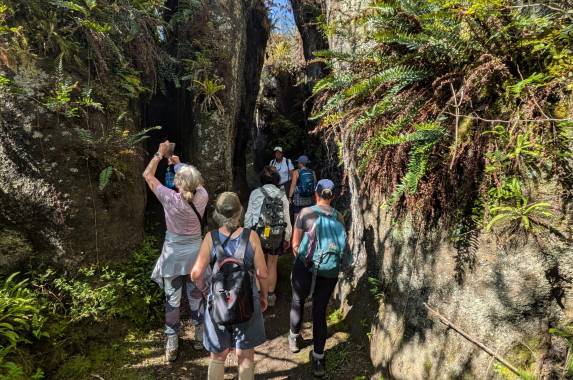
En route, we may see whales, dolphins and sea birds. After lunch at one of the few local restaurants, we visit the highlands and see lava caves once used by pirates and a large enclosure of Galapagos giant tortoises.
Accommodation: Lava Lodge (or similar)
Visit sea lion colony on Floreana • Sail to Isabela and visit the Wall of Tears
After an early breakfast, we go on a walk to discover the black volcanic beaches, which are home to red iguanas and sea lion colonies. There is also time to snorkel this morning (please note, the visit to this beach might be done in the late afternoon on Day 6 on some departures). Just before midday, we navigate by speedboat (2hr 30min to 3hr) to Isabela.
This afternoon, we walk (2.5mi/4km) to the Wall of Tears, a reminder of Isabela’s very different past when the island was used as a penal colony. Between 1946 and 1959, convicts were forced to build this wall from huge lava blocks simply as a form of punishment, which, combined with the harsh conditions, led to many deaths.
After this sobering visit, we hike back to the town through mangroves, wetlands and along sandy beaches. This is one of the best places on the islands to view migratory birds, including Wilson’s phalaropes, blue-winged teals and, if we’re very lucky, ospreys. This region has also seen the reintroduction of Galapagos giant tortoises and we are likely to encounter several on our walk.
Accommodation: San Vicente Hotel (or similar)
Sierra Negra volcano trek

It’s our toughest hiking day, but one that’s worth the effort as we tackle trails on the active Sierra Negra. This shield volcano has the second-largest volcanic caldera in the world and there is a chance of spotting the striking and endemic Galapagos vermilion flycatcher.
Our five to six-hour hike begins on a wide dirt track through the highlands, which climbs gradually (and can be muddy after rain). The terrain then turns more demanding as we cross exposed, uneven lava fields. With little shade, loose gravel and rough ground underfoot, this section requires steady footing and careful concentration!
The otherworldly landscapes are incredible, and we pass many volcanic features along the way, where we can observe fumaroles and a variety of lava formations. To keep us fuelled, we’re provided with a box lunch.
Accommodation: San Vicente Hotel (or similar)
Snorkel at Los Tuneles (Caba Rosa)
We head to Cabo Rosa, where volcanic activity has shaped a maze of lava tunnels, arches and shallow channels along Isabela’s coast. A 30-minute walk across the formations gives us an excellent chance to spot blue-footed boobies, nesting Nazca boobies, marine iguanas and Sally Lightfoot crabs. Below, white-tip reef sharks and sea turtles often rest in the sheltered water.
We then slip into the channels for a snorkel, keeping watch for sea turtles, rays, marine iguanas, Galapagos penguins and the wonderfully well-camouflaged seahorse. Lunch is served aboard the boat.
Accommodation: San Vicente Hotel (or similar)
Visit Las Tintoreras • Afternoon free to relax

Spend 15 minutes travelling to the islet and lava channels of Las Tintoreras, one of the best places in the Galapagos to see whitetip reef sharks, penguins and sea lions. This protected site is named after the white-tip reef sharks (tintoreras in Spanish) that are often seen resting in the narrow lava channel separating the island from Isabela.
A 40-minute walk explores the islet and back to the boat, before we jump into the water for a snorkel! The afternoon is free for swimming, snorkelling, walking or just relaxing on one of the beaches around Puerto Villamil.
Accommodation: San Vicente Hotel (or similar)
Sail to Santa Cruz • Optional visit to the Charles Darwin Research Station • Visit Tortuga Bay
Following breakfast at our hotel, we navigate by motorboat (2hr 30min) to Santa Cruz. Arriving, we have the option of visiting the Charles Darwin Research Station, which is home to the headquarters of the Charles Darwin Foundation. This is the main research hub on the islands and scientists come from around the world to study the flora and fauna here. After our visit, we have lunch at a local restaurant.
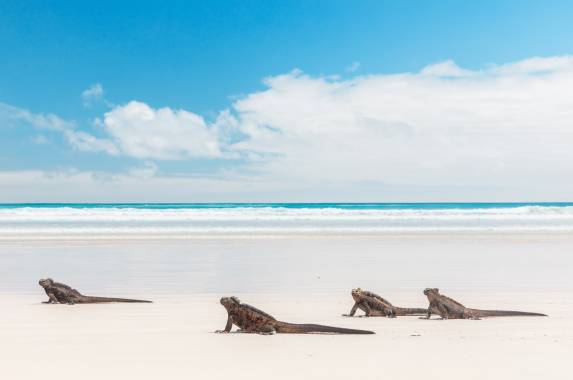
Our destination this afternoon is Tortuga Bay, a long stretch of white sand. The trail leading to the beach is paved and takes between 45 minutes and one hour, with the chance to see Galapagos finches and lizards. The beach itself is scattered with marine iguanas, who lay among the clusters of black rocks or stroll along the sand. In the water, turtles can sometimes be seen. Swimming is not recommended here due to strong currents. After a relaxing afternoon, we hike the same route back towards the main town of Puerto Ayora where our hotel is located.
Upgrade to a superior or a suite today – speak to your sales representative for more details
Accommodation: Mainao Hotel (or similar)
Explore Bartolomé Island, South Plaza Island or North Seymour

Visit either Bartolomé Island, South Plaza Island or North Seymour (depending on national park restrictions).
South Plaza has a remarkable vegetation of succulents and cacti that provide a unique habitat for land iguanas. The iguanas form small colonies at the base of the tall opuntia cacti, waiting for their flowers and dead pads to fall to the ground so they can feed. The island rocks are home to swallowtail gulls, shearwaters and sea lions.
North Seymour is a flat, boulder-strewn island and a major nesting site for frigatebirds. It’s also a good place to see blue-footed boobies performing courtship rituals and sea lions playing in the powerful surf.
Bartolomé is a spectacular scene of dramatic lava cones, clear seas and affords perhaps the most famous view of the Galapagos Islands, looking across the red cinder cones to the recent black lava fields on James Island.
If possible, we snorkel today where the water is calm, and enjoy lunch on the boat.
Upgrade to a superior or a suite today – speak to your sales representative for more details
Accommodation: Mainao Hotel (or similar)
Fly to Quito
After breakfast, we drive to Baltra airport, where we say a fond farewell to our Galapagos tour leader.
Our flight via Guayaquil returns us to Quito, where we meet our mainland tour leader and have the rest of the evening at leisure.
Upgrade to a suite today – speak to your sales representative for more details
Accommodation: Hotel Vieja Cuba (or similar)
Adventure ends in Quito
Our adventure ends after breakfast, and we begin our return journeys home. If you’d like to continue your exploration of Quito with extra nights, speak to your sales representative.
Post-trip Extensions
Amazon Add-on Tours
Extend your adventure in Ecuador with a journey into the heart of the Amazon, where winding waterways, dense rainforest and extraordinary wildlife create a world unlike anywhere else on Earth. Whether you’re seeking immersive wildlife encounters, cultural connection or a more refined rainforest retreat, there’s an Amazon add-on tour to suit your style of travel.
Sacha Lodge: Head deep within a private reserve bordering Yasuní National Park for an immersive four-day Amazon experience at Sacha Lodge. Explore canopy walkways high above the rainforest, glide through blackwater creeks by canoe and search for monkeys, macaws and giant otters, before unwinding in spacious lakeside cabins surrounded by jungle.
Yarina Lodge: Journey into a private reserve near Yasuní National Park for a four-day Amazon adventure at Yarina Lodge. Travel by canoe along the Napo River, explore rainforest trails with expert guides and spot monkeys, macaws and caimans, while staying in simple cabins designed to keep you close to the sights and sounds of the jungle.
Napo Cultural Center: Combine wildlife encounters with cultural immersion on this four-day stay at the Napo Cultural Center. Owned by the local Kichwa Añangu community, the lodge pairs guided rainforest exploration with opportunities to learn about local traditions, all from the comfort of spacious cabins overlooking the surrounding forest and lagoon.
Napo Wildlife Center: Perfect for wildlife enthusiasts, this four-day Napo Wildlife Center add-on tour takes you deep into Yasuní National Park, one of the most biodiverse places on Earth. Guided excursions reveal parrots gathering at clay licks, monkeys moving through the canopy and giant otters along the waterways, while spacious cabins beside Lake Añangu provide a wonderfully remote base.
La Selva Lodge: For those seeking a more refined rainforest escape, blend immersive exploration with understated comfort on an unforgettable five-day stay at La Selva Lodge. Elegant suites, excellent guiding and easy access to jungle trails, lakes and canopy towers create an experience that balances exceptional wildlife encounters with thoughtful service and relaxed surroundings.
Accommodation

We aim to secure locally owned accommodation that is well located, offers good value for money, and plenty of comfort.
Worth knowing
- Tailor your trip: Extend your adventure by securing extra hotel nights before or after the main itinerary. Speak to your sales representative to book.
- Private rooms: Like most tour operators, we room solo passengers together. If you’d prefer to have a private room, it’s normally possible to do this for a supplement. Speak to your sales representative to book.
- Room upgrades: Upgrades are available on this itinerary – speak to your sales representative for more details.
- Galapagos accommodation: Given the remote and isolated nature of the Galapagos, accommodation options are limited, and you may experience occasional hot water outages and blackouts. While the facilities may not match the comfort levels of the mainland, the unique opportunity to explore this extraordinary destination makes it a worthwhile experience.
Single supplement from £ 495
Food & Drink
For lunch and dinner, the tour leader will recommend various options in convenient locations, usually booking restaurants and eating with the group. For the included meals at restaurants, they are usually a set menu with two or three options.
Drinks and incidentals are quite expensive in the Galapagos, as everything is imported from the mainland. The choice of meals in some areas can be limited but special dietary requirements can usually be catered for if we are advised at the time of booking. Budget for around US$20-US$25 per meal.
Breakfasts are a mix of continental and boxed breakfasts, depending on the hotel. They are generally simple in the Galápagos, but sufficient to fuel you for a day of adventure.
The choice of meals in some areas of the Galápagos can be limited but special dietary requirements can usually be catered for if we are advised at the time of booking.
Transport
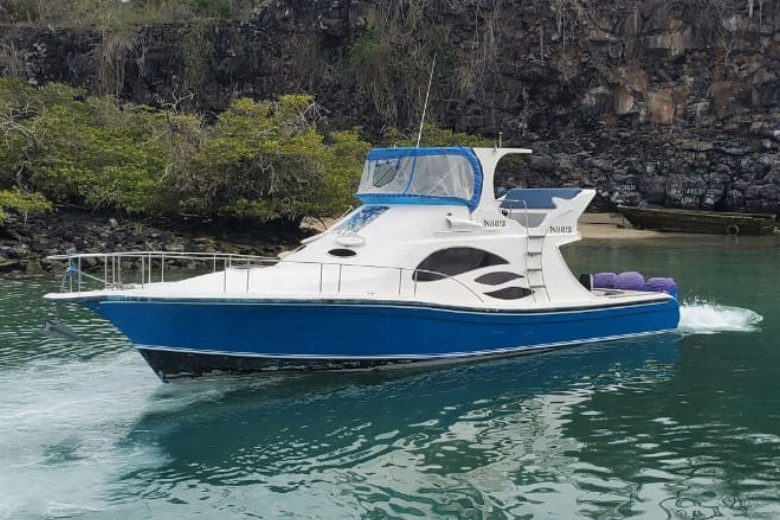
We use private buses, minibuses and cars for airport transfers and short drives within the Galapagos Islands, and small motorboats (above) to navigate between the islands.
Weather & Seasonality
In Quito and the highlands, it should be warm by day and generally dry. Maximum daytime temperatures are almost constant throughout the year at 20C (68F), with nights around 8C (46F). Expect some rain from February to May and October to November but storms, though heavy, are generally short.
The Galapagos climate is naturally variable. While the descriptions below reflect typical conditions, weather, ocean temperatures, rainfall, and sea conditions can be influenced by El Niño and La Niña events and may differ from year to year.
- January-June: Warm, humid weather, sunny skies, warmer ocean waters, and generally calmer seas make this the best time for snorkelling, and inter-island boat travel. Short tropical rainfall particularly from January to April, but they are often heavy and brief and followed by sunshine. Wildlife is active year-round, with many species nesting or breeding during this period.
- July-December: Cooler temperatures with lower humidity, morning mist (garúa), increased cloud cover, and occasional drizzle, especially in the highlands. Cooler, nutrient-rich waters attract abundant marine life, while stronger southeasterly trade winds can create rougher sea conditions, particularly on inter-island ferry crossings.
Joining Instructions
Key information
Start hotel: Hotel Vieja Cuba, La Niña N26-202 y Diego de Almagro, 170150 Quito
Phone: +593 2-290-6729
Recommended arrival time: You can arrive at any time today. There will be a welcome briefing around 6pm in the evening.
Airport: Quito Airport (UIO)
Getting to the start hotel
The start hotel is approximately 40 minutes’ drive from the airport. Exodus provides free arrival transfers to the start hotel from the airport for all customers. If you would like further information on joining this trip, please speak to your sales representative.
Please note, unless specified otherwise, the transfer will be to the start hotel and will be on the date on which the tour starts; transfers to other hotels in the same city and/or on different dates may attract an extra charge. Transfers should be booked with your sales representative at least two weeks before the tour starts.
Catching your return flight
There’s a group departure transfer to the airport in time for a chosen flight. Please speak to your sales representative if you wish to join. If the group departure transfer does not suit your flight time, speak to your sales representative to arrange an alternative transfer.
Full joining instructions including local emergency numbers will be sent to you as part of our Final Joining Instructions. If you do not receive these at least a week before departure, or require them earlier please contact our office or your travel agent.
Location start: Quito
Location end: Quito
What To Take
Essential Equipment
- Sunhat
- Sunglasses
- Sunscreen
- Insect repellent
- Large water bottle
- Swimwear
- Closed-toe sandals or water shoes for wading ashore or for walking on the islands if you don’t want to wear your trekking boots (strong footwear is needed because of the very rough lava: flip-flops or similar flimsy shoes are not suitable)
- Waterproofs
- Seasickness tablets, as the sea can be rough at times
- Snorkel gear: It may be preferable to bring your own snorkel gear for hygiene reasons; however, we do provide snorkel gear for you free of charge. The cost to rent a wetsuit locally varies per island but is between US$6-US$12 per day, payable locally in cash
- Reef safe sunscreen (a Galapagos requirement)
- Rash guard
- Rehydration medication/drinks
For the treks, you need:
- Headtorch (head lamp)
- Solid hiking boots
- Walking poles
- Warm fleece
- Woollen hat
- Good quality waterproofs
- Backpack for carrying water bottle, sunscreen etc
- Long-sleeved shirts and long trousers (pants) to provide some protection against the sharp lava rocks
During wet weather the trek can become muddy and slippery and as such waterproofs and walking poles will become a necessity.
Prohibited items: Many single-use plastic items are effectively banned in the Galapagos. Please only bring reusable items with you and check with your tour leader if you’re unsure. Additionally, food must be limited to small amounts of packaged, commercially prepared products. Fresh fruits, vegetables, meat, and dairy are not permitted to protect the islands’ ecosystem.
Optional Equipment
- Camera with telephoto lens
- Spare memory cards/batteries
- Binoculars
- Wetsuit (particularly during the cooler dry season)
If required, you can leave excess luggage at the hotel in Quito and collect this on your return from the Galapagos.
Practical Info & Visa
Visa
Ecuador
Travellers from the UK, US and EU normally do not need a visa to enter Ecuador. Please note, visa requirements often change and it is your responsibility to obtain any required visas for this trip. Therefore, we recommend that you check with the nearest embassy or consulate of your chosen destination(s), including any countries you may be transiting or transferring through.
Some local governments provide guidance on what visas their citizens need. To help, we’ve gathered a selection of useful links below.
- Australia: www.smartraveller.gov.au/destinations/americas/ecuador
- Canada: www.travel.gc.ca/destinations/ecuador
- United Kingdom: www.gov.uk/foreign-travel-advice/ecuador/entry-requirements
- USA: www.travel.state.gov/content/travel/en/international-travel/International-Travel-Country-Information-Pages/Ecuador.html
Vaccinations and Health
Ecuador
All visitors to Ecuador must show valid medical insurance on arrival and cannot enter the country without it.
You also need a yellow fever vaccination certificate (vaccinated at least 15 days before you travel) if you are arriving from the Democratic Republic of Congo or Uganda, including if you have transited for more than 12 hours through an airport of those countries.
As updates may happen at any time, please check the latest requirements with your doctor or travel clinic.
Malaria is also a risk in some areas of the country (including the Amazon Rainforest) so we suggest you consult a doctor for more advice. Additionally, dengue, chikungunya and zika, all viral diseases spread by mosquitoes, are known risks in places visited. There are currently no vaccines or prophylaxes available, so take the usual precautions to avoid mosquito bites.
Recommended vaccinations include tetanus, hepatitis A, hepatitis B, rabies, tuberculosis, typhoid and yellow fever.
Please check all vaccination recommendations with your doctor or travel clinic.
Methanol: The FCDO warns travellers to be cautious of methanol poisoning when travelling in destinations visited on the trip.
Local Time
Ecuador's time zone: America/Lima (UTC -05:00)
Electricity
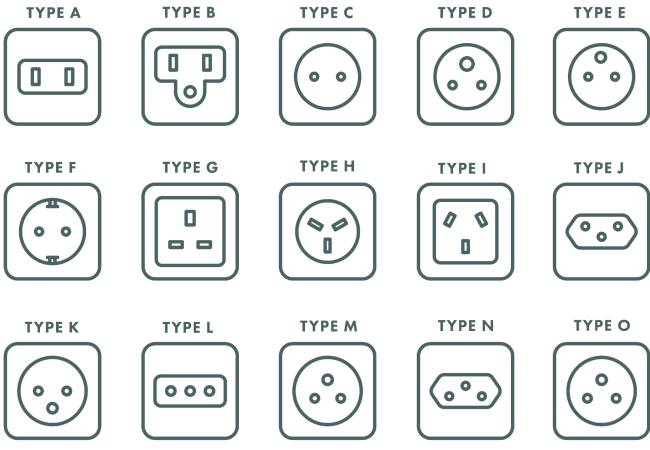
US-style 110V twin-pin sockets are widely available in the hotels. There are no power facilities when camping.
Money
Ecuador's currency: US dollar (USD)
ATM Availability
In the Galapagos, there are ATMs in Santa Cruz, San Cristóbal and Isabela; however, these can run out of cash (particularly during the peak seasons or over weekends) and they do not take all bankcards, so we recommend taking cash to the Galapagos.
Extra Expenses & Spending Money
You should carry your money in US dollars cash. Obtaining change for larger denomination banknotes (US$50 and US$100) can be difficult; in some cases, they may not be accepted due to recent increases in the circulation of forged high-value banknotes. You should carry a number of small notes (US$1 or US$5), as many small businesses and taxis do not carry large amounts of change.
On this trip, there is a compulsory Galapagos Tax of US$200 which can only be paid locally in cash (US dollars) and will be collected by the National Park Service on arrival at San Cristóbal. Galapagos taxes are subject to increase without notice, and any such increase will be collected in Quito or San Cristóbal.
For meals not included, budget roughly US$10-US$15 for lunch and US$15-US$20 for main evening meals (22% tax included). It is possible to eat more cheaply or expensively than this, and the estimates don’t include alcohol. Drinks and incidentals are quite expensive in the Galapagos, as everything is imported from the mainland.
Optional excursions
Quito
- Visit to the Intiñan Equator Museum (US$5)
Tipping
It is usual for groups to tip each member of staff on the trip, including the local guides, drivers and support staff on the trek. We generally suggest that each group member contributes about US$60 for this purpose and find that a tipping kitty managed by the group works well.
The tour leaders can be tipped separately. If you feel your tour leaders have performed well, we recommend the following amounts:
- Mainland tour leader: US$4-US$7 per person per day
- Galapagos tour leader: US$5-US$8 per person per day
Tipping is customary in restaurants and cafes throughout Ecuador, and we recommend leaving between 10% and 15% of the total bill if the service charge is not already included.
Sustainability and Impact
As a certified B Corp, we’re on a mission to improve our social and environmental impact across all our adventures.
We do this through our innovative Thriving Nature, Thriving People plan.
This ‘nature positive’ approach is designed to help nature and communities thrive in harmony through practical solutions, such as reducing carbon and waste on our trips, supporting conservation projects through the Exodus Adventure Travels Foundation, and rewilding 100 square metres for every Exodus traveller.
Important Information
Your Safe Participation
When booking this trip, you should be confident in your ability to participate in all activities described in these Trip Notes. If you have any doubt about your suitability, please call us and ask to speak to one of the experts on this itinerary.
Although our leaders are well trained to deal with different capabilities, if they have any concerns about someone’s ability to safely take part in an activity, or their impact on other people’s enjoyment, we authorise them to take necessary action which, in some circumstances, may involve asking someone to miss that activity.
By booking this trip you agree to our Booking Conditions which clearly state that our leaders have the authority to do this. In these rare instances we will ensure anyone sitting out is safely provided for and offered alternative options where possible. Refunds will not be provided for activities missed and customers may be liable for additional costs incurred.
Seatbelts
All vehicles used by us should be equipped with working seatbelts, except where approved by us based on the vehicle type or journey. Wherever seatbelts are available, we require our customers to use them for their own safety, even where it may not be a legal requirement.
Travel Safety
For additional information please have a look at the travel safety advice page on our website.
How To Book
Speak to our friendly team of experts to plan your adventure:
- Check availability: our website shows real-time availability of our guided group tours, or contact our team by phone, email or live chat.
- Hold a space: You can provisionally hold a space on any guided group tour to give you time to finalise your travel plans.
- Confirm your booking: Payment of a deposit will complete your booking and secure your place on the trip.
After booking
You will receive a confirmation document and invoice, which includes extra information and guidance about your travel arrangements. Our dedicated Customer Operations team will help you with any pre-travel questions or arrangements and can easily add extensions or extra accommodation to your booking. Final Joining Instructions will usually be sent out two to three weeks prior to departure.
Adding transfers to your booking
If you have arranged your own flights and would like to add transfers to your booking, please provide your arrival and departure details to our Customer Operations team around four to six weeks before departure.
- Where complimentary transfers are included, they are available for any flight but can only be added to your booking once we have received your flight schedule.
- Where group arrival and departure transfers are available, these operate at fixed times. You will need to arrive in time to meet the scheduled transfer. If the timings don’t align with your travel plans, our team can arrange private transfers once they receive your flight schedule.
Trip Note validity
Trip notes may be updated after booking; if any updates significantly impact the inclusions or itinerary you will be advised in writing. A link to the most up-to-date Trip Notes will be sent out with your Final Joining Instructions before departure.
The information in these Trip Notes is given in good faith. All holidays can be subject to unexpected changes, and occasionally it may not be possible to follow the itinerary as planned. In these circumstances we will make the best-possible alternative arrangements that maintain the integrity of the original itinerary.
